

In committee Sep 21, 2026
1 co-sponsor
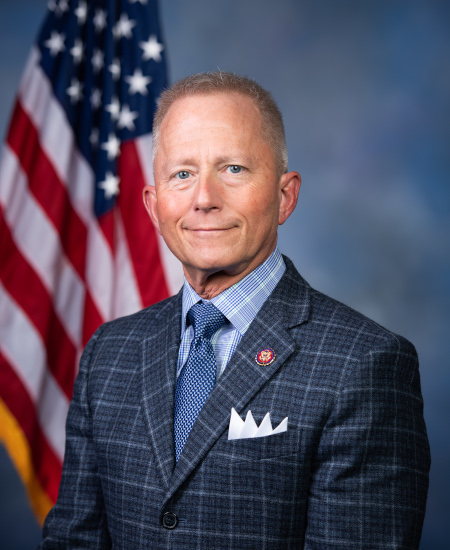
Rep. Jefferson Van Drew
Total votes
2,837
all sessions
Attendance
99%
23 missed
Near the chamber average
With party
91%
of cast votes
Lower than 76% of chamber peers
Bipartisan score
5%
crosses aisle rarely
Higher than 75% of chamber peers
Sponsored
1,693
bills & resolutions
Higher than 83% of chamber peers
Committees
7
assignments
1,693 bills and resolutions
Sponsored bills
Total
1,693
Primary
140
Co-sponsor
1,553
This page
1,693
matching current filters
PROOF Act
Maddy summaryThe PROOF Act requires state agencies to provide specific records to the Attorney General when requested for investigating fraud in major federal assistance programs, such as Medicaid, food stamps, unemployment benefits, and disaster relief funds. This information sharing covers data like identity verification records, payment logs, and provider billing statements directly related to active investigations. To protect privacy, the bill mandates that the Justice Department handle all transferred data under existing privacy laws, use encryption for security, and destroy the information once legal proceedings are complete. Additionally, federal agencies may only use this data for fraud-related law enforcement purposes and must submit an annual report to Congress detailing the number of requests made and resulting convictions.
Budget & TaxesSupports Budget & TaxesThe bill strengthens fiscal management by enabling fraud investigations in major federal assistance programs like Medicaid and food stamps, protecting public funds.
Criminal JusticeSupports Criminal JusticeBill empowers the Attorney General and Justice Department to investigate fraud in federal programs, strengthening law enforcement capabilities.
Passed Sep 17, 2026
0 co-sponsors
Ratepayer Protection Act
Maddy summaryThis bill, known as the Ratepayer Protection Act, modifies federal energy laws to ensure that large industrial customers pay for the specific infrastructure upgrades needed to serve their high electricity demands. It directly affects non-residential facilities with a peak power usage of 100 megawatts or more, requiring utilities to charge these customers the full incremental cost of any necessary generation, transmission, or distribution improvements. Under the new rules, large customers must also provide financial guarantees or contributions before such upgrades are made, ensuring utilities can recover costs even if the customer leaves the contract early. State regulators have two years to implement these standards, though the bill exempts utilities in states that have already enacted similar measures or are actively considering them.
Passed Sep 17, 2026
1 co-sponsor
SMILE for Veterans Act
Maddy summaryThe SMILE for Veterans Act directs the Secretary of Veterans Affairs to launch a three-year pilot program that provides dental care to eligible veterans living in rural areas who currently lack access to standard departmental services. The program operates by reimbursing or contracting with community-based providers, such as mobile clinics, nonprofit organizations, and private practices, to deliver basic preventive, restorative, and urgent dental treatments. Eligibility extends to veterans enrolled in the VA system who reside in designated rural areas and are either not otherwise eligible for dental care or unable to reach existing facilities within standard timeframes, with specific provisions allowing homeless veterans to qualify through alternative verification methods. The bill authorizes $5 million for program setup in fiscal year 2027 and $20 million annually for the following three years, while also establishing an internal working group to evaluate access barriers and requiring a final report to Congress on the pilot's effectiveness.
Budget & TaxesSupports Budget & TaxesThe bill establishes and funds a three-year pilot program for dental care for veterans, indicating increased government spending on a public service.
VeteransSupports VeteransThe bill establishes a pilot program to provide dental care to veterans in rural areas, directly expanding access to healthcare services for veterans.
In committee Sep 16, 2026
1 co-sponsor
Fit Future Act
Maddy summaryThe Fit Future Act establishes the President's Council on Sports, Fitness, and Nutrition, a group of up to 30 appointed members who serve without pay to advise the President and the Department of Health and Human Services. This council is tasked with developing strategies to revive the Presidential Fitness Test, promoting school-based physical education programs, and setting new fitness goals for American youth. Additionally, the council will recommend campaigns to address childhood obesity and national security concerns related to sedentary lifestyles, while receiving administrative support and funding from the Department of Health and Human Services.
EducationSupports EducationBill promotes school-based physical education and fitness programs, enhancing student wellness within the education system.
HealthcareSupports HealthcareBill promotes physical fitness and addresses childhood obesity, which are preventive health measures that strengthen public health outcomes.
Passed Sep 16, 2026
1 co-sponsor
Foreign Robocall Elimination Act
Maddy summaryHR 6152, the Foreign Robocall Elimination Act, establishes an interagency task force to address foreign robocalls entering the United States. The task force, composed of the FCC, FTC, DOJ, and private sector representatives, will study the origins, impacts, and potential solutions to foreign robocalls and must submit a report to Congress within 360 days. The bill also modifies existing law to require FCC notices about robocall mitigation every three years instead of annually, and introduces a bond requirement for providers using the Robocall Mitigation Database. This legislation affects telecommunications providers, federal agencies, and all U.S. telephone users who receive unwanted calls. The bill aims to improve coordination between U.S. agencies and foreign countries in combating illegal robocalls through concrete policy changes.
In committee Sep 16, 2026
1 co-sponsor
Northern Border Security Enhancement and Review Act
Maddy summaryThis bill amends the existing Northern Border Security Review Act to update deadlines and requirements for border security assessments. It requires the Department of Homeland Security Secretary to submit a northern border threat analysis by September 2, 2026, and every two years after, with strategy updates due 90 days after each analysis. The bill also mandates classified briefings to congressional committees 30 days after each threat analysis and directs the development of performance measures for Air and Marine Operations within six months of enactment. These changes directly affect the DHS Secretary, congressional committees, and U.S. Customs and Border Protection's operations along the northern border.
Passed Sep 16, 2026
1 co-sponsor
TRAPS Act
Maddy summaryThe TRAPS Act establishes a federal Task Force on Payment Scams, chaired by the Treasury Secretary, to coordinate efforts across agencies like the FTC, Federal Reserve, and consumer groups. The Task Force will study current scam tactics (such as fake text messages or fraudulent payment platforms), evaluate prevention strategies, and develop recommendations to help consumers avoid and report scams. It must submit an initial report within one year and annual updates, focusing on improving federal-state coordination and education programs. This bill directly affects government agencies and stakeholders participating in the Task Force, with the goal of protecting consumers from evolving payment scams.
In committee Sep 16, 2026
1 co-sponsor
GUARD Act
Maddy summaryHR 2978, the GUARD Act, allows state, local, and tribal law enforcement agencies to use existing federal grant funds for investigating elder financial fraud, "pig butchering" investment scams, and general financial fraud. The bill directs these funds toward hiring specialized staff, training on blockchain tools and transnational fraud, purchasing investigative software, improving data collection, and creating financial sector liaisons to coordinate with banks. It requires annual reports from law enforcement on fund usage and outcomes, and mandates federal agencies to submit comprehensive reports to Congress on scam statistics, enforcement actions, and funding allocation. The legislation directly affects law enforcement agencies and aims to strengthen efforts against fraud targeting vulnerable populations, particularly elderly individuals.
Criminal JusticeSupports Criminal JusticeFunds specialized law enforcement for financial fraud investigations, strengthening investigative capacity within criminal justice enforcement.
TechnologySupports TechnologyFunds blockchain tools and cybersecurity training for fraud investigations, enhancing digital security measures.
Passed Sep 16, 2026
1 co-sponsor
Combating Illicit Xylazine Act
Maddy summaryHR 1266, the Combating Illicit Xylazine Act, adds xylazine - a veterinary sedative increasingly found in illicit drug mixtures - to Schedule III of the Controlled Substances Act, regulating its use and trafficking. It directly affects veterinarians, animal owners, and manufacturers by allowing xylazine to be legally dispensed for animal use under specific veterinary prescriptions, while prohibiting non-veterinary human use. The bill includes transition periods (60 days for practitioners, 1 year for labeling) to ease compliance for manufacturers and practitioners, and requires the DEA and FDA to expedite necessary applications. It also mandates two congressional reports on xylazine's illicit use and trafficking patterns, and directs the Sentencing Commission to review penalties for offenses involving xylazine.
Passed Sep 16, 2026
1 co-sponsor
Ask Maddy
·
AI policy assistant
Ask Maddy about Jefferson Van Drew
Scope: new-hampshire
Hi! I can help you understand Jefferson Van Drew's legislative record. What would you like to know?
Try one of these
i
Maddy answers using official bill text and legislative records. Always verify before sharing.
Sources cited inline