

Maddy summaryHB 1067 establishes a state grant program to fund new mental health courts in New Hampshire, requiring counties, districts, or non-profits to apply through a standardized process managed by the judicial branch's Office of the Statewide Treatment Courts. The bill revises mental health court procedures to allow judges to dismiss charges or withhold prosecution upon successful completion of treatment programs, while mandating risk and clinical assessments for participants. It requires the judicial branch to develop application standards, track outcomes like recidivism, and provide training to ensure program effectiveness. The goal is to reduce incarceration costs and improve treatment access for individuals with mental illness through structured court interventions.
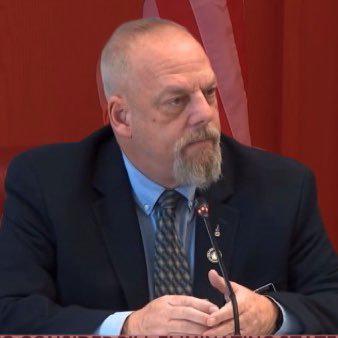
Rep. Dennis Mannion
Sponsored bills
Maddy summaryHB 1367 establishes a new criminal offense for "doxing" in New Hampshire, defined as intentionally publishing another person's personal information (like addresses, phone numbers, or financial details) without consent to threaten, harass, or cause harm. It makes basic doxing a class A misdemeanor, escalating to a class B felony if it causes physical harm, over $1,000 in economic loss, or occurs as part of a pattern of harassment. Victims can also pursue civil lawsuits for at least $1,000 per violation, plus punitive damages, injunctions, and attorney fees. The law explicitly excludes lawful public records, consented sharing, reporting crimes to police, and protected speech like journalism.
Maddy summaryHB 1469 requires massage therapy businesses employing more than one therapist to obtain a state license and undergo regular inspections by the Office of Professional Licensure and Certification (OPLC). The bill establishes new health and safety standards for these businesses, including requirements for direct supervision by licensed therapists and procedures for license renewal and disciplinary actions. It also adds compensation for members of the massage therapists' advisory board and creates a new investigative paralegal position within the OPLC, with funding provided for this role. This legislation directly affects massage therapy businesses, the OPLC, and the advisory board by expanding regulatory oversight and operational requirements.
Maddy summaryHB 1415 creates a special veterans license plate for New Hampshire residents, requiring a $60 initial fee (in addition to standard registration costs) and $30 annual renewal fees. Revenue from these plates funds a dedicated veterans' support program, with up to $50,000 annually allocated to promote the plate program through the Department of Military Affairs and Veteran Services. The remaining funds are distributed to initiatives prioritized by the governor and state veterans council to support veterans, service members, and their families. The fund is nonlapsing, meaning it carries over year to year without needing annual reauthorization.
Maddy summaryHB 1348 allows New Hampshire law enforcement agencies to legally possess portions of human remains (such as bone or tissue) for training cadaver detection dogs, but only with written permission from the deceased's next of kin or a prior donation document. The bill requires agencies to document consent, return all remains to funeral homes after training, and follow strict handling protocols. It establishes oversight by the Department of Safety to ensure respectful treatment and compliance, with penalties for violations. The law directly affects law enforcement agencies and funeral homes handling remains, while prioritizing ethical standards in training practices.
Maddy summaryHB 1361 modifies New Hampshire law governing search warrant inventories by requiring law enforcement officers to create inventories in the presence of the person searched (or a neutral witness if they're absent), rather than the warrant applicant. It also allows electronic inventories for digital evidence with officer verification, and specifies a standardized return form for warrant execution. The bill directly affects police officers executing searches and ensures clearer documentation for individuals whose property is seized. It takes effect January 1, 2027, as requested by the Department of Safety.
Maddy summaryHB 1363 amends New Hampshire law to allow the Department of Safety commissioner to designate an authorized person (not just the commissioner) to receive criminal conviction information from background checks for employee candidates. This directly affects state agencies and employers conducting background checks, streamlining how they receive sensitive criminal history data. The bill permits electronic fingerprint submissions and requires strict confidentiality for all criminal history records, while maintaining the existing process for state and federal background checks through the Division of State Police. The change aims to provide flexibility for employers without altering the core background check procedures.
Maddy summaryHB 1093 modifies New Hampshire's building code and school construction funding to treat public charter schools equally with traditional public schools. The bill extends full compliance with state building and fire codes to charter schools (as defined under RSA 194-B) and makes them eligible for the same state construction aid grants as school districts. Specifically, it revises building code language to include charter school facilities and updates funding rules to calculate grants for charters using the same formulas applied to school districts. This change ensures charter schools can access state construction funding and meet the same safety standards as other public schools.
Maddy summaryHB 1696 allows police to issue a written summons instead of arresting someone for certain misdemeanors or violations (excluding abuse, protective order breaches, or stalking cases). It requires people released on summons to "remain of good behavior" - meaning they cannot commit any new felony, misdemeanor, or major traffic offense while awaiting court. Failing to appear or violating this condition becomes a separate misdemeanor offense, punishable by fines and potentially consecutive jail time. This directly affects individuals charged with minor offenses who are released with a summons instead of being jailed.
Maddy summarySB 513 requires school districts and chartered public schools to hire an owner's project manager (OPM) before submitting applications for school building aid grants, rather than after. This applies specifically to construction, renovation, or reconstruction projects costing $1.25 million or more, unless the commissioner grants a waiver. The bill mandates that the OPM must carry specific insurance coverage and sets requirements for the state board to establish qualification rules. This change shifts the timing of OPM engagement from after application submission to the application phase itself.