Maddy summaryThe Title IX Clarification Act of 2026 amends federal education law to explicitly define the terms "sex," "female," and "male" based on biological characteristics. Specifically, it states that "sex" refers to an individual's biologically determined status as male or female, while "female" and "male" are defined by the presence of specific reproductive systems capable of producing ova or sperm, respectively. These definitions apply to all education programs and activities that receive federal financial assistance starting on the date the bill becomes law. The legislation aims to clarify existing statutes by removing ambiguity around biological sex definitions in the context of Title IX protections.

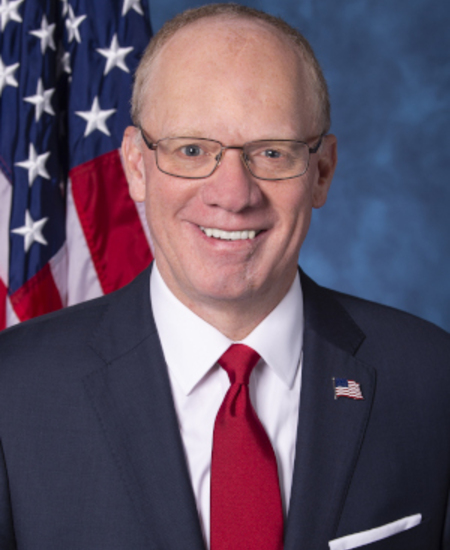
Rep. John W. Rose
Sponsored bills
Maddy summaryHR 5267, the American Franchise Act, clarifies when franchisors can be considered joint employers of franchisee employees under federal labor laws. It defines "substantial direct and immediate control" over essential employment terms like wages, benefits, hours, hiring, and discipline - requiring franchisors to actively set these terms to be deemed joint employers. The bill explicitly excludes routine brand standards, training, or minimal safety requirements from constituting such control. This directly affects franchisors and franchisees by limiting joint employer liability to cases where franchisors exert significant, ongoing influence over core employment decisions. The law applies prospectively to new cases after enactment, not past disputes.
Maddy summaryThis bill designates the United States Postal Service facility located at 83 East Park Street in Alamo, Tennessee, as the "Kenneth Nolen Davis Post Office." It requires that any future references to this specific facility in federal laws, maps, regulations, or documents be understood as referring to its new name.
Maddy summaryThis House resolution marks the 25th anniversary of the September 11, 2001 terrorist attacks by formally honoring the memory of the nearly 3,000 victims and recognizing the sacrifices made by first responders, military personnel, and the passengers of United Airlines Flight 93. The bill acknowledges the ongoing health challenges faced by survivors and responders, highlighting the role of the World Trade Center Health Program in providing long-term medical support. It also credits charitable organizations and community groups that have continued to assist victims' families and veterans over the past two decades. Finally, the resolution urges the American public to observe the anniversary with ceremonies and reaffirms Congress's commitment to remembering the events and lessons of that day.
Maddy summaryThe I-47 Future Interstate Act of 2026 designates a specific stretch of United States Route 287 as a high-priority transportation corridor. This route runs from State Highway 87 in Port Arthur, Texas, to United States Route 89 in Choteau, Montana. The bill formally assigns the number I-47 to this designated path within the national interstate highway system.
Maddy summaryThis House resolution formally mourns the passing of Dolly Parton and honors her extensive contributions to American music, philanthropy, and public service. It highlights her establishment of key organizations such as Dollywood and the Imagination Library, which have significantly impacted education, health care, and disaster relief in Tennessee. The bill recognizes specific achievements, including her support for pediatric medical research and wildlife conservation efforts. By acknowledging these accomplishments, the resolution aims to celebrate her legacy and encourage continued community service across the United States.
Maddy summaryThe Data BRIDGE Act requires the Federal Communications Commission (FCC) to update its national broadband map within 180 days of enactment by adding agricultural areas as a dedicated layer. This change will directly affect the FCC, USDA, state governments, and broadband providers by incorporating agricultural land data into the map used to identify broadband coverage gaps. The bill mandates the FCC to consult with the USDA, Commerce Department, states, and other stakeholders to integrate existing agricultural data into the map. The goal is to improve accuracy in identifying broadband needs in rural farming communities, though it does not directly fund infrastructure.
Maddy summaryThis bill extends existing whistleblower protections to workers on all contracts funded by the Department of Housing and Urban Development (HUD). It applies Section 4712 of U.S. law - which prohibits retaliation against employees reporting fraud or waste - to every HUD contract, subcontract, grant, or personal services agreement, regardless of when the contract was signed. This means employees working on HUD-funded projects can now seek legal protection if they face retaliation for raising concerns about misconduct. The law directly affects HUD contractors and their employees by ensuring they have the same legal safeguards as other federal contract workers.
Maddy summaryThe Consumer Financial Protection Accountability and Reform Act of 2026 significantly restructures the Bureau of Consumer Financial Protection by subjecting it to the regular federal appropriations process and establishing an independent Inspector General appointed by the President. The bill restricts the Bureau's supervisory authority over banks and credit unions with assets under $30 billion, allowing these institutions to elect to remain under their existing prudential regulators instead. It also introduces a safe harbor for small-dollar loans of $3,500 or less that meet specific structural requirements, shielding compliant lenders from civil money penalties and private damages. Additionally, the legislation creates federal standards for earned wage access services, requiring providers to offer a no-cost option for early wage access and prohibiting them from treating these services as credit or debt under federal law.
Maddy summaryHR 2555, the Freedom of Association in Higher Education Act of 2025, protects students who join or form single-sex social organizations (like fraternities or sororities) at colleges. It prohibits colleges receiving federal funds from taking negative actions against these students or organizations solely because they limit membership to one sex - such as denying housing, financial aid, leadership roles, or recognition. The bill ensures students can join such groups without coercion and stops colleges from imposing unfair recruitment rules on single-sex organizations compared to others. It does not require colleges to recognize single-sex groups, allow organizations to set their own membership rules, or override Title IX protections.