

Maddy summaryThe Badge-to-Business Act amends the Small Business Act to waive guarantee fees for express loans made to qualified career law enforcement officers starting January 1, 2027. To qualify, an officer must have completed at least ten years of service and not be facing a pending criminal investigation or administrative proceeding for misconduct related to their official duties. This fee waiver applies to both currently employed officers and those who have separated from service, provided they meet the conduct requirements at the time of application. The provision includes an exception allowing the Administrator to collect fees if the cost of guaranteeing these loans results in a net loss for the Administration in a given fiscal year.
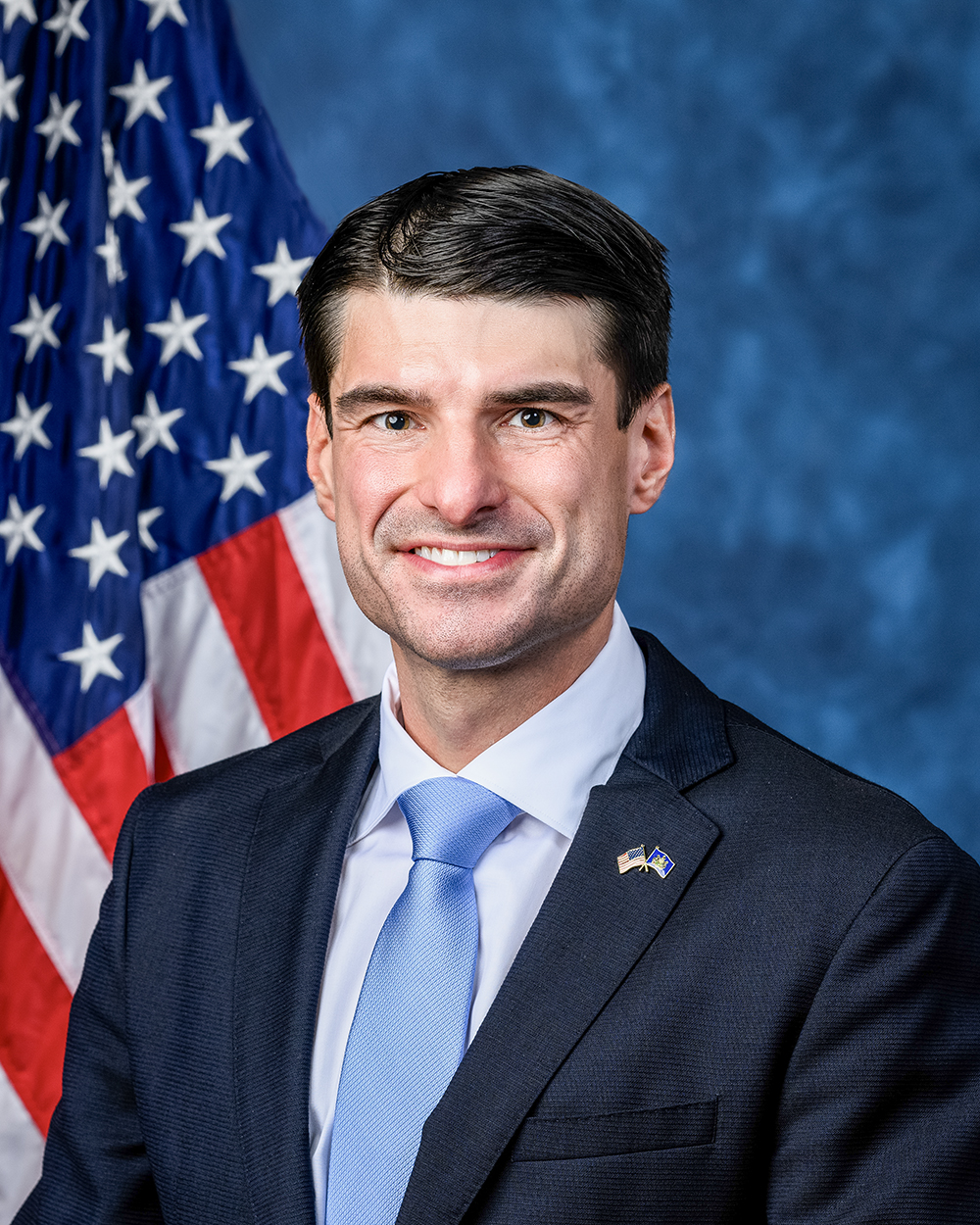
Rep. Robert P. Bresnahan, Jr.
Sponsored bills
Maddy summaryThe FLIGHT DECK Act requires the Federal Aviation Administration to create a voluntary program that allows certified air traffic controllers to sit on the flight deck of commercial or general aviation aircraft during flights. This initiative is designed to help controllers better understand the onboard conditions and complex requirements faced by flight crews. Participation is limited to one round trip within the United States, its territories, Alaska, and Hawaii, with no government reimbursement for travel expenses. The FAA must consult with pilot and controller unions to establish safety policies and ticketing rules, and it must submit a report to Congress one year after the program begins detailing participation levels and any barriers encountered.
Maddy summaryThis House resolution marks the 25th anniversary of the September 11, 2001 terrorist attacks by formally honoring the memory of the nearly 3,000 victims and recognizing the sacrifices made by first responders, military personnel, and the passengers of United Airlines Flight 93. The bill acknowledges the ongoing health challenges faced by survivors and responders, highlighting the role of the World Trade Center Health Program in providing long-term medical support. It also credits charitable organizations and community groups that have continued to assist victims' families and veterans over the past two decades. Finally, the resolution urges the American public to observe the anniversary with ceremonies and reaffirms Congress's commitment to remembering the events and lessons of that day.
Maddy summaryThe INSULIN Act of 2026 mandates that group and individual health insurance plans cap out-of-pocket costs for selected insulin products at $35 per 30-day supply, effective for plan years beginning on or after January 1, 2028. This cost limit applies to a variety of insulin types and delivery devices, with the cap set at the lesser of $35 or 25 percent of the negotiated price net of concessions. The bill also prohibits insurers from imposing deductibles or prior authorization requirements for these covered products unless clinically justified for safety reasons. Additionally, the legislation directs the Department of Health and Human Services to fund a resource center and hotline to help uninsured individuals find affordable insulin assistance programs, while requiring the Government Accountability Office to study the demographics of uninsured insulin users. Finally, it creates an expedited review process for biosimilar insulin applications when the Secretary determines there is inadequate competition in the market.
This bill designates the facility of the United States Postal Service located at 6 Pennsylvania Avenue in Matamoras, Pennsylvania, as the "PFC Edward Kuhn Memorial Post Office".
Maddy summaryHR 5334, the SEED Act of 2025, expands the existing educator expense deduction under federal tax law to explicitly include early childhood educators. It revises the Internal Revenue Code to cover expenses for "early childhood educators" and broadens the educational levels affected to include "pre-kindergarten through grade 12." This change allows early childhood educators (such as preschool teachers) to deduct work-related expenses like classroom supplies and professional development costs, which they previously could not claim under the existing deduction for "kindergarten through grade 12" teachers. The amendment applies to expenses incurred in taxable years beginning after December 31, 2024.
Maddy summary# Summary of Digital Commodities and Blockchain Technology Regulatory Framework This comprehensive legislation establishes a new regulatory framework specifically for digital commodities and blockchain technology, creating a balanced approach that protects investors while fostering innovation. ## Key Components 1. **New Regulatory Structure**: - Creates new categories for digital commodity exchanges, brokers, and dealers under the Commodity Futures Trading Commission (CFTC) - Establishes "qualified digital asset custodians" as a new regulatory category - Defines "mature blockchain systems" with special regulatory treatment 2. **Core Requirements**: - Mandates segregation of customer assets and strict custody requirements - Requires robust risk management systems - Sets capital requirements for digital commodity brokers and dealers - Establishes new disclosure and reporting obligations - Defines "blockchain control persons" with special restrictions on selling digital commodities 3. **Innovation-Focused Provisions**: - Creates a "Strategic Hub for Innovation and Financial Technology" (FinHub) at the SEC - Establishes "LabCFTC" as a dedicated innovation lab within the CFTC - Provides exemptions for SEC-registered entities from certain CFTC requirements - Includes provisions for expedited hiring of digital commodities experts 4. **Studies and Research**: - Mandates studies on decentralized finance (DeFi) - Requires a study on non-fungible tokens (NFTs) - Directs a study on financial literacy among digital commodity holders - Requires a study on tokenized securities and derivatives 5. **Exclusions**: - Excludes decentralized finance activities from regulation - Excludes certain blockchain-related activities from regulatory requirements The legislation aims to create a functional regulatory framework that acknowledges the unique benefits and risks of digital commodities while ensuring investor protection, preventing market manipulation, and promoting the responsible development of this emerging technology within the United States. It seeks to prevent the shift of digital commodity development to less regulated countries by establishing a clear, balanced regulatory path.
Maddy summaryHR 7008, the Stop Insider Trading Act, restricts Members of Congress, their spouses, and dependent children from purchasing certain investments like stocks in publicly traded companies. It requires 7-14 days' advance public notice before selling any such investment, including the sale date, description, and number of shares. Exceptions apply for work-related transactions (e.g., employer compensation) and reinvesting dividends. Violations trigger a fee of $2,000 or 10% of the investment’s value (whichever is greater), plus any net gain, paid from personal funds - not congressional allowances or campaign donations. The bill aims to prevent conflicts of interest by increasing transparency around congressional financial dealings.
Maddy summaryThis bill, known as the No Leniency for Fentanyl Dealers Act, aims to increase penalties for trafficking fentanyl and other synthetic opioids while enhancing detection efforts by the U.S. Postal Service. It lowers the quantity thresholds required for federal felony charges and mandates that sentencing guidelines be updated to reflect these stricter penalties. Additionally, the legislation directs the Postmaster General to purchase more chemical screening devices and hire scientists to identify illegal drugs in mail shipments, authorizing $9 million in funding to support these interdiction activities.
Maddy summaryThis resolution expresses the House of Representatives' support for the Freedom 250 Grand Prix, an INDYCAR race scheduled to take place in Washington, D.C., in August 2026. The bill highlights the event's significance as the first motor race held near the National Mall, where drivers will navigate a course around iconic national monuments to celebrate America's 250th birthday. It recognizes the long history of American INDYCAR racing and its role in fostering national pride and entertainment. The text serves as a formal acknowledgment of the event rather than enacting new laws or funding.