

In committee Sep 21, 2026
0 co-sponsors
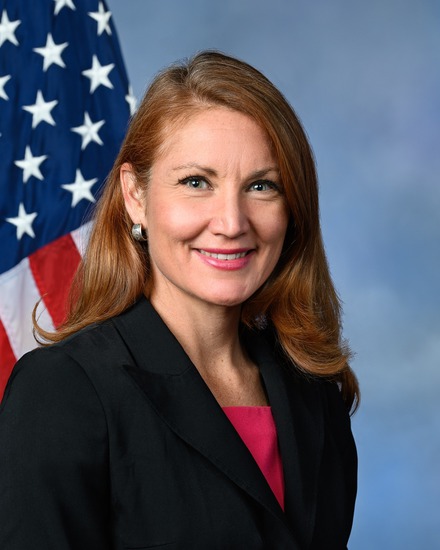
Rep. Melanie A. Stansbury
Total votes
2,694
all sessions
Attendance
98%
52 missed
Near the chamber average
With party
98%
of cast votes
Higher than 85% of chamber peers
Bipartisan score
1%
crosses aisle rarely
Lower than 86% of chamber peers
Sponsored
1,689
bills & resolutions
Higher than 89% of chamber peers
Committees
5
assignments
1,689 bills and resolutions
Sponsored bills
Total
1,689
Primary
56
Co-sponsor
1,633
This page
1,689
matching current filters
Expressing support for the designation of the week beginning on September 14, 2026, as "National Hispanic-Serving Institutions Week".
Maddy summaryThis House resolution expresses support for designating the week beginning September 14, 2026, as National Hispanic-Serving Institutions Week. It recognizes these colleges and universities, which enroll at least 25 percent Hispanic students, for their role in providing higher education access to low-income and underserved populations. The bill highlights that these institutions serve a significant portion of the nation's undergraduate students and contribute to economic mobility. It calls on the public and interested groups to observe the week with ceremonies and activities during Hispanic Heritage Month.
In committee Sep 17, 2026
1 co-sponsor
Supporting the designation of September 19, 2026, as "National Stillbirth Prevention and Awareness Day", recognizing tens of thousands of families in the United States that have endured a stillbirth, and seizing the opportunity to keep other families from experiencing the same tragedy.
Maddy summaryThis House resolution supports designating September 19, 2026, as National Stillbirth Prevention and Awareness Day to honor families affected by stillbirth and promote efforts to prevent future losses. The bill highlights that over 20,000 pregnancies in the United States end in stillbirth annually, noting significant racial disparities in these outcomes. It references the Maternal and Child Health Stillbirth Prevention Act of 2024, which allocates federal resources for related research and prevention activities. Additionally, the resolution requests that the President issue a proclamation encouraging nationwide programs to increase public awareness and support evidence-based prevention strategies.
In committee Sep 16, 2026
1 co-sponsor
MAGNET Act
Maddy summaryThe MAGNET Act amends the Magnet Schools Assistance Program to expand grant eligibility to state educational agencies and creates a new supplemental diversity grant for school districts seeking to promote racial and socioeconomic integration. These funds support specific initiatives such as implementing inclusive enrollment practices, providing free transportation, improving teacher recruitment, and establishing inter-district partnerships to reduce segregation. The bill requires recipients to submit annual reports on their progress toward diversity and achievement goals, with the federal government retaining the authority to enforce compliance or revoke funding if schools fail to demonstrate tangible improvements.
In committee Sep 16, 2026
1 co-sponsor
Food for Thought Act of 2026
Maddy summaryThe Food for Thought Act of 2026 establishes a competitive grant program administered by the Department of Agriculture to provide free meals and snacks to low-income college students at eligible institutions, including community colleges, historically Black colleges and universities, and other minority-serving schools. To qualify, an institution must have at least 20 percent of its undergraduate students eligible for Federal Pell Grants, and grants are awarded for a maximum duration of two years with funds restricted to meal preparation, outreach, and limited equipment purchases. Recipients are required to prioritize students who receive Pell Grants or report food insecurity, while also evaluating institutional policies that may create barriers to enrollment and referring students to other federal benefit programs like SNAP. The bill authorizes appropriations for fiscal years 2027 through 2032 and mandates that the Secretary of Agriculture submit reports to Congress on the program's impact on student retention and completion rates.
In committee Sep 16, 2026
1 co-sponsor
ASAP Act
Maddy summaryThis bill would require Medicare to cover early detection screening tests for Alzheimer's disease and related dementias starting January 1, 2028. It defines eligible tests as FDA-cleared genomic blood tests, blood product analyses, or equivalent medical imaging methods (like protein expression or whole genome sequencing) that detect pre-symptomatic or early-stage conditions. Medicare beneficiaries would receive this coverage without cost-sharing for these specific screenings. The bill amends Medicare coverage rules to explicitly include these tests under Section 1861(nnn) of the Social Security Act.
In committee Sep 16, 2026
1 co-sponsor
AM Radio for Every Vehicle Act of 2025
Maddy summaryThis bill requires all new passenger vehicles manufactured for sale in the U.S. to include AM radio as standard equipment (not an optional add-on) by 2027-2028, depending on manufacturer size. It mandates that AM radio receivers must be easily accessible to drivers and allows compliance through digital AM broadcast technology. During a transition period, manufacturers must clearly label vehicles without AM radio but cannot charge extra for this feature. The bill also mandates a GAO study on AM radio's role in emergency alerts and includes a 10-year sunset provision for the rule. It preempts state laws regarding AM radio access in vehicles.
Passed Sep 16, 2026
1 co-sponsor
Proposing an amendment to the Constitution of the United States to prohibit the use of slavery and involuntary servitude as a punishment for a crime.
Maddy summaryH.J. Res. 216 proposes a constitutional amendment to eliminate the exception in the Thirteenth Amendment that currently permits slavery and involuntary servitude as punishment for a crime. The resolution would amend the Constitution to explicitly state that neither slavery nor involuntary servitude may be imposed on anyone as a penalty for criminal conduct. This change would directly affect incarcerated individuals by prohibiting forced labor practices within the criminal justice system, while clarifying that voluntary work programs and community service alternatives remain permissible.
Criminal JusticeSupports Criminal JusticeProposes constitutional amendment to ban involuntary servitude as punishment, directly advancing criminal justice reform and protecting inmate rights.
Labor & EmploymentSupports Labor & EmploymentThe bill prohibits involuntary servitude and forced labor for prisoners, directly strengthening protections against exploitative labor practices.
In committee Sep 15, 2026
1 co-sponsor
Survivors’ Rights Restitution Act of 2026
Maddy summaryThe Survivors' Rights Restitution Act of 2026 establishes a federal compensation program administered by the Attorney General for victims of sexual assault, abuse, trafficking, or exploitation involving Jeffrey Epstein or Ghislaine Maxwell, as well as victims whose rights were violated by the federal government. Petitions are filed with the United States Court of Federal Claims and assigned to special adjudicators who must be mental health professionals or experts in victim services, civil rights law, or claims administration. The process is designed to be informal and less adversarial than standard litigation, with decisions required within 120 days and a minimum compensation award of $123,000. Compensation is funded by a dedicated Treasury account that accepts forfeited assets and voluntary contributions, and payments are exempt from federal income tax and means-tested benefit calculations.
Budget & TaxesSupports Budget & TaxesThe bill establishes a federal compensation program, directly impacting government spending and fiscal management to fund restitution for victims.
Criminal JusticeSupports Criminal JusticeThe bill establishes a federal compensation program for victims of sexual assault and other crimes, addressing victim rights and restitution within the criminal justice system.
HealthcareSupports HealthcareThe bill establishes a compensation program for victims of sexual assault and exploitation and requires adjudicators to be mental health professionals or victim services experts, indicating support for mental health and victim support within healt...
In committee Sep 15, 2026
1 co-sponsor
Renewing the African American Civil Rights Network Act
Maddy summaryThis bill, titled the Renewing the African American Civil Rights Network Act, extends federal funding for the African American Civil Rights Network by three years. The legislation directly affects the network's operations by amending the United States Code to change the authorization period from seven years to ten years. By updating this timeline, the bill ensures continued financial support for the organization's mission to promote civil rights and historical preservation. No new programs or policy changes are introduced; the measure solely focuses on renewing the existing funding authorization.
In committee Sep 15, 2026
1 co-sponsor
Ask Maddy
·
AI policy assistant
Ask Maddy about Melanie A. Stansbury
Scope: nevada
Hi! I can help you understand Melanie A. Stansbury's legislative record. What would you like to know?
Try one of these
i
Maddy answers using official bill text and legislative records. Always verify before sharing.
Sources cited inline