Maddy summaryThis bill directs the Secretary of the Interior to release federal claims to approximately 15.12 acres of land in Bonners Ferry, Idaho, that were originally platted under a specific section of the Revised Statutes. The primary mechanism is a recordable disclaimer of interest that must be issued within 90 days of the law's enactment. This action facilitates the transfer of ownership for the specified property, which is identified on a map dated December 22, 1893, while explicitly excluding any portion located within the Kootenai Indian Reservation.

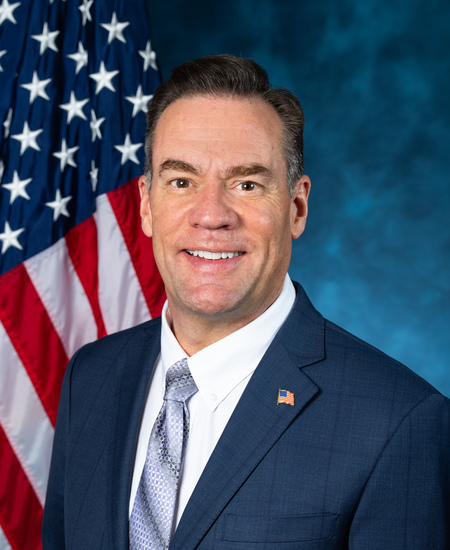
Rep. Russ Fulcher
Sponsored bills
Maddy summaryThe Title IX Clarification Act of 2026 amends federal education law to explicitly define the terms "sex," "female," and "male" based on biological characteristics. Specifically, it states that "sex" refers to an individual's biologically determined status as male or female, while "female" and "male" are defined by the presence of specific reproductive systems capable of producing ova or sperm, respectively. These definitions apply to all education programs and activities that receive federal financial assistance starting on the date the bill becomes law. The legislation aims to clarify existing statutes by removing ambiguity around biological sex definitions in the context of Title IX protections.
Maddy summaryThe Halt Abusive Internet Lawsuits Act of 2026 prohibits federal and state legal claims related to wiretapping or eavesdropping when information is collected for commercial digital activities. This applies to practices such as using cookies, pixels, chatbots, and analytics tools to facilitate sales, marketing, or customer interactions. The bill directly affects businesses and service providers that use these standard digital commerce tools by shielding them from specific privacy-related lawsuits. Additionally, any existing legal actions based on these grounds would be required to stop once the law is enacted.
Maddy summaryThe Packaging and Claims Knowledge Act of 2025 requires companies to ensure that recyclable, compostable, and reusable claims on consumer product packaging are accurate and supported by third-party certification. The bill mandates that recyclable claims must include information about local recycling availability, while compostable claims must be backed by scientific evidence and clearly explain disposal limitations. Companies must also provide actual reuse systems or products for reusable packaging claims, and the Federal Trade Commission will issue guidance on compliance without creating binding regulations.
Maddy summaryThe Foreign Propaganda Disclosure Act amends the Foreign Agents Registration Act to explicitly include social media influencers in its regulatory scope. The bill defines a social media influencer as any individual who maintains a monetized account on a social media platform, using an existing definition from the Trafficking Victims Prevention and Protection Reauthorization Act of 2022. By making this addition, the legislation requires these specific digital content creators to comply with the same registration and disclosure obligations currently applied to other foreign agents.
Maddy summaryThis bill streamlines geothermal exploration on federal lands by defining small-scale "geothermal exploration projects" (e.g., limited drilling with <8 acres disturbance, <180 days duration, and 3-year land restoration). It exempts such projects from major federal environmental reviews under NEPA, requires leaseholders to provide 30-day notice before drilling, and establishes "geothermal leasing priority areas" on eligible federal land. The Secretary must designate these priority areas within 3 years (considering economic viability and transmission access), review them every 5 years, and use programmatic environmental reviews for future leasing. The bill directly affects geothermal leaseholders and federal agencies managing public lands, reducing regulatory hurdles for initial exploration while creating a structured framework for future leasing.
Maddy summaryThe Stealth Bot Prohibition Act makes it illegal to use automated software, known as stealth bots, to access websites without revealing their identity or purpose. Specifically, the law bans deploying these bots in ways that harm online services and prohibits disguising them as human users when interacting with generative artificial intelligence systems. Violations can result in civil penalties of up to $53,000 per incident, which are enforced by the Federal Trade Commission and state attorneys general. The bill defines a stealth bot as any program that scrapes or scans the internet without disclosing its nature or intended use to the website operator.
Maddy summaryThe Wildfire Reduction Market Expansion Act of 2026 updates the Clean Air Act to broaden the definition of renewable biomass eligible for carbon credits. It specifically allows materials from forest management, such as slash, storm debris, and wood residuals, to be counted as renewable fuel if they come from sustainably managed lands or public forests designated for fuel reduction. The bill also includes vegetation cleared from defensible space around buildings and from wildfire risk reduction projects in the wildland-urban interface. By clarifying these categories and establishing certification requirements, the legislation aims to increase the supply of biomass available for generating renewable energy credits.
Maddy summaryHR 6213, the Heat Workforce Standards Act of 2025, prohibits the U.S. Department of Labor from finalizing, implementing, or enforcing OSHA's proposed "Heat Injury and Illness Prevention" standard (published August 30, 2024). This bill directly blocks the specific regulatory proposal targeting heat safety in both outdoor and indoor work settings. It does not create new requirements or affect workers; it solely prevents the implementation of the existing OSHA proposal. The bill is procedural, focusing on halting a regulatory action rather than establishing new policy.
Maddy summaryHR 4986, the Parents Opt-in Protection Act, amends federal law to require written permission before schools administer certain student surveys or evaluations. It directly affects students (especially minors) and their parents, requiring schools to obtain prior written consent from the student (if an adult or emancipated minor) or the parent (for minors) for each specific survey. The bill clarifies that schools cannot force participation without this written consent for surveys related to sensitive topics like health or behavior. This change updates existing consent rules from verbal permission to a written requirement for targeted school assessments.