Maddy summaryThis House resolution formally recognizes the 25th anniversary of the September 11, 2001, terrorist attacks and designates September 11, 2026, as a National Day of Service and Remembrance. It honors the actions of first responders, recovery workers, volunteers, and military personnel who aided victims in New York, Washington, DC, and Shanksville, PA. The bill urges all Americans to observe this day through personal acts of service, such as volunteering, displaying the flag, or participating in memorial events. It also encourages the public to maintain a spirit of unity and compassion throughout the year in memory of those affected by the attacks.

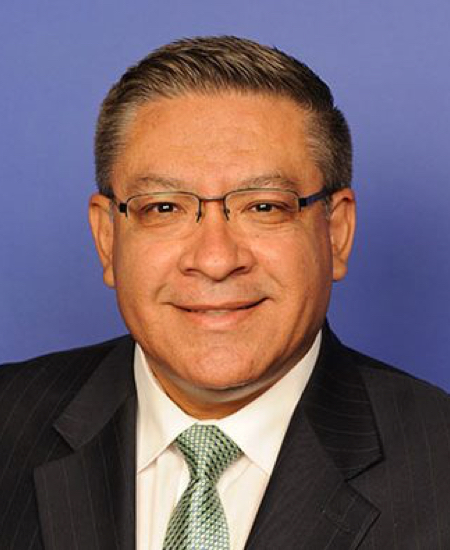
Rep. Salud O. Carbajal
Sponsored bills
Maddy summaryThis House resolution expresses support for designating the week of September 19 through September 26, 2026, as National Estuaries Week to raise public awareness about the importance of these coastal ecosystems. The bill highlights that estuaries support a significant portion of the U.S. population and economy while providing critical services such as flood control, water filtration, and habitat for fish and wildlife. It acknowledges ongoing threats to estuary health, including pollution and sea level changes, and recognizes the efforts of government agencies, organizations, and individuals working to protect and restore these areas.
Maddy summaryThe Strengthening Coast Guard Communities Act of 2026 grants the Commandant of the Coast Guard the authority to enter into intergovernmental support agreements on behalf of the department in which the service is operating. This provision allows the Commandant to act with the same legal standing as the Secretary of that department for these specific agreements. The bill requires the Commandant to submit a written notification to the relevant Senate and House committees within 60 days of exercising this authority, detailing any agreements made.
Maddy summaryThis bill amends the Fair Labor Standards Act to clarify that direct sellers and qualified real estate agents (as defined under IRS rules) are not considered "employees" under federal labor law. It directly affects these workers by excluding them from FLSA protections like minimum wage and overtime pay. The key provision inserts a new definition into the law, changing how these professions are classified for labor rights purposes. This is a technical definitional change, not a new policy or program.
Maddy summaryThis House resolution marks the 25th anniversary of the September 11, 2001 terrorist attacks by formally honoring the memory of the nearly 3,000 victims and recognizing the sacrifices made by first responders, military personnel, and the passengers of United Airlines Flight 93. The bill acknowledges the ongoing health challenges faced by survivors and responders, highlighting the role of the World Trade Center Health Program in providing long-term medical support. It also credits charitable organizations and community groups that have continued to assist victims' families and veterans over the past two decades. Finally, the resolution urges the American public to observe the anniversary with ceremonies and reaffirms Congress's commitment to remembering the events and lessons of that day.
Maddy summaryThe 9-8-8 Implementation Act of 2026 expands federal funding and mandates insurance coverage for behavioral health crisis services, directly affecting individuals experiencing mental health or substance use emergencies as well as the providers who serve them. The bill authorizes grants to upgrade local lifeline call centers, build new crisis stabilization facilities, and train a larger workforce of behavioral health professionals. It requires Medicare, Medicaid, private group health plans, TRICARE, and other federal insurance programs to cover crisis response services with financial terms no more restrictive than standard medical care. Additionally, the legislation establishes a federal panel to develop training protocols for 9-1-1 dispatchers to better connect callers to appropriate crisis care rather than law enforcement responses.
Maddy summaryThe STORM FORTIFIED and Wildfire Prepared Act authorizes $100 million annually from 2027 through 2036 to establish state-level revolving loan funds that provide grants to homeowners for installing storm-resistant roofs and wildfire-prepared home improvements. To receive federal capitalization, states must contribute at least 35 percent of the grant amount to their own fund, which then lends money to state agencies at an interest rate of no more than 1 percent. Homeowners are eligible for grants up to $10,000 if they meet specific criteria, including owning a primary residence, maintaining required property insurance, and ensuring the work is verified by qualified evaluators. The bill requires states to forgive the homeowner's repayment obligation for individuals with incomes below 120 percent of the area median income, while excluding new construction, condominiums, and mobile homes from participation.
National Law Enforcement Officers Remembrance, Support and Community Outreach Act. [ sic ] This bill temporarily directs the Department of the Interior to award a grant to the National Law Enforcement Officers Memorial Fund for the expenses associated with operating and enhancing the community outreach, public education, and officer safety and wellness programs of the National Law Enforcement Museum.
Maddy summaryThe First-Time Homebuyer Affordability Act amends the Internal Revenue Code to exempt qualified mortgage bonds from the federal government's annual volume cap on tax-exempt securities. By removing this limit, the bill allows for a greater issuance of these specific bonds, which are typically used to finance home loans for first-time buyers. This change directly affects financial markets and lenders by enabling them to issue more tax-advantaged debt without being constrained by existing statutory limits. The provision applies to all obligations issued after the date of the Act's enactment.
Maddy summaryThe Wildfire Response and Readiness Act establishes a national prescribed fire program that requires federal agencies to increase the acreage of controlled burns on public lands by 10 percent annually for a decade. It creates a ten-year national wildfire plan to coordinate landscape-scale forest restoration, reforestation, and watershed protection efforts across federal, state, tribal, and private boundaries. The bill also authorizes new funding for community resilience, including grants for home hardening, satellite monitoring technology, and a joint office dedicated to fire environment data and prediction. Additionally, it modernizes the firefighting workforce by establishing training academies, expanding civilian conservation centers, and providing liability protections for non-federal partners conducting prescribed fires.