

Maddy summaryThis bill directs the Department of Homeland Security to conduct a large-scale exercise within four years of enactment to test preparedness for agroterrorism, which involves terrorist attacks using biological agents against the U.S. agriculture and food supply systems. The exercise will simulate scenarios where such agents are smuggled into the country or deployed domestically, requiring participants from federal, state, local, and private sectors to practice coordinating responses and managing widespread disruptions. Following the drill, the Secretary of Homeland Security must submit a report to Congress detailing the findings, lessons learned, and recommendations for improving national security measures to better counter agroterrorism threats.
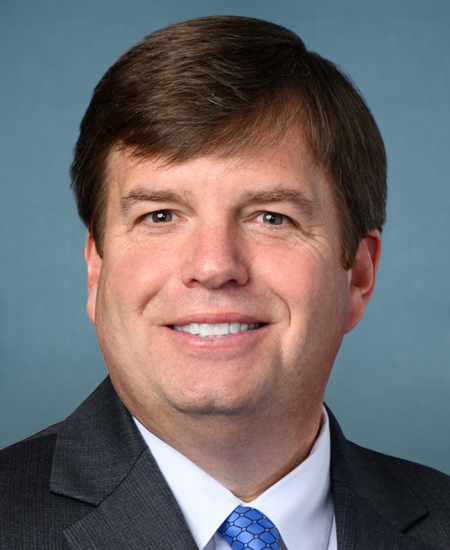
Rep. Dale W. Strong
Sponsored bills
Maddy summaryHR 5267, the American Franchise Act, clarifies when franchisors can be considered joint employers of franchisee employees under federal labor laws. It defines "substantial direct and immediate control" over essential employment terms like wages, benefits, hours, hiring, and discipline - requiring franchisors to actively set these terms to be deemed joint employers. The bill explicitly excludes routine brand standards, training, or minimal safety requirements from constituting such control. This directly affects franchisors and franchisees by limiting joint employer liability to cases where franchisors exert significant, ongoing influence over core employment decisions. The law applies prospectively to new cases after enactment, not past disputes.
Maddy summaryThis House resolution marks the 25th anniversary of the September 11, 2001 terrorist attacks by formally honoring the memory of the nearly 3,000 victims and recognizing the sacrifices made by first responders, military personnel, and the passengers of United Airlines Flight 93. The bill acknowledges the ongoing health challenges faced by survivors and responders, highlighting the role of the World Trade Center Health Program in providing long-term medical support. It also credits charitable organizations and community groups that have continued to assist victims' families and veterans over the past two decades. Finally, the resolution urges the American public to observe the anniversary with ceremonies and reaffirms Congress's commitment to remembering the events and lessons of that day.
Maddy summaryHR 7008, the Stop Insider Trading Act, restricts Members of Congress, their spouses, and dependent children from purchasing certain investments like stocks in publicly traded companies. It requires 7-14 days' advance public notice before selling any such investment, including the sale date, description, and number of shares. Exceptions apply for work-related transactions (e.g., employer compensation) and reinvesting dividends. Violations trigger a fee of $2,000 or 10% of the investment’s value (whichever is greater), plus any net gain, paid from personal funds - not congressional allowances or campaign donations. The bill aims to prevent conflicts of interest by increasing transparency around congressional financial dealings.
Maddy summaryThe PERFORM Act restricts the Postmaster General from receiving bonuses or performance-based pay if the Postal Service runs a financial deficit, misses service targets, or fails to pass its annual audit. To enforce this, the law requires the Postmaster General to submit an annual report to Congress detailing all executive compensation, the metrics used to justify those payments, and the agency's financial and service performance data. Additionally, the Postal Service Inspector General must review these reports to ensure compliance with the new restrictions. These measures directly affect the compensation of senior Postal Service leadership and increase transparency regarding the agency's financial and operational results.
Maddy summaryThe Tuskegee Airmen Memorial Act of 2026 authorizes the organization Tuskegee Airmen, Inc. to build a commemorative monument on federal land in Washington, D.C., honoring the original Tuskegee Airmen who served in World War II. This legislation allows the group to accept private donations and cover all costs for the project without using federal funds, while requiring any leftover money to be deposited into specific government accounts. The bill also mandates that the memorial be constructed in compliance with existing federal standards for commemorative works.
Maddy summaryThis bill, titled the National Security Interstate Pipeline Act, allows the President to designate specific oil and natural gas pipelines as critical to national security, thereby placing them under exclusive federal control for siting and permitting. Once designated, the Federal Energy Regulatory Commission becomes the sole lead agency responsible for approving these projects, bypassing state and local regulations that could delay construction. The legislation also grants pipeline companies the right to use eminent domain to acquire necessary land after a good-faith negotiation attempt and permits the President to waive certain environmental laws if delays threaten national defense. Additionally, the bill sets strict timelines for federal and state agencies to complete reviews, deeming requirements satisfied if actions are not taken within specified periods, while requiring the President to report these designations and waivers to Congress.
Maddy summaryThis bill requires pharmacy benefits managers (PBMs) administering prescription drug benefits for federal employee health plans to reimburse pharmacies at specific rates, including the national average drug cost plus a small percentage or $50, whichever is lower. It prohibits PBMs from favoring their own pharmacies, restricting patient choice, or reducing pharmacy payments after claims are processed. The bill establishes $10,000 civil penalties for violations, with debarment from federal health plans after 10 penalties in 10 years. This directly affects PBMs, in-network pharmacies, and federal health benefit plans covering millions of federal employees and their families. The law aims to ensure fair reimbursement practices and maintain pharmacy choice under the Federal Employees Health Benefits Program.
This bill designates the facility of the United States Postal Service located at 401 North Elm Street in Tuskegee, Alabama, as the "Tuskegee Airmen Memorial Post Office".
Maddy summaryHR 7651, the Chloe Cole Act of 2026, prohibits healthcare providers from performing certain medical interventions on minors under 18 aimed at altering physical development to align with gender identity. These "covered interventions" include puberty blockers, hormone treatments, and specific surgeries, but exclude medically necessary care for conditions like disorders of sexual development or traumatic injuries. The bill creates a federal civil lawsuit right for affected minors or their parents against providers who perform such interventions, allowing claims for damages including emotional distress and punitive awards, with strict liability for providers after the law's enactment. It explicitly allows exceptions for legitimate medical treatments and requires providers to prove such exceptions apply if challenged.