Maddy summaryThis bill creates a new National Fraud Enforcement Division within the Department of Justice to lead efforts against fraud targeting the federal government, federally funded programs, and American citizens. The division will be headed by an Assistant Attorney General appointed by the President and Senate, who will oversee complex investigations, guide local prosecutors, and coordinate with other federal agencies to stop organized fraud schemes. Additionally, the leader of this new unit will set national enforcement priorities and suggest legal or regulatory changes to fix systemic weaknesses that allow fraud to occur.

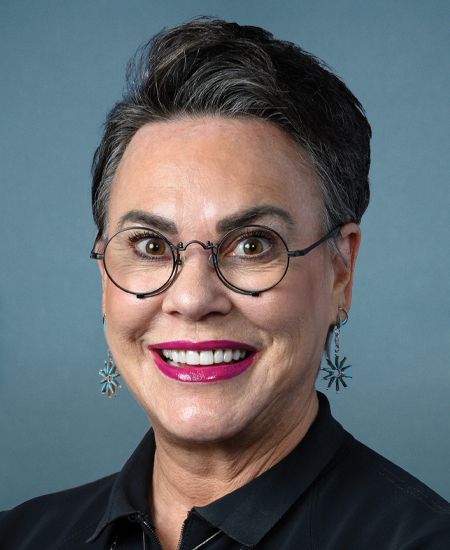
Rep. Harriet M. Hageman
Sponsored bills
Maddy summaryThis bill, known as the Ratepayer Protection Act, modifies federal energy laws to ensure that large industrial customers pay for the specific infrastructure upgrades needed to serve their high electricity demands. It directly affects non-residential facilities with a peak power usage of 100 megawatts or more, requiring utilities to charge these customers the full incremental cost of any necessary generation, transmission, or distribution improvements. Under the new rules, large customers must also provide financial guarantees or contributions before such upgrades are made, ensuring utilities can recover costs even if the customer leaves the contract early. State regulators have two years to implement these standards, though the bill exempts utilities in states that have already enacted similar measures or are actively considering them.
Maddy summaryThis bill, known as the License to Drill Act, extends the deadline for collecting fees on new oil and gas drilling permit applications from 2026 to 2037 under the Mineral Leasing Act. It requires the Secretary of the Interior to continue collecting these fees for each new permit application throughout the extended period. The bill also directs that all fees collected between fiscal years 2027 and 2037 be transferred to the BLM Permit Processing Improvement Fund instead of being distributed as previously required. These changes affect the Bureau of Land Management's administrative process for managing oil and gas leasing on federal lands.
Maddy summaryThis bill, known as the Safe Cloud Storage Act, would provide legal protection for private companies that store child sexual abuse material on behalf of law enforcement agencies. It directly affects technology firms and cloud storage providers that contract with police departments and prosecutors to keep digital evidence of child exploitation. The legislation limits liability for these approved vendors by shielding them from civil lawsuits and criminal charges when performing their contractual duties, except in cases of intentional misconduct, negligence, or acting with reckless disregard. To qualify for this protection, vendors must meet strict cybersecurity requirements including end-to-end encryption, regular independent audits, keeping data within the United States, and maintaining detailed records of who accesses the sensitive material. The bill also establishes procedures for notifying the Department of Justice about contracts and ensures evidence is preserved if a law enforcement agency fails to pay or breaches the agreement.
Maddy summaryThis bill prevents public colleges receiving federal funding from denying religious student groups access to campus facilities and official recognition - same as other student organizations. It requires equal treatment for religious groups regarding meeting spaces, events, and institutional support, prohibiting discrimination based on religious beliefs or practices. The law directly affects all public universities participating in federal student aid programs (over 400 institutions). It mandates policy changes to ensure religious groups receive the same access and benefits as secular clubs.
Maddy summaryThis bill requires all new passenger vehicles manufactured for sale in the U.S. to include AM radio as standard equipment (not an optional add-on) by 2027-2028, depending on manufacturer size. It mandates that AM radio receivers must be easily accessible to drivers and allows compliance through digital AM broadcast technology. During a transition period, manufacturers must clearly label vehicles without AM radio but cannot charge extra for this feature. The bill also mandates a GAO study on AM radio's role in emergency alerts and includes a 10-year sunset provision for the rule. It preempts state laws regarding AM radio access in vehicles.
Maddy summaryThis resolution supports the designation of the week from September 13 through September 19, 2026, as National Truck Driver Appreciation Week. It aims to raise public awareness about the contributions of professional truck drivers and promote respect for their essential role in the economy. The House formally thanks these workers and encourages the public to recognize the designated week.
Maddy summaryThe STOP Improper Licensing Act requires the Federal Motor Carrier Safety Administration to audit state procedures for issuing commercial driver's licenses to non-residents within three years of enactment. The audit focuses on identifying cases where licenses were issued without verifying lawful presence or were retained after an individual's legal status expired. States found to have significant compliance issues must implement corrective measures, with those having error rates over 25 percent subject to annual follow-up audits for three years. If a state fails to respond to required actions, the federal government can withhold all FMCSA funding until the state returns to compliance.
Stop Secret Spending Act of 2025 This bill expands a requirement for federal agencies to report expenditures on the USAspending.gov website to include other transaction agreement expenditures. (Other transaction agreements, or OTAs, are contractual instruments other than standard procurement contracts, grants, or cooperative agreements; they are exempt from many federal procurement laws and regulations). Under current law, federal agencies must report expenditures on federal awards to USAspending.gov with the term federal award defined as federal grants, loans, cooperative agreements, contracts, and certain other types of expenditures. This bill expands the definition of federal award to include expenditures under OTAs, and therefore such expenditures must be included on the USAspending.gov website. The Department of the Treasury must ensure that data relating to OTAs are automatically transmitted to the website and a centralized view of this data is available on the website. Treasury must also annually post on the USAspending.gov website a report that includes (1) the total amount of federal spending on federal awards for which data has not been posted on the website, and (2) the reason why such spending data was not posted. For 10 years after enactment, the Office of Inspector General of specified federal agencies must periodically submit to Congress and make publicly available a report assessing the agency's spending data and use of data standards.
Maddy summaryThis bill, known as the Congressional Records Protection Act, aims to shield the personal and official communications of Members of Congress and their employees from government searches and subpoenas. It directly affects federal, state, and local law enforcement agencies by prohibiting them from obtaining records related to these individuals unless the person is the specific target of a criminal investigation. Under the new rules, agencies must notify the affected Member or employee before searching their records, except in urgent cases where notice could endanger lives or destroy evidence. Additionally, any materials found during a search that belong to a protected individual cannot be reviewed for 30 days to ensure they are not accessed without proper oversight.