

In committee Sep 24, 2026
1 co-sponsor
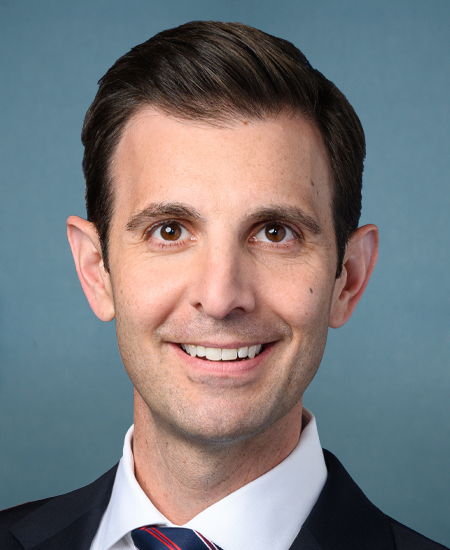
Rep. Christopher R. Deluzio
Total votes
1,879
all sessions
Attendance
100%
8 missed
Higher than 96% of chamber peers
With party
96%
of cast votes
Near the chamber average
Bipartisan score
2%
crosses aisle rarely
Near the chamber average
Sponsored
1,128
bills & resolutions
Higher than 90% of chamber peers
Committees
6
assignments
1,128 bills and resolutions
Sponsored bills
Total
1,128
Primary
59
Co-sponsor
1,069
This page
1,128
matching current filters
In committee Sep 24, 2026
0 co-sponsors
In committee Sep 24, 2026
1 co-sponsor
In committee Sep 16, 2026
1 co-sponsor
Reverse Big Ugly Tax Breaks for Data Centers Act
Maddy summaryThe Reverse Big Ugly Tax Breaks for Data Centers Act removes specific tax incentives for large-scale data centers and artificial intelligence facilities. It excludes these facilities from bonus depreciation, a provision that currently allows businesses to deduct the full cost of certain equipment in the year it is purchased. Additionally, the bill prevents these properties from qualifying as opportunity zone business property, which would otherwise offer significant tax benefits for investments in designated areas. The legislation targets structures with a power capacity exceeding 50 megawatts that are dedicated to data storage, processing, or AI operations.
Budget & TaxesOpposes Budget & TaxesThe bill removes specific tax incentives for large-scale data centers and AI facilities, thereby limiting tax benefits for certain businesses.
TechnologyOpposes TechnologyThe bill removes tax incentives for data centers and AI facilities, which could hinder investment and development in the technology sector.
In committee Sep 16, 2026
1 co-sponsor
Stop Corporate Takeovers of Physicians Act of 2026
Maddy summaryThe Stop Corporate Takeovers of Physicians Act of 2026 prohibits non-physician entities from owning, controlling, or employing licensed medical professionals, requiring that medical practices be majority-owned and controlled by the clinicians who work there. The bill grants physicians and other advanced practice providers protections against non-compete agreements and bans health care providers from interfering with clinical judgment through administrative controls such as limiting patient visit times or dictating diagnostic codes. Additionally, it imposes strict restrictions on management services organizations to prevent them from exercising de facto control over medical practices, including prohibitions on controlling hiring, compensation, and billing decisions. Enforcement is handled by the Federal Trade Commission, which can treat violations as unfair business practices, while individuals and state attorneys general are also granted the right to sue for damages and injunctive relief.
HealthcareSupports HealthcareThe bill aims to protect clinical judgment and prevent non-physician interference in medical practices, which can improve patient care and access to quality healthcare by ensuring decisions are medically driven.
Labor & EmploymentSupports Labor & EmploymentThe bill protects physicians and advanced practice providers from corporate control and non-compete agreements, enhancing their employment rights and autonomy.
In committee Sep 16, 2026
1 co-sponsor
ASAP Act
Maddy summaryThis bill would require Medicare to cover early detection screening tests for Alzheimer's disease and related dementias starting January 1, 2028. It defines eligible tests as FDA-cleared genomic blood tests, blood product analyses, or equivalent medical imaging methods (like protein expression or whole genome sequencing) that detect pre-symptomatic or early-stage conditions. Medicare beneficiaries would receive this coverage without cost-sharing for these specific screenings. The bill amends Medicare coverage rules to explicitly include these tests under Section 1861(nnn) of the Social Security Act.
In committee Sep 16, 2026
1 co-sponsor
TRAPS Act
Maddy summaryThe TRAPS Act establishes a federal Task Force on Payment Scams, chaired by the Treasury Secretary, to coordinate efforts across agencies like the FTC, Federal Reserve, and consumer groups. The Task Force will study current scam tactics (such as fake text messages or fraudulent payment platforms), evaluate prevention strategies, and develop recommendations to help consumers avoid and report scams. It must submit an initial report within one year and annual updates, focusing on improving federal-state coordination and education programs. This bill directly affects government agencies and stakeholders participating in the Task Force, with the goal of protecting consumers from evolving payment scams.
In committee Sep 16, 2026
1 co-sponsor
Combating Illicit Xylazine Act
Maddy summaryHR 1266, the Combating Illicit Xylazine Act, adds xylazine - a veterinary sedative increasingly found in illicit drug mixtures - to Schedule III of the Controlled Substances Act, regulating its use and trafficking. It directly affects veterinarians, animal owners, and manufacturers by allowing xylazine to be legally dispensed for animal use under specific veterinary prescriptions, while prohibiting non-veterinary human use. The bill includes transition periods (60 days for practitioners, 1 year for labeling) to ease compliance for manufacturers and practitioners, and requires the DEA and FDA to expedite necessary applications. It also mandates two congressional reports on xylazine's illicit use and trafficking patterns, and directs the Sentencing Commission to review penalties for offenses involving xylazine.
Passed Sep 16, 2026
1 co-sponsor
AM Radio for Every Vehicle Act of 2025
Maddy summaryThis bill requires all new passenger vehicles manufactured for sale in the U.S. to include AM radio as standard equipment (not an optional add-on) by 2027-2028, depending on manufacturer size. It mandates that AM radio receivers must be easily accessible to drivers and allows compliance through digital AM broadcast technology. During a transition period, manufacturers must clearly label vehicles without AM radio but cannot charge extra for this feature. The bill also mandates a GAO study on AM radio's role in emergency alerts and includes a 10-year sunset provision for the rule. It preempts state laws regarding AM radio access in vehicles.
Passed Sep 16, 2026
1 co-sponsor
Ask Maddy
·
AI policy assistant
Ask Maddy about Christopher R. Deluzio
Scope: montana
Hi! I can help you understand Christopher R. Deluzio's legislative record. What would you like to know?
Try one of these
i
Maddy answers using official bill text and legislative records. Always verify before sharing.
Sources cited inline