Maddy summaryThis bill directs the Secretary of Commerce to conduct a study on critical infrastructure manufacturing in the U.S. It requires identifying products currently imported due to domestic manufacturing gaps, analyzing the job impacts and costs of making them domestically, and assessing feasibility for rural areas or industrial parks. The study must be completed within one year, with a public report to Congress within 18 months containing findings and recommendations. The bill does not create new regulations or funding - it only mandates a study to inform future policy decisions about reshoring critical infrastructure products.

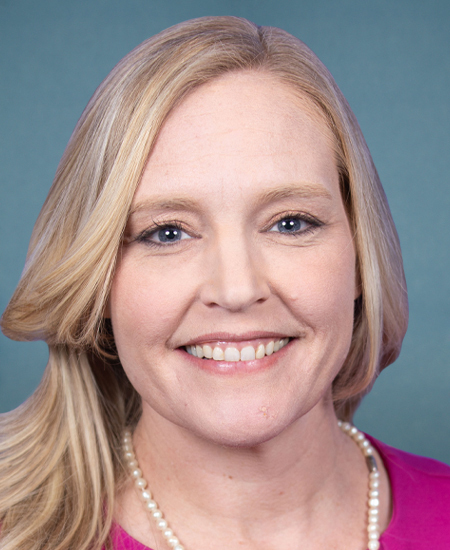
Rep. Erin Houchin
Sponsored bills
This bill designates the facility of the United States Postal Service located at 501 West Memorial Drive in Muncie, Indiana, as the "Officer Blake A. Reynolds Post Office Building".
Maddy summaryThis bill designates the American mastodon as the national fossil mammal and the Tyrannosaurus rex as the national fossil dinosaur for the United States. It achieves this by amending Title 36 of the U.S. Code to officially recognize these specific species within the legal framework for national symbols. The changes update the relevant chapter heading to include "fossil" and add a new section to formally establish these designations.
Maddy summaryThe Science of Reading Act of 2026 amends the Elementary and Secondary Education Act to require states receiving federal literacy development grants to align their reading instruction with "science of reading" principles. It explicitly prohibits the use of the "three-cueing model" (a method teaching word recognition through pictures, context, or guessing) and defines science of reading as evidence-based instruction in phonics, phonemic awareness, vocabulary, and comprehension. States must describe this alignment in grant applications, and federal funds for literacy programs will only support initiatives meeting these standards. This directly affects states and school districts administering ESEA-funded literacy programs starting in 2026.
Maddy summaryThe Chip EQUIP Act restricts federal funding for semiconductor manufacturing equipment made by foreign entities designated as security concerns (or their subsidiaries). It prohibits the use of such "ineligible" equipment - defined as completed, fully assembled tools like etching, lithography, or inspection machines - in projects receiving federal financial assistance for 10 years. The bill requires federal agreements to include this ban, with limited waivers allowed only if the equipment is unavailable from U.S. or allied sources, was refurbished by a foreign entity of concern but originally made by a non-concern entity, or meets export rules and national security criteria. This directly affects companies receiving federal funds for semiconductor manufacturing facilities.
Maddy summaryHR 5967 establishes a federal task force led by the FTC and DOJ to combat scams. The task force, including agencies like the FBI, SEC, and Social Security Administration, will develop a national strategy using existing tools such as the Consumer Sentinel Network and Internet Crime Complaint Center. Key actions include public education, coordination with industry (like banks and social media platforms), and enforcement using current laws against fraud and money laundering. The task force must report to Congress within one year and dissolve after 10 years.
Maddy summaryThis bill prevents public colleges receiving federal funding from denying religious student groups access to campus facilities and official recognition - same as other student organizations. It requires equal treatment for religious groups regarding meeting spaces, events, and institutional support, prohibiting discrimination based on religious beliefs or practices. The law directly affects all public universities participating in federal student aid programs (over 400 institutions). It mandates policy changes to ensure religious groups receive the same access and benefits as secular clubs.
Maddy summaryThe Data BRIDGE Act requires the Federal Communications Commission (FCC) to update its national broadband map within 180 days of enactment by adding agricultural areas as a dedicated layer. This change will directly affect the FCC, USDA, state governments, and broadband providers by incorporating agricultural land data into the map used to identify broadband coverage gaps. The bill mandates the FCC to consult with the USDA, Commerce Department, states, and other stakeholders to integrate existing agricultural data into the map. The goal is to improve accuracy in identifying broadband needs in rural farming communities, though it does not directly fund infrastructure.
Maddy summaryThis bill requires all new passenger vehicles manufactured for sale in the U.S. to include AM radio as standard equipment (not an optional add-on) by 2027-2028, depending on manufacturer size. It mandates that AM radio receivers must be easily accessible to drivers and allows compliance through digital AM broadcast technology. During a transition period, manufacturers must clearly label vehicles without AM radio but cannot charge extra for this feature. The bill also mandates a GAO study on AM radio's role in emergency alerts and includes a 10-year sunset provision for the rule. It preempts state laws regarding AM radio access in vehicles.