

Maddy summaryThe Vet CENTERS for Mental Health Act of 2026 requires the Secretary of Veterans Affairs to ensure that every state meets a specific minimum number of mental health treatment centers within one year of enactment. For states in the contiguous United States, this minimum is calculated as the greater of one center per 30,000 square miles of land or one center per 55,000 veterans based on census data. Non-contiguous states and territories must maintain at least one center or match their existing count from January 1, 2020, whichever is higher. To achieve these targets, the Secretary may open new facilities using buildings provided by state, local, or tribal governments, and can establish outstations in place of full centers if multiple additional sites are needed in a single state.
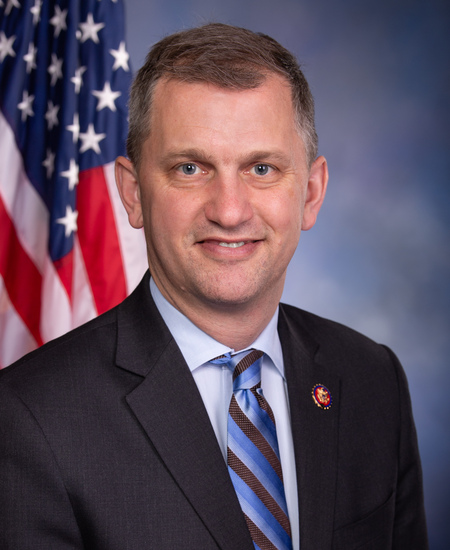
Rep. Sean Casten
Sponsored bills
Maddy summaryThis bill designates the Route 66 National Historic Trail, covering approximately 2,400 miles from Chicago, Illinois, to Santa Monica, California, along all historical alignments of U.S. Highway 66 (1926-1985). It directs the National Park Service to administer the trail while respecting its unique character, requiring tribal consultation for significant impacts on Native American tribes, and explicitly prohibiting land acquisition beyond 1/4 mile on either side of the trail. The bill clarifies it does not create buffer zones, disrupt energy infrastructure (including pipelines or renewable projects), or designate the trail as part of the National Park System, while affirming existing authority for easements and rights-of-way.
Maddy summaryThe NO PROFIT Act prohibits social media platforms from selling or providing paid, early access to posts made by federal government officials and their immediate family members. It also makes it illegal for any person to buy or sell securities, commodities, or prediction market contracts while possessing this non-public information before it is available to the general public. The bill targets a wide range of officials, including the President, members of Congress, executive branch employees, and judges, as well as their spouses and dependent children. Violations by social media platforms result in civil penalties equal to the revenue earned from the unauthorized early access, while individuals who trade on this information face enforcement actions by the Securities and Exchange Commission or the Commodity Futures Trading Commission.
Maddy summaryThe Critically Endangered Animals Conservation Act of 2026 establishes a dedicated fund within the existing Multinational Species Conservation Fund to provide competitive grants for the protection of animal species classified as endangered or critically endangered by the International Union for Conservation of Nature. The Secretary of the Interior will manage this program, awarding financial assistance to foreign wildlife authorities and qualified organizations to support projects such as habitat restoration, illegal trade enforcement, and scientific research aimed at recovering wild populations outside the United States. To ensure accountability and effectiveness, grant recipients must submit periodic progress reports that are generally made available to the public, while specific restrictions prohibit the use of funds for captive breeding unless it is strictly necessary for releasing animals back into the wild. The legislation authorizes $5 million per year in appropriations from fiscal years 2027 through 2032 and requires the Secretary to report on the program's results to Congress every two years.
Maddy summaryThis bill designates the U.S. Postal Service facility at 14855 South Van Dyke Road in Plainfield, Illinois, as the "Staff Sergeant Jose Dueñez Jr. Post Office Building." It directly affects the postal facility and all official references to it. The key provision requires that any future law, document, or record referring to the location must use the new name. This is a purely procedural renaming with no funding, policy changes, or impact beyond official nomenclature.
Maddy summaryThis bill names a U.S. Postal Service facility at 1300 East Northwest Highway in Palatine, Illinois, as the "Bernie Bluestein Post Office Building." It updates all official references in federal laws, documents, and records to reflect this new name for the location. The change is purely administrative and affects how the building is identified in government materials. No new policies or funding are involved; it is a ceremonial designation.
Maddy summaryHR 2466 designates the U.S. Postal Service facility at 5225 Harrison Avenue in Rockford, Illinois, as the "Jay P. Larson Post Office Building." The bill updates all federal references - including laws, maps, and official documents - to use this new name for the building. It does not create new policies or affect residents, businesses, or postal services. This is a ceremonial naming bill with no financial or operational changes.
Maddy summaryThe Lowering Energy Costs through Grid Modernization Act encourages utilities to upgrade power lines by replacing old conductors with more efficient ones that carry more electricity and generate less heat. To support these upgrades, the bill allows for faster federal environmental reviews and makes it easier to secure permits for projects that fit within existing land rights. Additionally, the legislation expands a federal tax credit to include these high-performance transmission upgrades, offering a higher credit rate for smaller projects or those meeting specific domestic content requirements.
Maddy summaryThis bill reauthorizes and expands the Accelerating Access to Critical Therapies for ALS Act through 2031, extending funding for research into treatments for amyotrophic lateral sclerosis. It requires drug manufacturers to share interim clinical trial data with the FDA to better assess the progress of investigational drugs and clarifies that phase 3 clinical trial definitions include combined phase 2/3 trials and planned trials not yet enrolling participants. The legislation also mandates the FDA to publish an updated five-year action plan for ALS and other rare neurodegenerative diseases, including resource needs and coordination strategies with broader disease communities. Additionally, the bill requires the Government Accountability Office to submit a report on the program's implementation four years after enactment.
Maddy summaryThe No Passes for Polluters Act of 2026 requires Congress to explicitly approve any exemptions from Clean Air Act regulations before the President or federal agencies can use them. Under this bill, the President must submit a detailed message to both houses of Congress explaining the reasons and facts behind any proposed exemption, which then triggers a special legislative process. To pass such an exemption, a joint resolution must be approved by a two-thirds vote in both the Senate and the House of Representatives, with limited debate and no amendments allowed. Additionally, the Comptroller General will review these proposals to ensure they have legal authority, and any unauthorized use of exemptions could lead to civil lawsuits. The legislation also mandates that the President reconsider certain executive branch emissions regulations every three years.