

In committee Sep 21, 2026
1 co-sponsor
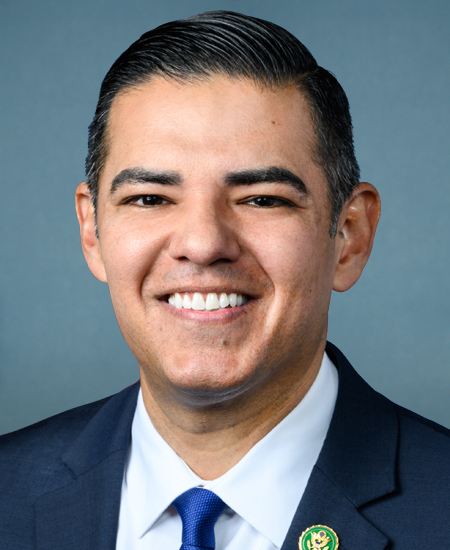
Rep. Robert Garcia
Total votes
1,879
all sessions
Attendance
95%
98 missed
Lower than 85% of chamber peers
With party
96%
of cast votes
Higher than 81% of chamber peers
Bipartisan score
2%
crosses aisle rarely
Lower than 81% of chamber peers
Sponsored
859
bills & resolutions
Higher than 75% of chamber peers
Committees
4
assignments
859 bills and resolutions
Sponsored bills
Total
859
Primary
45
Co-sponsor
814
This page
859
matching current filters
Expressing support for the designation of the week beginning on September 14, 2026, as "National Hispanic-Serving Institutions Week".
Maddy summaryThis House resolution expresses support for designating the week beginning September 14, 2026, as National Hispanic-Serving Institutions Week. It recognizes these colleges and universities, which enroll at least 25 percent Hispanic students, for their role in providing higher education access to low-income and underserved populations. The bill highlights that these institutions serve a significant portion of the nation's undergraduate students and contribute to economic mobility. It calls on the public and interested groups to observe the week with ceremonies and activities during Hispanic Heritage Month.
In committee Sep 17, 2026
1 co-sponsor
In committee Sep 17, 2026
1 co-sponsor
Recognizing the importance of Latino community leadership and engagement in outdoor recreation and conservation activities that protect United States natural resources, and expressing support for the designation of September 12 through September 20, 2026, as "Latino Conservation Week".
Maddy summaryThis House resolution formally recognizes the role of Latino communities in outdoor recreation and conservation efforts that protect U.S. natural resources. It highlights how these groups lead activities such as hiking, community cleanups, and environmental justice initiatives on public lands. The bill specifically supports the designation of September 12 through September 20, 2026, as Latino Conservation Week to celebrate this engagement. As a commemorative measure, it does not create new laws or funding but serves to affirm the importance of inclusive access to nature and the cultural contributions of Latino populations to environmental stewardship.
In committee Sep 16, 2026
1 co-sponsor
Housing Tariff Exclusion Act
Maddy summaryThe Housing Tariff Exclusion Act directs the Secretary of Commerce to create a process allowing U.S. companies to request exemptions from tariffs on building materials that are not produced in sufficient quantities domestically. The bill specifically targets products used in residential construction, such as lumber, cement, and fixtures, while excluding rare earth elements and antidumping duties. Requests for "critical homebuilding products" must be decided within 15 days, while other covered articles have a 60-day review period, with all decisions published online for transparency. The legislation includes retroactive provisions to refund overpaid tariffs on goods imported before an exemption is granted and sets a sunset date of October 1, 2029, after which no new exclusions can be issued.
In committee Sep 16, 2026
1 co-sponsor
Survivors’ Rights Restitution Act of 2026
Maddy summaryThe Survivors' Rights Restitution Act of 2026 establishes a federal compensation program administered by the Attorney General for victims of sexual assault, abuse, trafficking, or exploitation involving Jeffrey Epstein or Ghislaine Maxwell, as well as victims whose rights were violated by the federal government. Petitions are filed with the United States Court of Federal Claims and assigned to special adjudicators who must be mental health professionals or experts in victim services, civil rights law, or claims administration. The process is designed to be informal and less adversarial than standard litigation, with decisions required within 120 days and a minimum compensation award of $123,000. Compensation is funded by a dedicated Treasury account that accepts forfeited assets and voluntary contributions, and payments are exempt from federal income tax and means-tested benefit calculations.
Budget & TaxesSupports Budget & TaxesThe bill establishes a federal compensation program, directly impacting government spending and fiscal management to fund restitution for victims.
Criminal JusticeSupports Criminal JusticeThe bill establishes a federal compensation program for victims of sexual assault and other crimes, addressing victim rights and restitution within the criminal justice system.
HealthcareSupports HealthcareThe bill establishes a compensation program for victims of sexual assault and exploitation and requires adjudicators to be mental health professionals or victim services experts, indicating support for mental health and victim support within healt...
In committee Sep 15, 2026
1 co-sponsor
Common Cents Act
Maddy summaryThe Common Cents Act would end the production of one-cent coins for general circulation while allowing them to remain legal tender, and it authorizes businesses to round cash transactions to the nearest five cents when exact change is unavailable. The bill also permits the redesign of the five-cent coin with a zinc core and nickel outer layer to reduce manufacturing costs, subject to tests ensuring compatibility with existing machines. Employers must round any cash payments to employees up to the nearest five-cent increment, while rounding in other transactions is optional for businesses but cannot violate minimum wage or overtime laws. Additionally, the Federal Reserve Board is required to submit a strategic plan and periodic reports to Congress on how to maintain stability in coin distribution systems during the transition away from pennies.
Passed Sep 15, 2026
1 co-sponsor
FABRIC Act
Maddy summaryThe FABRIC Act amends the Fair Labor Standards Act to prohibit piece-rate pay for garment industry workers, requiring employers to pay them at least the federal minimum wage on an hourly basis while still allowing for incentive bonuses. The bill establishes joint and several liability for brand guarantors, meaning companies that contract for garment manufacturing can be held financially responsible for wage violations committed by their contractors or subcontractors. To improve oversight, the legislation mandates that all garment manufacturers and contractors register annually with the Department of Labor, providing detailed information about ownership, employees, and past legal violations. Additionally, the bill creates a new Office of the Garment Industry within the Department of Labor and authorizes $100 million in competitive grants to support domestic manufacturing, workforce development, and facility improvements.
In committee Sep 14, 2026
1 co-sponsor
Safeguarding Taxpayer Investment for Executive Airlift Act of 2026
Maddy summaryThe Safeguarding Taxpayer Investment for Executive Airlift Act of 2026 prohibits the Department of Defense from using fiscal year 2027 funds to sell, donate, or transfer ownership of any aircraft from the VC-25B Bridge program. This restriction prevents these specific planes from being moved to individuals or entities outside the Department of the Air Force. The bill directly affects federal budgeting processes by limiting how appropriated defense money can be spent on executive airlift assets during that fiscal year.
In committee Sep 14, 2026
1 co-sponsor
To designate the facility of the United States Postal Service located at 6444 San Fernando Road in Glendale, California, as the "Paul Ignatius Post Office".
This bill designates the facility of the United States Postal Service located at 6444 San Fernando Road in Glendale, California, as the "Paul Ignatius Post Office".
Passed Sep 14, 2026
1 co-sponsor
Ask Maddy
·
AI policy assistant
Ask Maddy about Robert Garcia
Scope: montana
Hi! I can help you understand Robert Garcia's legislative record. What would you like to know?
Try one of these
i
Maddy answers using official bill text and legislative records. Always verify before sharing.
Sources cited inline