

Allow longevity payments for county detention officers
SB 236 revises the compensation structure for county detention officers by entitling them to longevity payments. The bill ensures that county detention officers receive these payments in a manner similar to deputy sheriffs and undersheriffs. Specifically, starting from their first anniversary of employment, detention officers will receive an annual longevity payment equal to 1% of their minimum base annual salary for each year of service. This legislation also supersedes specific unfunded mandate laws concerning these provisions.
Bill status
signed
all 5 stages cleared
Introduction
Jan 2025
Committee Review
Mar 2025
Senate Passage
Apr 2025
House Passage
Apr 2025
Signed into Law
Apr 2025
Introduced Jan 29, 2025
Signed Apr 17, 2025
Maddy AI version diff · 4 comparisons
What changed between versions
SB0236_2(8).pdf
→
SB0236_X.pdf
·
4 edits
MODERATE
This bill updates the Montana Code to grant longevity payments to detention officers, aligning their compensation benefits with those of deputy sheriffs and undersheriffs. It also formally supersedes previous unfunded mandate laws regarding these payments. The changes ensure detention officers receive an annual salary increase based on years of service, calculated as 1% of their minimum base salary for each year worked.
Scope change
The scope of eligibility for longevity payments has been expanded to explicitly include detention officers, whereas prior versions of the bill focused primarily on deputy sheriffs and undersheriffs.
ELIGIBILITY
Detention officers are now explicitly included as eligible recipients of longevity payments alongside deputy sheriffs and undersheriffs.
REQUIREMENT
The statutory language for longevity payments was updated to ensure consistency across all three roles (deputy sheriff, undersheriff, and detention officer) regarding the 1% annual increase based on years of service.
A new section was added to explicitly state that this act supersedes existing unfunded mandate laws (Sections 1-2-112 through 1-2-116) related to these payments.
TECHNICAL
The document format was updated from a draft version to an enrolled bill, including signatures from the Secretary of the Senate, President of the Senate, and Speaker of the House.
Floor votes · Senate Feb 19, 2025 · House Mar 31, 2025
How they voted
32–17
Passed · 1 other
Total votes 50
Feb 19, 2025
D
Democratic18
94% Yea
R
Republican32
50% Nay
Vote distribution
All Yea
All Nay
Mixed
No data
Full legislative history
Actions timeline
Total actions
41
Key actions
9
Committee
6
Apr 16, 2025
Signed into law
(S) Signed by Governor
upper
Apr 8, 2025
Lower · Passed
(H) Signed by Speaker
lower
Apr 7, 2025
Upper · Passed
(S) Signed by President
upper
Mar 31, 2025
House · Passed
House Vote: pass (70-28-2)
house
Mar 27, 2025
Lower · Passed
(H) Committee Report - (H) Judiciary
lower
Mar 27, 2025
Lower · Passed
(H) Committee Executive Action - (H) Judiciary
lower
Feb 20, 2025
Committee
(H) Referred to Committee - (H) Judiciary
lower
Feb 19, 2025
Senate · Passed
Senate Vote: pass (32-17-1)
senate
Feb 14, 2025
Upper · Passed
(S) Committee Report - (S) Judiciary
upper
Feb 14, 2025
Upper · Passed
(S) Committee Executive Action - (S) Judiciary
upper
Jan 30, 2025
Committee
(S) Referred to Committee - (S) Judiciary
upper
Jan 29, 2025
Introduced
(S) Introduced
upper
1 primary · 0 co-sponsors
Sponsors
Role
Legislator
Party
State
District
P
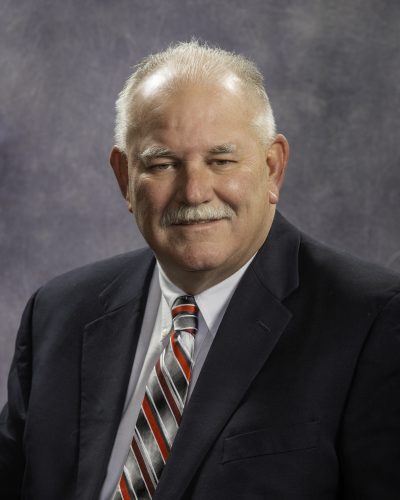
Barry Usher
RRepublican
Ask Maddy
·
AI policy assistant
Ask Maddy about SB 236
Scope: MT
Hi! I can help you understand SB 236. What would you like to know?
Try one of these
i
Maddy answers using official bill text and legislative records. Always verify before sharing.
Sources cited inline