

Maddy summaryHB 2057 creates a new "entertainment district special license" for designated areas in Missouri that meet specific criteria, such as being located in a city with 4,400-4,900 residents bordering a lake with at least 1,000 miles of shoreline. This license allows participating bars, restaurants, and portable bars within the district to sell alcohol by the drink until 1:30 a.m. on weekdays and from 6 a.m. on Sundays until 1:30 a.m. on Mondays. It permits patrons to move alcohol between licensed venues within the district boundaries (but not outside) and requires establishments to serve drinks in containers marked with their unique logo. Licensees must pay a $300 annual fee and are solely responsible for alcohol violations on their premises or in common areas.
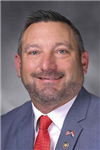
Rep. Jeff Vernetti
Sponsored bills
Maddy summaryHB 2366 prohibits Missouri employers from knowingly hiring individuals without legal work authorization. It requires businesses receiving state contracts over $5,000, tax credits, or state-administered loans to verify employees’ work eligibility through federal programs and submit annual sworn affidavits. The state attorney general would enforce these rules, with businesses able to use federal program participation as a defense against violations. Emergency periods (like natural disasters) temporarily suspend the verification requirement for 15 days.
Maddy summaryHB 1740 updates the state's point system for driving violations, affecting drivers who accumulate points on their license record. It sets specific thresholds for license suspension (e.g., 8 points in 18 months) and revocation (12 points in 12 months), while allowing drivers to avoid full suspension by installing an alcohol interlock device in their vehicle. License reinstatement requires proof of financial responsibility (like insurance) and takes 30-90 days depending on prior suspensions, with shorter timelines for first-time offenses. The bill also clarifies that points cannot be reduced during suspension periods and mandates reinstatement fees for suspended drivers.
Maddy summaryHB 3338 prohibits Missouri courts and state agencies from enforcing rules or mandates from international organizations (like the UN or World Health Organization) or foreign laws that violate fundamental rights. It specifically voids court decisions, contracts, or arbitration rulings that rely on Shari'a law or other foreign legal systems in areas like marriage, custody, or inheritance if they conflict with constitutional rights. The law defines "fundamental rights" as those protected by Missouri and U.S. constitutions, including due process, free speech, and religious freedom. It does not apply to religious organizations' internal matters, voluntary corporate agreements, or federal treaties.
Maddy summaryHB 2054 requires Missouri's Department of Mental Health (DMH) to reimburse counties and cities without counties for the cost of housing individuals who lack mental fitness to stand trial due to mental illness. Specifically, DMH will pay $200 per day for custody time plus medication costs when a person is held in jail because they cannot understand court proceedings or assist in their defense. County sheriffs or city officials must submit certified records of days held and medication costs within two years of eligibility, and DMH will review and pay eligible claims. This bill directly affects local governments managing jail costs for mental health-related custody cases under Section 552.020 of Missouri law.
Maddy summaryHB 1677 requires that individuals arrested for crimes undergo a mental health evaluation within 45 days to determine if they are competent to participate in court proceedings. If evaluation results indicate a need for treatment, the person must be transferred to a mental health facility within 45 days of the evaluation. The bill mandates that agencies explain delays beyond these deadlines to law enforcement or prosecutors and requires annual reports to the legislature by the Department of Mental Health starting in 2027. This bill directly affects arrested individuals who may require mental health assessments, focusing on timely evaluations and treatment access while establishing accountability measures.
Maddy summaryHB 2367 modifies Missouri law to allow community colleges to offer bachelor's degree programs in specific workforce shortage fields. It defines "workforce shortage" as a determination by the Missouri Economic Research and Information Center (MERIC) showing more job vacancies than available workers in a field. The bill permits community colleges to provide bachelor's degrees only when: (1) a persistent shortage exists requiring that degree level; (2) accreditation/licensure now requires a bachelor's; or (3) employment needs increase to that level without duplicating existing programs. This change directly affects community colleges seeking to address local labor gaps and students pursuing careers in those high-demand fields.
Maddy summaryThis bill clarifies that single-family homes rented for less than 30 consecutive days (subject to sales tax) must be classified as residential property for tax purposes, not as "transient housing." It explicitly defines "transient housing" as rentals where rent receipts are subject to sales tax, excluding short-term home rentals. This affects property owners and local tax assessors who must apply this classification when determining property tax rates. The change ensures short-term rentals are taxed under residential rates rather than commercial rates, without altering rental regulations or tenant rights.
Maddy summaryHB 2425 changes Missouri's license plate requirement for noncommercial vehicles, requiring only one plate instead of two beginning August 28, 2026. Owners of noncommercial vehicles with a front license plate as of that date must surrender it to the Department of Revenue. The bill specifies that one plate must be displayed on the rear of most vehicles (except commercial vehicles, which may request two plates with an additional fee). It also mandates that all plates include state name, "SHOW-ME STATE," expiration date, and reflective features for visibility. This policy affects all Missouri residents who register noncommercial vehicles under current law.
Maddy summaryHB 2597 sets minimum payment rates for out-of-network ambulance providers treating patients covered by health insurance plans. It requires insurance companies to pay these providers either the local government rate for ambulance services in that area or 325% of the Medicare rate for the same service (whichever is lower), but not more than the ambulance provider's billed charge. The bill mandates that payments be made directly to the ambulance provider within 30 days for complete claims, prohibits billing patients for additional amounts after payment, and limits patient cost-sharing to the same level as in-network services. This directly affects ambulance services (excluding air ambulances) and health insurance companies operating in the state.