

Federal Building Threat Notification Act
S 2542, the Federal Building Threat Notification Act, requires the Federal Protective Service to create emergency communication guidance for federal building tenants within one year of enactment. This guidance must include protocols for notifying tenants about violent threats (like active shooters, weapons, or terrorism) within 150 feet of a building and provide safety instructions during immediate threats. The bill mandates that each protected federal building appoint a security official to implement the guidance and conduct regular crisis response testing. It directly affects all federal agencies occupying buildings protected by the Federal Protective Service, ensuring they receive timely threat notifications and safety protocols. The Director must submit a 10-page report to Congress on the implemented protocols within one year.
Bill status
passed
3 of 5 stages cleared
Introduction
Jul 2025
Committee Review
Aug 2026
Senate Passage
Aug 2026
House Passage
President
Introduced Jul 30, 2025
Last action Aug 10, 2026
Maddy AI version diff · 1 comparison
What changed between versions
Introduced in Senate
→
Engrossed in Senate
·
3 edits
·
Aug 7, 2026
MINOR
The engrossed version makes a minor cross-reference correction and formatting cleanups, but most importantly adds a new subsection (f) stating that no additional funds are authorized to be appropriated to carry out the Act. This means the Federal Protective Service must implement the emergency communication guidance, crisis response assessments, and reporting requirements using only existing budget authority.
FISCAL
New subsection (f) states that no additional funds are authorized to be appropriated to carry out this Act, meaning all new duties (guidance development, periodic testing, reporting) must be funded from existing appropriations.
TECHNICAL
Cross-reference corrected from 'subsection (b)' to 'paragraph (1)' in the contents provision, fixing an internal citation error.
Formatting of subsection (d) was cleaned up by removing unnecessary line breaks between the section heading, introductory text, and numbered paragraphs. No substantive change.
Floor votes
How they voted
This bill passed the Senate by voice vote (no roll call recorded).
Full legislative history
Actions timeline
Total actions
10
Key actions
4
Committee
3
Aug 7, 2026
Upper · Passed
Passed Senate with an amendment by Unanimous Consent. (consideration: CR S4547-4548; text: CR S4548)
upper
Aug 7, 2026
Upper · Passed
Passed/agreed to in Senate: Passed Senate with an amendment by Unanimous Consent.
upper
Aug 6, 2026
Upper · Passed
Committee on Homeland Security and Governmental Affairs. Reported by Senator Paul with an amendment in the nature of a substitute. Without written report.
upper
Aug 6, 2026
Upper · Passed
Committee on Homeland Security and Governmental Affairs. Ordered to be reported with an amendment in the nature of a substitute favorably.
upper
Jul 30, 2025
Committee
Read twice and referred to the Committee on Homeland Security and Governmental Affairs.
upper
Jul 30, 2025
Introduced
Introduced in Senate
upper
1 primary · 2 co-sponsors
Sponsors
Role
Legislator
Party
State
District
P

Gary C. Peters
DDemocratic
Co

James Lankford
RRepublican
Co
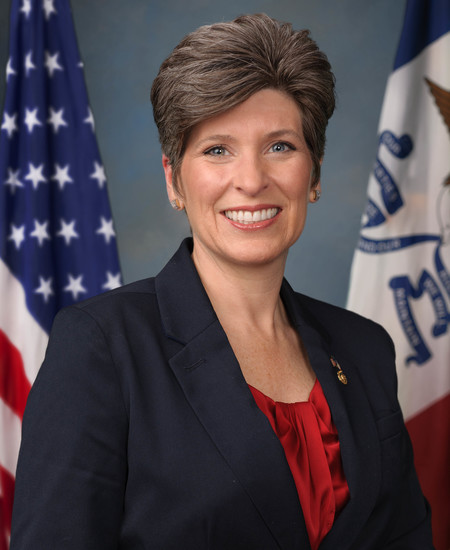
Joni Ernst
RRepublican
Ask Maddy
·
AI policy assistant
Ask Maddy about S 2542
Scope: US
Hi! I can help you understand S 2542. What would you like to know?
Try one of these
i
Maddy answers using official bill text and legislative records. Always verify before sharing.
Sources cited inline