Vicksburg National Military Park Boundary Modification Act This bill directs the Department of the Interior to convey approximately 7 acres of specified land (in two parcels) within the Vicksburg National Military Park to Mississippi for an interpretive center. The conveyed land must facilitate public access to the park, may not be used in a manner that adversely impacts the park's resources or visitor experience, and remains subject to any use restriction that Interior determines is appropriate. Interior must convey the land by quitclaim deed and without consideration, such as payment. Upon the conveyance of the land, Interior must modify the park's boundary to exclude the land.

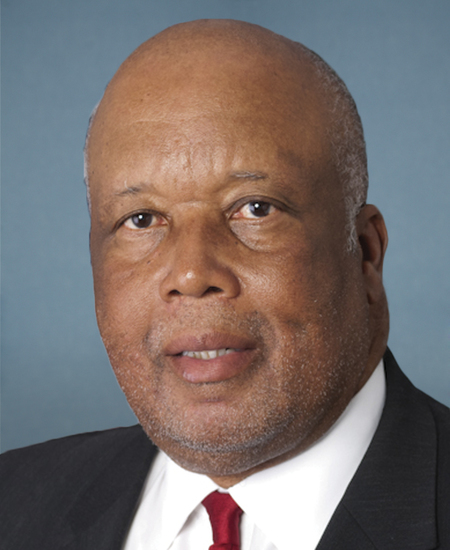
Rep. Bennie G. Thompson
Sponsored bills
Maddy summaryThis bill extends the deadline for completing federal disaster recovery projects in Puerto Rico until December 31, 2035, affecting state and local governments as well as private nonprofit facility owners. It specifically targets unfinished infrastructure and mitigation projects resulting from Hurricane Irma, Hurricane Maria, the 2020 earthquakes, and Hurricane Fiona. The legislation allows recipients to request further time extensions after 2035 if needed. Additionally, it requires the Federal Emergency Management Agency to submit annual reports to Congress detailing project progress, projected completion dates, and any obstacles hindering recovery efforts.
Maddy summaryHR 7436 requires the Department of Homeland Security (DHS) to create standardized training for all new employees in the Office of Intelligence and Analysis (OIA). This includes mandatory civil rights and privacy training (citing the Privacy Act of 1974), specialized training for analysts on intelligence standards, and open-source intelligence collection protocols. The bill also mandates tracking training completion, quarterly public lists of available advanced training from other agencies, and annual reports to Congress on implementation progress. It further requires a Comptroller General review comparing DHS training to other intelligence agencies within two years. The law directly affects OIA staff, including new hires and those in specific roles like open-source intelligence collection.
Maddy summaryThis bill would require Medicare to cover early detection screening tests for Alzheimer's disease and related dementias starting January 1, 2028. It defines eligible tests as FDA-cleared genomic blood tests, blood product analyses, or equivalent medical imaging methods (like protein expression or whole genome sequencing) that detect pre-symptomatic or early-stage conditions. Medicare beneficiaries would receive this coverage without cost-sharing for these specific screenings. The bill amends Medicare coverage rules to explicitly include these tests under Section 1861(nnn) of the Social Security Act.
Maddy summaryHR 5109 requires the Transportation Security Administration (TSA) to create guidelines helping individuals in federal, state, and local prisons prepare for and apply for Transportation Worker Identification Credential (TWIC) cards *before* their release. The bill directs TSA to develop specific procedures for prison staff to assist inmates in pre-applying for TWIC cards and navigating appeals or waivers if initially denied. This aims to streamline access to TWIC cards - required for many port and maritime jobs - allowing returning citizens to secure employment faster after release. The bill cites that 525,000 jobs in Louisiana alone depend on TWIC access, and faster credential acquisition supports reintegration efforts.
Maddy summaryThis bill requires all new passenger vehicles manufactured for sale in the U.S. to include AM radio as standard equipment (not an optional add-on) by 2027-2028, depending on manufacturer size. It mandates that AM radio receivers must be easily accessible to drivers and allows compliance through digital AM broadcast technology. During a transition period, manufacturers must clearly label vehicles without AM radio but cannot charge extra for this feature. The bill also mandates a GAO study on AM radio's role in emergency alerts and includes a 10-year sunset provision for the rule. It preempts state laws regarding AM radio access in vehicles.