Maddy summaryMichigan House Bill 6284 updates the state's sentencing guidelines by amending Section 16m of the Code of Criminal Procedure to include specific firearm-related felonies. The bill creates a comprehensive list of offenses, ranging from selling firearms to minors and prohibited persons to discharging guns in vehicles or at dwellings, assigning each a specific classification level and maximum prison sentence. These classifications determine how judges calculate sentences for these crimes, with penalties varying based on the severity of the act and any resulting injuries or deaths. The legislation is tied to House Bill 6285 and will not take effect unless that companion bill is also enacted into law.

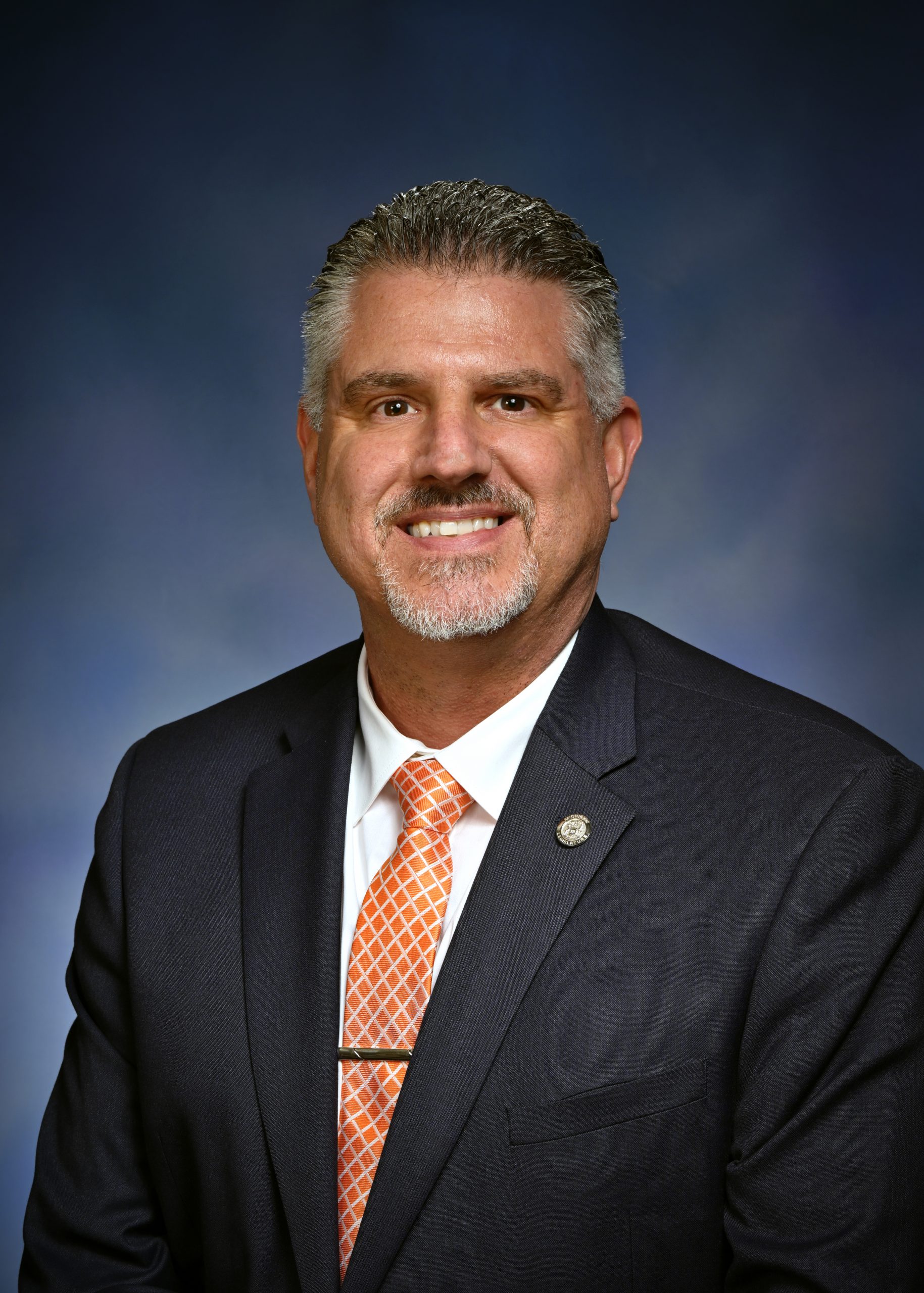
Rep. Mike Hoadley
Sponsored bills
Maddy summaryMichigan House Bill 6311 amends the state's unemployment insurance laws to establish specific deadlines and content requirements for notifying claimants and employers about benefit determinations. The bill mandates that the unemployment agency must notify affected parties within 14 days of a decision, providing details on the reasons for the ruling, the facts relied upon, and instructions for filing an appeal. It also allows for electronic delivery of these notices if the claimant has consented or used the agency's online portal, while requiring mailed copies if electronic delivery fails. Additionally, the legislation requires the agency to send written notifications regarding claimant rights and responsibilities within two weeks and six months after initial benefit payments are issued.
Maddy summaryMichigan House Bill 6249 establishes that ownership of subsurface pore space, which can be used for storing carbon dioxide or other substances, is vested in the owner of the surface land unless it has been previously separated. The bill allows this pore space to be sold, leased, or otherwise transferred independently from the surface estate, provided that any such separation clearly describes the specific geological formation, depth, and scope of surface use rights involved. It clarifies that selling mineral rights does not automatically transfer pore space ownership, which must be explicitly stated in the agreement. This legislation takes effect only if two related companion bills are also enacted into law.
Maddy summaryThis Michigan bill updates high school graduation requirements by allowing students to earn math credits through approved career and technical education programs in trades like welding, construction, and engineering. It adds a new section to the state school code that recognizes formal CTE programs as equivalent to traditional math courses when they cover the same content as state assessments. The legislation also clarifies how personal finance courses can count toward multiple subject requirements, including math, arts, and foreign language credits. These changes directly affect public school districts and academies in Michigan by providing more flexibility in how students meet graduation standards while maintaining core academic expectations.
Maddy summaryHB 5485 updates Michigan's dam safety regulations for inland lakes by revising definitions and adding new sections to the Natural Resources and Environmental Protection Act. The bill directly affects dam owners, operators, and the state agency responsible for dam safety oversight. Key changes include updated terms like "spillway capacity" and "emergency action plan," alongside new regulatory sections (e.g., 31506a, 31509a) to modernize safety standards. These amendments clarify requirements for dam maintenance, flood management, and structural integrity without altering existing enforcement procedures.
Maddy summaryHouse Bill 4471 proposes to allow retired county employees to be employed in a county sheriff's office. The key provision is that these individuals would be able to work in such a role without forfeiting their existing retirement allowance or pension benefits. This bill directly affects county retirees who may wish to return to employment within a sheriff's department. It amends section 12a of 1851 PA 156, which concerns the powers and duties of county boards of commissioners regarding employee benefits.
Maddy summaryHB 4189 names a specific bridge on South Grand Avenue over I-96 in Fowlerville as the "LCpl Michael W. Hanks Memorial Bridge" to commemorate a fallen Marine. The bill requires the state transportation department and Livingston County road commission to install signs at both approaches of the bridge designating its new name. This is a purely commemorative measure with no policy changes or financial impact, directly affecting the bridge location and signage in Fowlerville. It amends Michigan's Memorial Highway Act to add this designation without altering transportation policies or funding.
Maddy summaryHB 4072 requires hospitals and freestanding surgical outpatient facilities to offer patients any unused eye drops or eye ointments after ophthalmic surgical procedures or medical care. This applies when the facility-provided medication was administered to the patient and is required for their ongoing treatment upon discharge. The bill details labeling requirements if a pharmacist dispenses the drug, and assigns the responsibility for patient counseling on its use to the prescribing doctor. This allows patients to take home remaining eye medications for continued care.
Maddy summaryHB 4063 prohibits former governors, lieutenant governors, and heads of major state departments from accepting payment or reimbursement for lobbying if their activities exceed the threshold requiring lobbyist registration. This 2-year restriction applies to officials whose terms begin on or after January 1, 2025. Violating the ban carries penalties of up to 90 days in jail or a $1,000 fine. The bill targets high-level former officials to limit potential conflicts of interest after leaving public office.
Maddy summaryHB 4350 amends Michigan's Natural Resources and Environmental Protection Act to allow individuals to feed wild birds and other wildlife under specific conditions. This bill permits such feeding if it occurs within 300 feet of a residence and the total amount of feed does not exceed two gallons. It clarifies that this allowance does not apply to activities like baiting for hunting, normal agricultural practices, or feeding conducted in a way that excludes deer and elk. This aims to create limited exceptions for recreational or preventative feeding of wildlife by residents.