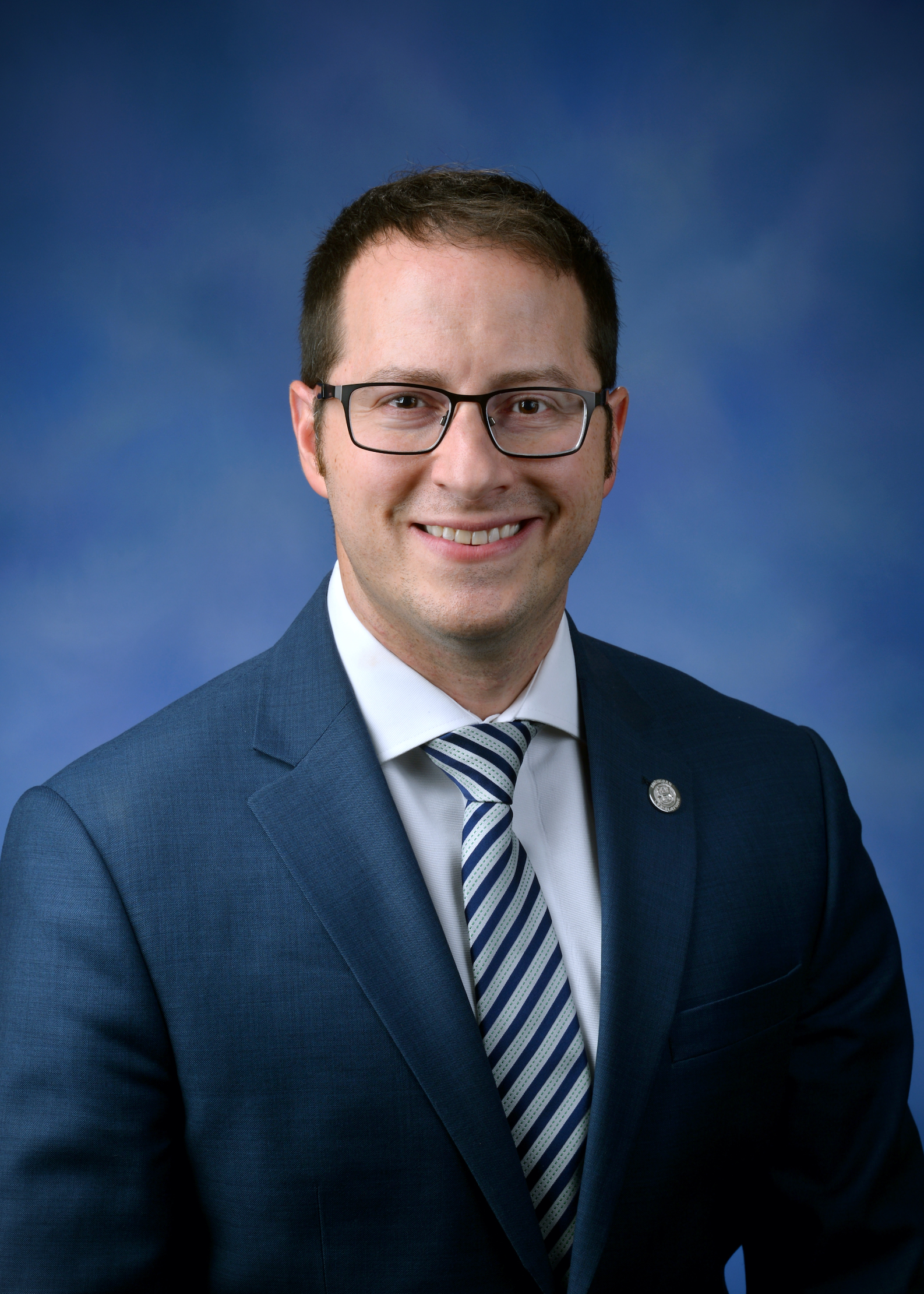
Photo of Graham Filler
R Michigan House · District 93

Rep. Graham Filler

Contact Email
Compare
Total votes
2,102
all sessions
Attendance
97%
58 missed
Lower than 88% of chamber peers
With party
94%
of cast votes
Lower than 88% of chamber peers
Bipartisan score
3%
crosses aisle rarely
Higher than 86% of chamber peers
Sponsored
441
bills & resolutions
Lower than 86% of chamber peers
Committees
0
assignments
441 bills and resolutions

Sponsored bills

Total
441
Primary
69
Co-sponsor
372
This page
441
matching current filters
Co-sponsor HB 4167
Passed · Michigan House · Co-sponsor
Health: diseases; rare disease advisory council; create. Amends 1978 PA 368 (MCL 333.1101 - 333.25211) by adding secs. 5135 & 5135a.

Maddy summaryThis bill creates a new Rare Disease Advisory Council within the Michigan Department of Health and Human Services to advise the state on research, diagnosis, and treatment for rare diseases. The council will be composed of a diverse group of members, including medical professionals, patient advocates, industry representatives, and individuals with rare diseases, who will serve four-year terms. Once established, the council is authorized to hold public hearings, consult with experts, and apply for grants to develop recommendations for improving care and support for those affected by conditions that impact fewer than 200,000 people in the United States.

Passed Dec 18, 2024 1 co-sponsor
Primary HB 4758
Passed · Michigan House · Lead sponsor
Liquor: liquor control commission; certain liquor code violations not held against a licensee after a certain time; provide for. Amends 1998 PA 58 (MCL 436.1101 - 436.2303) by adding sec. 910.

Maddy summaryThis bill modifies the Michigan Liquor Control Code to prevent the Liquor Control Commission from using certain past violations to deny, suspend, or revoke liquor licenses. Specifically, it states that if at least two years have passed since a violation occurred, the commission cannot consider it when making licensing decisions. The law defines a "qualified violation" as any breach of the liquor code that is not a criminal offense or a state civil infraction. This change aims to ensure that older, non-criminal mistakes do not permanently bar individuals or businesses from holding liquor licenses.

Passed Dec 18, 2024 0 co-sponsors
Co-sponsor HB 6238
Passed · Michigan House · Co-sponsor
Labor: discrimination; employees who are victims of certain crimes; prohibit employers from discriminating against because of. Creates new act.

Maddy summaryThis bill prohibits Michigan employers from discriminating against or retaliating against employees who are victims of violent crimes, including those who need time off for legal proceedings or workplace safety adjustments. It requires employers to post and distribute a notice about these protections to all staff and allows victims to request specific accommodations, such as schedule changes or security measures like door locks. If an employer violates these rules, the affected employee can file a lawsuit within three years to seek remedies like reinstatement, compensation, and legal fees. The state Department of Labor and Economic Opportunity is tasked with enforcing the law and creating detailed rules to guide implementation.

Passed Dec 18, 2024 1 co-sponsor
Co-sponsor HB 5957
Passed · Michigan House · Co-sponsor
Criminal procedure: expunction; certain conditions allowing for setting aside convictions and certain implementation dates; amend. Amends secs. 1b, 1d & 1e of 1965 PA 213 (MCL 780.621b et seq.).

Maddy summaryThis bill updates Michigan's laws on expunging criminal convictions by clarifying how multiple offenses are counted and adjusting the waiting periods before individuals can apply to have their records set aside. Under the new rules, crimes committed within a 24-hour window and stemming from the same incident will be treated as a single offense unless they involve assault, weapons, or carry a maximum penalty of ten years or more. The legislation also establishes specific waiting times based on the severity of the crime, ranging from three years for standard misdemeanors to seven years for serious felonies, and requires applicants to have no pending charges or new convictions during those waiting periods. Additionally, the bill mandates that expungement applications include detailed personal information, a certified record of the convictions, and a $50 processing fee paid to the state police.

Passed Dec 18, 2024 1 co-sponsor
Co-sponsor HB 6239
In committee · Michigan House · Co-sponsor
Employment security: benefits; disqualification from receiving benefits when leaving employment; create exception for victim of domestic violence, gender violence, or sexual violence. Amends secs. 29 & 29a of 1936 (Ex Sess) PA 1 (MCL 421.29 & 421.29a).

Maddy summaryHB 6239 proposes to amend Michigan's employment security laws to create a permanent exception for individuals who leave their jobs due to domestic violence, gender violence, or sexual violence. Under current rules, victims of such violence are only exempt from unemployment benefit disqualification until March 31, 2021, and this bill seeks to extend that protection indefinitely. The legislation would allow these individuals to receive unemployment benefits without the benefits being charged to their former employer's account. This change directly affects workers who must leave employment to escape abusive situations, ensuring they maintain financial support while seeking safety.

In committee Dec 12, 2024 1 co-sponsor
Primary HB 5415
In committee · Michigan House · Lead sponsor
Individual income tax: revenue distributions; deposit into the good jobs for Michigan fund; revise to reflect the name change of the fund. Amends secs. 51f & 711 of 1967 PA 281 (MCL 206.51f & 206.711). TIE BAR WITH: HB 5413'24

Maddy summaryThis bill updates Michigan's income tax law to reflect the official name change of the "Good Jobs for Michigan" fund. It requires that specific tax revenues linked to certified new jobs be deposited into the renamed fund rather than the old title. Additionally, the legislation mandates that tax returns clearly separate the portion of withheld taxes paid to the state from amounts sent to community colleges or the renamed fund. These changes ensure that financial records accurately describe where the money goes while maintaining the existing rules for how taxes are collected and reported.

In committee Dec 10, 2024 0 co-sponsors
Co-sponsor HB 5413
In committee · Michigan House · Co-sponsor
Economic development: Michigan strategic fund; good jobs for Michigan program; modify. Amends secs. 9, 90g & 90h of 1984 PA 270 (MCL 125.2009 et seq.).

Maddy summaryThis bill modifies the Michigan Strategic Fund Act to require the fund to submit a detailed annual report detailing its activities and financial assistance programs. The report must include specific data such as the number and average salary of new and retained jobs, the amount of money returned to the fund, and the status of all loans. Additionally, the legislation mandates that the fund immediately notify legislative leaders and relevant committees if any recipient receiving over $500,000 in assistance files for bankruptcy. The bill also requires an annual audit by the auditor general to assess the fund's ability to meet its obligations and makes these reports and audits available to the public online.

In committee Dec 10, 2024 1 co-sponsor
Co-sponsor HB 5414
In committee · Michigan House · Co-sponsor
Economic development: Michigan strategic fund; good jobs for Michigan program; modify. Amends secs. 90i & 90j of 1984 PA 270 (MCL 125.2090i & 125.2090j). TIE BAR WITH: HB 5413'24

Maddy summaryThis bill modifies the Michigan Strategic Fund Act to establish a new program called the High-Wage Incentive for Regional Employment in Michigan fund. It authorizes businesses that create certified new jobs to receive payments from this fund based on captured withholding taxes, provided they meet specific performance conditions. The legislation outlines procedures for issuing annual certificates to eligible businesses, requiring the fund to process payment requests within 90 days, and mandates that businesses forfeit funds if they fail to maintain their job creation commitments. Additionally, the bill creates a separate fund account that retains its balance year-to-year and requires the fund to publish details about payments and recipients on its website. The bill includes a provision stating that it will not take effect unless a related Senate bill is also enacted into law.

In committee Dec 10, 2024 1 co-sponsor
Co-sponsor HB 4930
Signed into law · Michigan House · Co-sponsor
Transportation: school vehicles; school bus stop-arm cameras; allow. Amends secs. 5 & 20 of 1990 PA 187 (MCL 257.1805 & 257.1820).

Maddy summaryThis bill allows Michigan school districts to install and use stop-arm cameras on school buses to automatically record vehicles that fail to stop or pass illegally. The law defines these camera systems as setups with at least two cameras that capture video or photos of the offending vehicle, its license plate, and the area up to 200 feet in front of the bus, while also logging the date, time, and location of the incident. School districts have the flexibility to operate these systems themselves, partner with law enforcement agencies for enforcement and cost-sharing, or hire private vendors to manage the technology. Additionally, the bill clarifies legal definitions for terms like "public school," "nonpublic school," and "law enforcement agency" within the state's pupil transportation act.

Signed into law Dec 10, 2024 1 co-sponsor
Co-sponsor HB 4928
Signed into law · Michigan House · Co-sponsor
Transportation: school vehicles; school bus stop-arm cameras; allow, and provide civil sanctions for violations. Amends secs. 682, 741, 742 & 909 of 1949 PA 300 (MCL 257.682 et seq.).

Maddy summaryThis bill updates Michigan's vehicle code to allow school districts to use cameras on school buses to automatically detect and fine drivers who fail to stop when the bus is loading or unloading students. It establishes that drivers caught by these cameras must pay civil fines between $100 and $500, with the revenue from these fines going directly to the school district that operates the bus for safety-related purposes. The legislation also clarifies that vehicles on divided highways with physical barriers or raised dividers do not need to stop for a school bus on the other side, and it sets specific rules for how law enforcement agencies can review camera evidence and issue citations.

Signed into law Dec 10, 2024 1 co-sponsor
Showing 1 to 10 of 441 bills
1 2 3 45 Next