

Maddy summaryHB 1120 allows members of the U.S. Foreign Service and their spouses to practice licensed professions in Maryland using a valid license from another state, without needing to obtain a new Maryland license. The bill creates new provisions (Sections 10-14A-01 to 10-14A-03) in Maryland law to establish this portability for specific occupations covered under the state's licensing codes. It directly affects Foreign Service employees and their spouses who are already licensed in another jurisdiction and relocate to Maryland for duty. The bill amends multiple sections across Maryland’s licensing codes in State Government, Business Occupations, Education, and Health to implement this change. This policy removes a barrier for these individuals to continue their professional work without repeating licensing requirements.
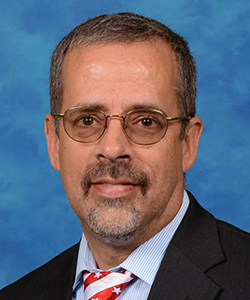
Rep. William Wivell
Sponsored bills
Maddy summaryHB 1400 creates penalties for shellfish aquaculture permit and registration card holders who violate specific regulations. It directly affects commercial shellfish harvesters in Maryland who hold these permits. Key violations include harvesting oysters too close to closed areas, using prohibited gear, exceeding time restrictions, harvesting from leased areas without authorization, or taking oysters commercially without proper permits. For a first violation, permits may be suspended for up to 5 years; repeat violations result in permanent revocation. During suspension or revocation, individuals cannot work in any aquaculture activity, even if unrelated to shellfish.
Maddy summaryHB 1395 requires farmers who purchase new agricultural equipment to provide written notice (via certified mail) to manufacturers or dealers about defects during the warranty period. It mandates that manufacturers or dealers correct defects within 30 days at no cost to the farmer, even if repairs occur after the warranty expires. If repeated repair attempts fail to fix issues that substantially impair the equipment’s use or value, farmers can choose a replacement or refund. The bill applies to self-propelled farm vehicles (excluding lawn mowers, ATVs, or off-road vehicles) sold on or after January 1, 2026, and makes warranty violations subject to enforcement under Maryland’s Consumer Protection Act.
Maddy summaryHB 972 establishes the Maryland Fair and Agricultural Education Promise Fund, a permanent fund to provide annual grants supporting agricultural fairs and education. The fund will receive lottery proceeds (before allocation to the general fund) and replace previous requirements for horse racing fund allocations. It directs specific annual grants: $825,000 to the Maryland Agricultural Fair Board, $75,000 to the Maryland Agricultural Education Foundation, $550,000 to the Maryland State Fair Society (for youth programs like 4-H and FFA), and $50,000 to the Maryland FFA Association. These grants aim to advance agricultural fairs, education, and youth programs across Maryland.
Maddy summaryHB 980 (Kanaiyah's Law) creates the Office of the Child Welfare Ombudsman within the Attorney General's office to handle complaints about Maryland's child welfare system. It requires juvenile courts to include specific information-sharing requirements in guardianship orders and expands criminal background checks to cover all adults living in a child's guardian's home. The bill also prohibits unlicensed placements for certain children, protects complainants from retaliation, and exempts certain complaint records from public disclosure. These changes directly affect child welfare agencies, guardians, and families navigating the system, aiming to improve transparency and accountability.
Maddy summaryMaryland's HB 643 updates requirements for Certified Public Accountant (CPA) licensure by increasing the minimum on-the-job training hours needed. It raises the required practical experience from 1,000 hours to 2,000 hours for most applicants (applying on or after October 1, 2000), and sets a 4,000-hour requirement for those seeking higher-level licensure. The bill also specifies that applicants must hold a bachelor's or master's degree with an accounting concentration from an accredited institution, plus meet the new hour thresholds. These changes directly affect individuals seeking initial CPA licenses in Maryland, effective October 1, 2026. The law modifies existing sections of Maryland's Business Occupations and Professions code without altering exam or character requirements.
Maddy summaryHB 1362 requires all meetings of condominium council of unit owners and homeowners association governing bodies (including board meetings and committees) in Maryland to be recorded either by video with audio or audio-only. This applies to regularly scheduled meetings, special meetings, and closed sessions (with recording paused during closed portions for specific legal or personnel matters). The bill directly affects condominium associations and homeowners associations by mandating this recording requirement instead of relying solely on written minutes. Key provisions include the mandatory recording format, allowance to pause recordings during closed sessions for legally permitted reasons, and requirements for documenting closed meetings in minutes. The bill amends Maryland's real property law to establish these standards for transparency.
Maddy summaryHB 952 requires operators of "companion chatbots" (AI systems designed to meet social needs through human-like interactions) to establish safety protocols, including preventing harmful content like self-harm discussions and sexually explicit material for minors. Operators must publish these protocols online, display clear warnings that chatbots are AI (not human), and provide crisis resource referrals for users expressing suicidal thoughts. The bill also mandates that operators of chatbots used by minors display mandatory break reminders after 3 hours of continuous use. It excludes business customer service bots, video game features, and basic voice assistants from these requirements.
Maddy summaryHB 1204 establishes Maryland's Education Savings Account Program, providing state-funded accounts for parents of eligible K-12 students to cover approved education expenses. Eligible students include those who attended public school for at least 100 days last year (or military-connected students), with funding set at 75% of per-pupil state/local funding for families below 500% of the federal poverty level, and 50% for others. Parents must sign agreements committing to use funds only for approved costs (like private school tuition or licensed tutoring), not double-bill insurance, and return unused funds upon graduation or withdrawal. The bill also adds a state income tax deduction for deposits into these accounts.
Maddy summaryHB 1266 requires Maryland law enforcement agencies to submit sexual assault evidence collection kits (physical evidence gathered from victims' bodies/clothing after an assault) to forensic labs within 30 days of receipt. It clarifies that kits must include all requested reference standards within this timeframe and specifies exceptions where submission isn’t required (e.g., if evidence disproves the assault, the victim declines consent, or the suspect’s DNA is already in CODIS). The bill directly affects law enforcement agencies handling sexual assault cases and ensures timely forensic analysis for victims. It amends Maryland’s Criminal Procedure law (Section 11-926) and takes effect October 1, 2026.