




Home Maryland Committees Judicial Proceedings
Senate Committee
Committee

Judicial Proceedings

Roster

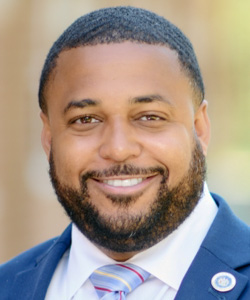
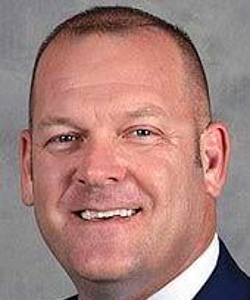
Members · 11

Legislation

Recent bills · 5

in committee · Maryland · Senate Apr 13, 2026

SB 965: Motor Vehicles - Out-of-State Drivers - Automated Enforcement (Out-of-State Driver Accountability Act)

SB 965 requires local governments operating automated traffic enforcement systems (like speed cameras or red-light cameras) to submit quarterly reports to Maryland’s Vision Zero coordinator about citations issued to vehicles registered in other states. The reports must include the out-of-state license plate number, whether the ticket was paid, and whether it remains overdue. Local governments must track these citations cumulatively over time, showing total issued, paid, and overdue tickets. This bill creates a data collection system for out-of-state traffic citations but does not change traffic enforcement rules or penalties.
Nick Charles (D)
passed · Maryland · House of Delegates Apr 13, 2026

HB 450: Criminal Procedure - Protection of Identity of Victim of Sexual Assault or Stalking

HB 450 protects victims of sexual assault or stalking by requiring courts and parties in criminal or juvenile cases to redact identifying information (like names or addresses) from public court records and filings. It directly affects victims, courts, and legal parties by prohibiting disclosure of such information to nonparties unless the court finds "clear and convincing evidence" of good cause to allow it. The bill mandates redaction of victim identifiers in all filings - including charging documents - and requires courts to redact existing records upon written request from the victim. Exceptions only apply when a court specifically authorizes disclosure after reviewing evidence of necessity. The law takes effect October 1, 2026.
passed · Maryland · House of Delegates Apr 10, 2026

HB 577: Criminal Law - Firearm Crimes - Machine Gun Convertible Pistols

HB 577 prohibits the manufacture, sale, purchase, possession, or transfer of "machine gun convertible pistols" in Maryland after a specified date. These are defined as semiautomatic pistols with a special trigger mechanism that can be easily converted to automatic fire using common tools or a "pistol converter" device. The bill creates new criminal penalties for violating this ban, with key exceptions allowing law enforcement use, licensed dealer transactions for specific purposes, and inheritance by qualified individuals. It does not affect standard semiautomatic firearms or restrict existing lawfully owned weapons.
Nicole Williams (D) Derrick Coley (D) Elizabeth Embry (D) Julian Ivey (D) Lesley Lopez (D)
passed · Maryland · House of Delegates Apr 9, 2026

HB 687: Criminal Procedure - Evidence - Protecting Artists' Creative Expression (PACE Act)

HB 687 (the PACE Act) protects criminal defendants and juvenile respondents in Maryland from having their creative works (like music, poetry, visual art, or film) used as evidence against them in court. It blocks such evidence unless a court finds, by a preponderance of evidence, that the creator intended the work to be literal (not fictional), it directly references the specific facts of the alleged crime, and it's relevant to a disputed fact. The bill explicitly excludes this protection for juvenile cases where creative expression is used to evaluate mental health or diversion programs. This law directly affects artists facing criminal or juvenile charges in Maryland, changing how their original creative expression can be considered as evidence. The law takes effect October 1, 2026.
Marlon Amprey (D) Adrian Boafo (D) Gabriel Acevero (D) Jackie Addison (D) Christopher Bouchat (R)
passed · Maryland · House of Delegates Apr 9, 2026

HB 669: State Highway Administration - Third-Party Road Improvements - Required Work Schedule

HB 669 prohibits political subdivisions (like counties or cities) from issuing use and occupancy permits to developers or contractors completing road work on State highways with over 25,000 average daily vehicles until the work is approved by both the State Highway Administration and the political subdivision. The bill amends Maryland law to require that all third-party road improvements on high-traffic state roads meet the satisfaction of both the State Highway Administration and the local political subdivision before permits are granted. Key mechanisms include requiring performance bonds for projects over $100,000, funded partly by private money, or located outside the applicant’s property. This directly affects developers and contractors performing road work on major state highways, ensuring completed improvements meet safety and quality standards before public use.
Andrew Pruski (D) Dylan Behler (D) Robin Grammer (R) Michele Guyton (D) Anne Healey (D)