Maddy summaryThis resolution expresses support for National Public Lands Day and encourages Americans to visit public lands on a designated fee-free day. It highlights the significant role these areas play in supporting rural economies, preserving biodiversity, and providing cultural and spiritual value. The text notes that public lands generate substantial economic output and employment while serving as hubs for outdoor recreation.

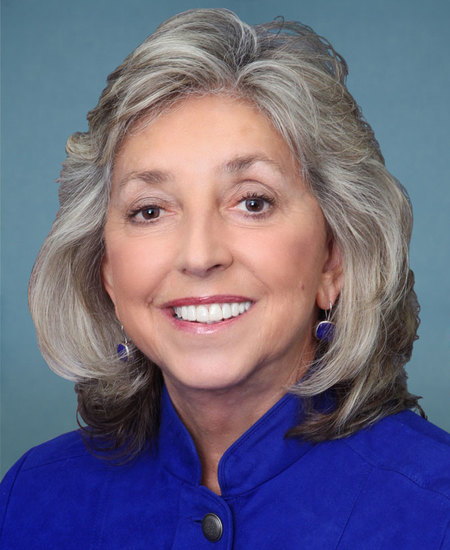
Rep. Dina Titus
Sponsored bills
Maddy summaryThis House resolution expresses support for designating the week beginning September 14, 2026, as National Hispanic-Serving Institutions Week. It recognizes these colleges and universities, which enroll at least 25 percent Hispanic students, for their role in providing higher education access to low-income and underserved populations. The bill highlights that these institutions serve a significant portion of the nation's undergraduate students and contribute to economic mobility. It calls on the public and interested groups to observe the week with ceremonies and activities during Hispanic Heritage Month.
Maddy summaryThe Public Lands Accountability Act requires the Bureau of Land Management to conduct full environmental impact statements for any hyperscale data centers built on public lands, prohibiting the use of categorical exclusions that would normally allow for faster approval. The bill defines these facilities as large commercial sites with a peak power load of at least 50 megawatts and mandates that their environmental reviews include specific analyses of water consumption, cooling system usage, and long-term effects on regional water supplies and drought resilience. Additionally, the legislation requires applicants to submit detailed workforce plans outlining expected construction and permanent job numbers, local hiring rates, and whether workers will receive prevailing wages.
Maddy summaryThe Reverse Big Ugly Tax Breaks for Data Centers Act removes specific tax incentives for large-scale data centers and artificial intelligence facilities. It excludes these facilities from bonus depreciation, a provision that currently allows businesses to deduct the full cost of certain equipment in the year it is purchased. Additionally, the bill prevents these properties from qualifying as opportunity zone business property, which would otherwise offer significant tax benefits for investments in designated areas. The legislation targets structures with a power capacity exceeding 50 megawatts that are dedicated to data storage, processing, or AI operations.
Maddy summaryThe End Tax Penalties on American Hostages Act modifies the Internal Revenue Code to protect United States nationals who are wrongfully detained or held hostage abroad from tax penalties and interest. It achieves this by disregarding the time spent in captivity when calculating tax deadlines, interest accruals, and penalty amounts, while also requiring the Treasury Department to update its systems to suspend collection activities for these individuals. Additionally, the bill establishes a program to refund or abate any taxes, penalties, or interest that eligible individuals paid during the period from January 1, 2021, to the date of the law's enactment. To implement these changes, the Secretary of State and the Attorney General must provide lists of affected individuals to the Treasury by January 1, 2027, and notify them of their eligibility for refunds.
Maddy summaryHR 2004, titled "Tyler’s Law," requires the Secretary of Health and Human Services to study how often hospital emergency departments test for fentanyl during overdose cases (beyond standard drug tests), including associated costs, patient benefits/risks, and impacts on privacy and patient-physician relationships. The study must be completed within one year of the bill's enactment. Based on the study results, the Secretary must issue guidance within six months on whether emergency departments should routinely test for fentanyl, how to inform clinicians about test contents, and how such testing may affect future overdose risks and health outcomes. This bill directly affects hospital emergency departments and patients experiencing overdoses by shaping future testing protocols.
Maddy summaryHR 1266, the Combating Illicit Xylazine Act, adds xylazine - a veterinary sedative increasingly found in illicit drug mixtures - to Schedule III of the Controlled Substances Act, regulating its use and trafficking. It directly affects veterinarians, animal owners, and manufacturers by allowing xylazine to be legally dispensed for animal use under specific veterinary prescriptions, while prohibiting non-veterinary human use. The bill includes transition periods (60 days for practitioners, 1 year for labeling) to ease compliance for manufacturers and practitioners, and requires the DEA and FDA to expedite necessary applications. It also mandates two congressional reports on xylazine's illicit use and trafficking patterns, and directs the Sentencing Commission to review penalties for offenses involving xylazine.