Vicksburg National Military Park Boundary Modification Act This bill directs the Department of the Interior to convey approximately 7 acres of specified land (in two parcels) within the Vicksburg National Military Park to Mississippi for an interpretive center. The conveyed land must facilitate public access to the park, may not be used in a manner that adversely impacts the park's resources or visitor experience, and remains subject to any use restriction that Interior determines is appropriate. Interior must convey the land by quitclaim deed and without consideration, such as payment. Upon the conveyance of the land, Interior must modify the park's boundary to exclude the land.

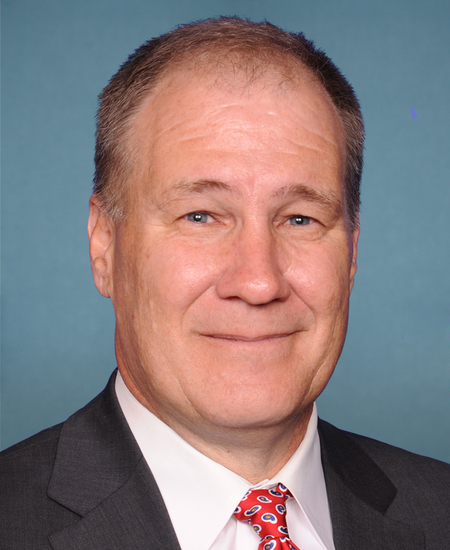
Rep. Trent Kelly
Sponsored bills
Maddy summaryThis House resolution supports designating the week of September 20 through September 26, 2026, as "Gold Star Families Remembrance Week." It aims to honor the families of service members and veterans who have died in the line of duty. The bill encourages Americans to observe this annual week by performing acts of community service and celebrating the lives of those who made the ultimate sacrifice.
Maddy summaryThis bill would require Medicare to cover early detection screening tests for Alzheimer's disease and related dementias starting January 1, 2028. It defines eligible tests as FDA-cleared genomic blood tests, blood product analyses, or equivalent medical imaging methods (like protein expression or whole genome sequencing) that detect pre-symptomatic or early-stage conditions. Medicare beneficiaries would receive this coverage without cost-sharing for these specific screenings. The bill amends Medicare coverage rules to explicitly include these tests under Section 1861(nnn) of the Social Security Act.
Maddy summaryThis bill requires all new passenger vehicles manufactured for sale in the U.S. to include AM radio as standard equipment (not an optional add-on) by 2027-2028, depending on manufacturer size. It mandates that AM radio receivers must be easily accessible to drivers and allows compliance through digital AM broadcast technology. During a transition period, manufacturers must clearly label vehicles without AM radio but cannot charge extra for this feature. The bill also mandates a GAO study on AM radio's role in emergency alerts and includes a 10-year sunset provision for the rule. It preempts state laws regarding AM radio access in vehicles.
Maddy summaryThis bill designates the U.S. Postal Service facility at 825 Highway 198 in Beaumont, Mississippi, as the "Jeremy Malone Post Office." It updates all official references in federal documents, maps, and records to reflect this new name. As a naming bill, it has no policy or funding impact - it solely commemorates an individual through the facility's official designation. The change affects only the postal facility and its official documentation.
Maddy summaryHR 5267, the American Franchise Act, clarifies when franchisors can be considered joint employers of franchisee employees under federal labor laws. It defines "substantial direct and immediate control" over essential employment terms like wages, benefits, hours, hiring, and discipline - requiring franchisors to actively set these terms to be deemed joint employers. The bill explicitly excludes routine brand standards, training, or minimal safety requirements from constituting such control. This directly affects franchisors and franchisees by limiting joint employer liability to cases where franchisors exert significant, ongoing influence over core employment decisions. The law applies prospectively to new cases after enactment, not past disputes.
Maddy summaryThis House resolution marks the 25th anniversary of the September 11, 2001 terrorist attacks by formally honoring the memory of the nearly 3,000 victims and recognizing the sacrifices made by first responders, military personnel, and the passengers of United Airlines Flight 93. The bill acknowledges the ongoing health challenges faced by survivors and responders, highlighting the role of the World Trade Center Health Program in providing long-term medical support. It also credits charitable organizations and community groups that have continued to assist victims' families and veterans over the past two decades. Finally, the resolution urges the American public to observe the anniversary with ceremonies and reaffirms Congress's commitment to remembering the events and lessons of that day.
Maddy summaryThis joint resolution expresses the support of the U.S. House of Representatives for designating November 9 of each year as Gold Star Father's Day. The bill honors fathers who have lost a child while serving in the Armed Forces by recognizing their sacrifice and the unique bond between fathers and their children. It does not create new legal requirements or funding but serves as a formal statement of congressional backing for this observance, which has already been adopted by several state legislatures.
Maddy summaryThe Wildfire Reduction Market Expansion Act of 2026 updates the Clean Air Act to broaden the definition of renewable biomass eligible for carbon credits. It specifically allows materials from forest management, such as slash, storm debris, and wood residuals, to be counted as renewable fuel if they come from sustainably managed lands or public forests designated for fuel reduction. The bill also includes vegetation cleared from defensible space around buildings and from wildfire risk reduction projects in the wildland-urban interface. By clarifying these categories and establishing certification requirements, the legislation aims to increase the supply of biomass available for generating renewable energy credits.
Maddy summaryThis bill requires pharmacy benefits managers (PBMs) administering prescription drug benefits for federal employee health plans to reimburse pharmacies at specific rates, including the national average drug cost plus a small percentage or $50, whichever is lower. It prohibits PBMs from favoring their own pharmacies, restricting patient choice, or reducing pharmacy payments after claims are processed. The bill establishes $10,000 civil penalties for violations, with debarment from federal health plans after 10 penalties in 10 years. This directly affects PBMs, in-network pharmacies, and federal health benefit plans covering millions of federal employees and their families. The law aims to ensure fair reimbursement practices and maintain pharmacy choice under the Federal Employees Health Benefits Program.