

In committee Sep 24, 2026
1 co-sponsor
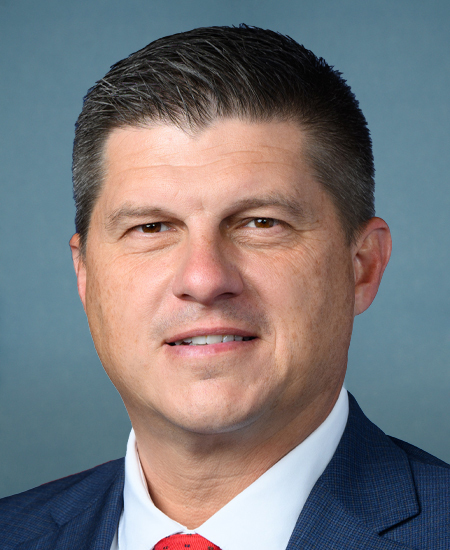
Rep. Brad Finstad
Total votes
2,001
all sessions
Attendance
99%
17 missed
Higher than 78% of chamber peers
With party
96%
of cast votes
Higher than 83% of chamber peers
Bipartisan score
2%
crosses aisle rarely
Lower than 84% of chamber peers
Sponsored
815
bills & resolutions
Near the chamber average
Committees
11
assignments
815 bills and resolutions
Sponsored bills
Total
815
Primary
67
Co-sponsor
748
This page
815
matching current filters
Ratepayer Protection Act
Maddy summaryThis bill, known as the Ratepayer Protection Act, modifies federal energy laws to ensure that large industrial customers pay for the specific infrastructure upgrades needed to serve their high electricity demands. It directly affects non-residential facilities with a peak power usage of 100 megawatts or more, requiring utilities to charge these customers the full incremental cost of any necessary generation, transmission, or distribution improvements. Under the new rules, large customers must also provide financial guarantees or contributions before such upgrades are made, ensuring utilities can recover costs even if the customer leaves the contract early. State regulators have two years to implement these standards, though the bill exempts utilities in states that have already enacted similar measures or are actively considering them.
Passed Sep 24, 2026
1 co-sponsor
National Fraud Enforcement Division Act of 2026
Maddy summaryThis bill creates a new National Fraud Enforcement Division within the Department of Justice to lead efforts against fraud targeting the federal government, federally funded programs, and American citizens. The division will be headed by an Assistant Attorney General appointed by the President and Senate, who will oversee complex investigations, guide local prosecutors, and coordinate with other federal agencies to stop organized fraud schemes. Additionally, the leader of this new unit will set national enforcement priorities and suggest legal or regulatory changes to fix systemic weaknesses that allow fraud to occur.
Passed Sep 22, 2026
0 co-sponsors
Reclaim Local Control Act
Maddy summaryThe Reclaim Local Control Act requires metropolitan planning organizations that are currently made up entirely of gubernatorial appointees to change their structure within one year of enactment. These groups must either be redesignated or restructured to meet specific federal requirements for local control. The bill directly affects the governance of these transportation planning bodies by limiting the use of statewide political appointments in favor of a more locally representative composition.
In committee Sep 17, 2026
1 co-sponsor
Empowering Moms Act
Maddy summaryThe Empowering Moms Act directs the Secretary of Health and Human Services to update the government website moms.gov within one year to serve as a centralized directory for resources aimed at pregnant, postpartum, and parenting women. The bill authorizes grants for states to help aggregate local resources, which users can filter by ZIP code and distance, while also allowing the federal government to contact users via phone or email if they consent to follow-up outreach. A key provision excludes organizations that provide abortions, except in cases of rape, incest, or life-threatening conditions, from being listed on the website or receiving state grants. The act mandates that the website be accessible in multiple languages and requires the Secretary to submit a report to Congress within 180 days detailing user traffic, feedback, and resource gaps.
In committee Sep 16, 2026
1 co-sponsor
SBIC Reporting Modernization Act of 2026
Maddy summaryThe SBIC Reporting Modernization Act of 2026 requires the Small Business Investment Company (SBIC) Administrator to publish a quarterly report on the performance of licensed small business investment companies. This mandate begins 90 days after the bill is enacted and applies to all SBICs operating under the Small Business Investment Act of 1958. The reports must include specific data points such as the number of applicants approved for final licensing, the dollar value of debentures issued, and the total number of jobs created or sustained through these investments.
In committee Sep 16, 2026
0 co-sponsors
Reshoring American Manufacturing Act of 2026
Maddy summaryThe Reshoring American Manufacturing Act of 2026 directs the Small Business Administration to create a dedicated website helping small businesses bring their manufacturing operations back to the United States. This online resource will provide contact details for relevant government offices and partner organizations, along with other useful information determined by the agency. The law requires the website to be launched within 60 days of enactment and mandates annual reviews to ensure the content remains current and helpful.
In committee Sep 16, 2026
1 co-sponsor
ASAP Act
Maddy summaryThis bill would require Medicare to cover early detection screening tests for Alzheimer's disease and related dementias starting January 1, 2028. It defines eligible tests as FDA-cleared genomic blood tests, blood product analyses, or equivalent medical imaging methods (like protein expression or whole genome sequencing) that detect pre-symptomatic or early-stage conditions. Medicare beneficiaries would receive this coverage without cost-sharing for these specific screenings. The bill amends Medicare coverage rules to explicitly include these tests under Section 1861(nnn) of the Social Security Act.
In committee Sep 16, 2026
1 co-sponsor
Northern Border Security Enhancement and Review Act
Maddy summaryThis bill amends the existing Northern Border Security Review Act to update deadlines and requirements for border security assessments. It requires the Department of Homeland Security Secretary to submit a northern border threat analysis by September 2, 2026, and every two years after, with strategy updates due 90 days after each analysis. The bill also mandates classified briefings to congressional committees 30 days after each threat analysis and directs the development of performance measures for Air and Marine Operations within six months of enactment. These changes directly affect the DHS Secretary, congressional committees, and U.S. Customs and Border Protection's operations along the northern border.
Passed Sep 16, 2026
1 co-sponsor
Data BRIDGE Act
Maddy summaryThe Data BRIDGE Act requires the Federal Communications Commission (FCC) to update its national broadband map within 180 days of enactment by adding agricultural areas as a dedicated layer. This change will directly affect the FCC, USDA, state governments, and broadband providers by incorporating agricultural land data into the map used to identify broadband coverage gaps. The bill mandates the FCC to consult with the USDA, Commerce Department, states, and other stakeholders to integrate existing agricultural data into the map. The goal is to improve accuracy in identifying broadband needs in rural farming communities, though it does not directly fund infrastructure.
In committee Sep 16, 2026
1 co-sponsor
Ask Maddy
·
AI policy assistant
Ask Maddy about Brad Finstad
Scope: louisiana
Hi! I can help you understand Brad Finstad's legislative record. What would you like to know?
Try one of these
i
Maddy answers using official bill text and legislative records. Always verify before sharing.
Sources cited inline