

Maddy summarySB 43 establishes Louisiana's Psychedelic-Assisted Therapy Program within the Department of Health to fund clinical studies using psychedelic medications (like psilocybin) for treating opioid use disorders, co-occurring substance use disorders, and treatment-resistant mental health conditions. The program requires academic health centers to meet strict federal and state compliance standards - including FDA approval, safety protocols, and therapist qualifications - to conduct these studies. Eligible patients, including those with the specified conditions, may participate, and parishes can use opioid settlement funds to enroll residents. The bill mandates annual progress reports from participating centers and requires coordination with other states conducting similar research. This is a research-focused program, not a policy allowing general therapeutic use.
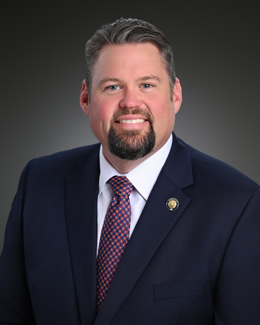
Sponsored bills
Maddy summarySB 387 amends Louisiana law to regulate pharmacy benefit managers (PBMs), directly affecting PBMs, local pharmacies, health insurers, and patients. It establishes new definitions (like "Maximum Allowable Cost List" and "Effective rate pricing"), requires PBMs to provide transparent compensation and services to enrollees and providers, and creates a private right to sue for violations. The bill also mandates audits of PBM practices, sets penalties for noncompliance, and repeals outdated provisions. These changes aim to increase transparency and accountability in how PBMs handle prescription drug pricing and reimbursements within Louisiana.
Maddy summaryThis bill, known as the Nursing Home Choice Act, requires Louisiana to provide counseling and alternative options to residents and families of nursing homes that receive the lowest one-star quality rating from the Centers for Medicare and Medicaid Services. When a facility is rated one star, staff must offer immediate access to community-based services or transfer residents to a higher-rated nursing home, and potential residents must be notified before placement to explore alternatives. The law also mandates that one-star facilities submit a remediation plan with specific improvement targets within 30 days, provide quarterly progress reports, and face additional monitoring and potential sanctions if they fail to improve their rating within two years. These requirements apply to all nursing homes with a one-star rating on October 1, 2026, and remain in effect until the facility achieves a rating of two stars or higher.
Maddy summaryHB 180 establishes new definitions and rules for private entities seeking to expropriate (take) property in Louisiana. It defines "foreign adversary" as entities listed in U.S. Treasury sanctions databases and "agent of a foreign adversary" as an entity controlled by such entities (e.g., through ownership or profit-sharing). The bill directly affects private companies or organizations, particularly those linked to foreign adversaries, by requiring them to meet these definitions before proceeding with property expropriation. The key provision mandates that private entities must comply with these definitions as a prerequisite for any expropriation action, aligning Louisiana law with federal sanctions frameworks. (Based on R.S. 9:2717.1.1, prefiling stage as of 2026-02-18.)
Maddy summaryHB 401 designates the elevated section of U.S. Highway 190 over the Bogue Falaya River in Covington, St. Tammany Parish, as the "Corporal Justin D. McLeese Memorial Bridge" to honor a military corporal. The bill requires the Louisiana Department of Transportation to install signage reflecting this name, using local or private funds to cover costs up to $2,250 per sign. This is a ceremonial naming bill with no substantive policy changes, solely commemorating an individual through a public infrastructure designation.
Maddy summaryHB 816 prohibits foreign adversaries (as defined by U.S. Treasury) and entities with foreign adversary control from owning or acquiring land within 25 miles of designated Louisiana military installations. The bill directly affects foreign governments, corporations, or investment funds with foreign adversary ties seeking to purchase or lease such adjacent property. Key provisions include requiring affidavits to verify non-adversary status, imposing $50,000 civil penalties for violations, and allowing contract rescission if a foreign adversary interest is discovered. Exceptions cover U.S. citizens, legal residents, and residential properties (1-4 family homes). The law aims to protect military sites by restricting ownership near installations, with enforcement handled by the state attorney general.
Maddy summaryThis bill urges the U.S. Congress and the United States Forest Service to permit the use of dogs for hunting within the Kisatchie National Forest. It also requests that the Louisiana Department of Wildlife and Fisheries collaborate with the Forest Service to ensure this hunting practice is conducted safely and sustainably. The legislation does not create new laws but serves as a formal recommendation to federal and state agencies regarding hunting regulations in the specified forest area.
Maddy summarySB 388 prohibits Louisiana state agencies from entering contracts with foreign entities designated as adversaries or terrorist organizations by the U.S. government (e.g., under federal designations like 15 C.F.R. 791.4 or 8 U.S.C. 1189). It grants the governor emergency authority to immediately cancel or suspend such contracts if they pose security risks to Louisiana, requiring consultation with homeland security and legal officials before action. The bill defines key terms like "foreign adversary" and "state contract" (covering goods, services, or technology) and allows affected parties to seek court review if they dispute cancellation decisions. This directly affects state agencies entering contracts and foreign entities linked to U.S.-designated threats.
Maddy summarySB 251 establishes the "Louisiana Critical Infrastructure Protection Act of 2026" to safeguard critical infrastructure - including gas/oil systems, water delivery, telecommunications, power grids, emergency services, and transportation systems - from foreign adversaries. The bill prohibits companies and government entities from entering agreements that allow foreign adversaries (as defined by federal regulations) to access or control critical infrastructure, and bans the use of adversary cameras and laser sensors in Louisiana transportation systems. Companies must certify their access, conduct background checks on employees with infrastructure access, store data outside foreign adversary countries, and report cyber incidents to the Governor's Office of Homeland Security, with exceptions only for unavoidable needs approved by that office. This directly affects businesses and government agencies operating critical infrastructure in Louisiana.
Maddy summaryHB 321 creates legal protections for victims of human trafficking who committed prostitution-related offenses. It establishes an affirmative defense allowing victims (both minors and adults) to avoid prosecution for crimes like prostitution (R.S. 14:82) or solicitation (R.S. 14:83) if those acts resulted directly from trafficking. The bill also presumes children engaged in prostitution are trafficking victims, exempting them from prosecution and requiring referral to specialized services for sexually exploited children. Adults determined to be trafficking victims must be notified about available support services, while children automatically qualify for existing victim assistance programs under Louisiana law.