

PAROLE: Provides for consolidation of certain repetitive language relative to parole eligibility
HB 280 consolidates repetitive language in Louisiana law regarding parole eligibility for juvenile offenders sentenced to life imprisonment. It streamlines provisions across multiple sections (previously duplicative in subsections B(2), D(1), E(1), F(1), G(1), and J(1)) into a single, clearer framework. The bill does not change eligibility requirements but clarifies that juvenile offenders (those under 18 at the time of offense, excluding certain murder convictions) qualify for parole consideration after serving 25 years, subject to conditions like risk assessment, no recent disciplinary offenses, and completion of programs. This procedural update directly affects individuals convicted as juveniles of life sentences under specific criteria.
Bill status
signed
all 5 stages cleared
Introduction
Feb 2026
Committee Review
Apr 2026
House Passage
Apr 2026
Senate Passage
May 2026
Signed into Law
May 2026
Introduced Feb 23, 2026
Signed May 29, 2026
Maddy AI version diff · 3 comparisons
What changed between versions
HB280 Original
→
HB280 Act 425
·
3 edits
MINOR
HB 280 was enrolled as Act 425, finalizing its text for implementation. The substantive policy change involves expanding parole eligibility criteria for juvenile offenders by adding new requirements. Previously, only three conditions were needed for parole consideration; the bill now adds mandatory completion of substance abuse treatment and at least one educational or job skills program.
Scope change
The bill applies specifically to juvenile offenders seeking parole under existing statutes (R.S. 15:574.4).
REQUIREMENT
Added a requirement that the offender must complete substance abuse treatment if it is available at their facility.
Added a requirement that the offender must complete at least one of the following: a literacy program, an adult basic education program, or a job skills training program.
ELIGIBILITY
Modified the parole eligibility checklist by increasing the number of conditions from three to five, making it more difficult for offenders to qualify for parole.
Floor votes · Senate May 19, 2026 · House Apr 8, 2026
How they voted
33–0
Passed · 7 other
Total votes 40
May 19, 2026
D
Democratic12
75% Yea
R
Republican28
85% Yea
Vote distribution
All Yea
All Nay
Mixed
No data
Full legislative history
Actions timeline
Total actions
22
Key actions
4
Committee
5
May 19, 2026
Upper · Passed
Read by title, passed by a vote of 33 yeas and 0 nays, and ordered returned to the House. Motion to reconsider tabled.
upper
Apr 22, 2026
Committee
Read by title and referred to the Legislative Bureau.
upper
Apr 21, 2026
Upper · Passed
Reported favorably.
upper
Apr 8, 2026
Lower · Passed
Read third time by title, roll called on final passage, yeas 93, nays 0. Finally passed, title adopted, ordered to the Senate.
lower
Mar 31, 2026
Lower · Passed
Reported favorably (7-0).
lower
Mar 9, 2026
Committee
Read by title, under the rules, referred to the Committee on Administration of Criminal Justice.
lower
Feb 23, 2026
Committee
Under the rules, provisionally referred to the Committee on Administration of Criminal Justice.
lower
1 primary · 0 co-sponsors
Sponsors
Role
Legislator
Party
State
District
P
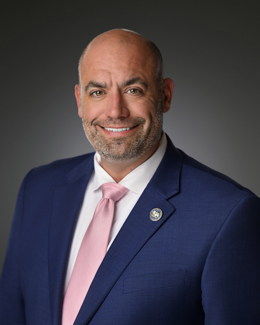
Bryan Fontenot
RRepublican
Ask Maddy
·
AI policy assistant
Ask Maddy about HB 280
Scope: LA
Hi! I can help you understand HB 280. What would you like to know?
Try one of these
i
Maddy answers using official bill text and legislative records. Always verify before sharing.
Sources cited inline