

DOMESTIC ABUSE: Adds intentional evasion of service of process for certain court orders as conduct that constitutes a violation of a protective order
HB 231 creates a new criminal offense for intentionally avoiding service of specific court orders, directly affecting individuals who evade legal notices related to protective orders, custody cases, or other civil/criminal proceedings. The bill makes it a violation to deliberately skip being served with orders issued under laws covering domestic violence (R.S. 9:361 et seq.), child custody (R.S. 28:53.2), or certain civil/criminal court processes (e.g., Code of Civil Procedure Articles 3601 or 3607.1). Key provisions define which orders trigger this crime and establish criminal penalties for intentional evasion, rather than focusing on the underlying order's content. This policy change adds a criminal consequence for avoiding court-ordered notices, targeting a specific behavior without altering the substantive requirements of the covered orders.
Bill status
signed
all 5 stages cleared
Introduction
Feb 2026
Committee Review
Apr 2026
House Passage
May 2026
Senate Passage
May 2026
Signed into Law
May 2026
Introduced Feb 20, 2026
Signed May 15, 2026
Maddy AI version diff · 4 comparisons
What changed between versions
Senate Floor Bureau Note, #2789, Kleinpeter, Adopted
→
HB231 Act
·
2 edits
MINOR
The bill was finalized and enrolled for the 2026 Regular Session, converting the document from a draft Senate floor amendment into an official Act (Act No. 140). The core policy content remains focused on defining the intentional evasion of legal service as a violation of protective orders, with no substantive changes to the legal text itself.
Scope change
None; the bill's scope regarding protective orders remains unchanged.
TECHNICAL
The document header was updated from 'Senate Floor Amendments' to 'Enrolled' and 'Act No. 140', indicating the bill has passed all legislative stages and is now official law.
Formatting and attribution were adjusted to reflect the final enrolled version, changing the sponsor attribution from Senator Kleinpeter to Representative Boyer.
Floor votes · House Mar 31, 2026
How they voted
This bill passed the Senate by voice vote (no roll call recorded).
Full legislative history
Actions timeline
Total actions
22
Key actions
5
Committee
5
May 11, 2026
Lower · Passed
Read by title, roll called, yeas 99, nays 0, Senate amendments concurred in.
lower
May 5, 2026
Upper · Passed
Senate floor amendments read and adopted. Read by title, passed by a vote of 36 yeas and 0 nays, and ordered returned to the House. Motion to reconsider tabled.
upper
Apr 22, 2026
Committee
Read by title and referred to the Legislative Bureau.
upper
Apr 21, 2026
Upper · Passed
Reported favorably.
upper
Mar 31, 2026
Lower · Passed
Read third time by title, roll called on final passage, yeas 87, nays 7. Finally passed, title adopted, ordered to the Senate.
lower
Mar 25, 2026
Lower · Passed
Reported with amendments (11-0).
lower
Mar 9, 2026
Committee
Read by title, under the rules, referred to the Committee on Administration of Criminal Justice.
lower
Feb 20, 2026
Committee
Under the rules, provisionally referred to the Committee on Administration of Criminal Justice.
lower
1 primary · 0 co-sponsors
Sponsors
Role
Legislator
Party
State
District
P
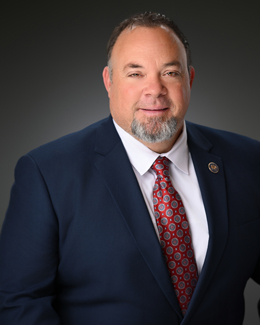
Chad Boyer
RRepublican
Ask Maddy
·
AI policy assistant
Ask Maddy about HB 231
Scope: LA
Hi! I can help you understand HB 231. What would you like to know?
Try one of these
i
Maddy answers using official bill text and legislative records. Always verify before sharing.
Sources cited inline