Maddy summaryThe Title IX Clarification Act of 2026 amends federal education law to explicitly define the terms "sex," "female," and "male" based on biological characteristics. Specifically, it states that "sex" refers to an individual's biologically determined status as male or female, while "female" and "male" are defined by the presence of specific reproductive systems capable of producing ova or sperm, respectively. These definitions apply to all education programs and activities that receive federal financial assistance starting on the date the bill becomes law. The legislation aims to clarify existing statutes by removing ambiguity around biological sex definitions in the context of Title IX protections.

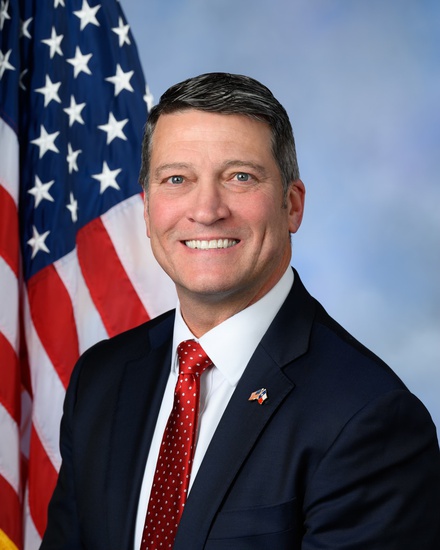
Rep. Ronny Jackson
Sponsored bills
Maddy summaryThis House resolution marks the 25th anniversary of the September 11, 2001 terrorist attacks by formally honoring the memory of the nearly 3,000 victims and recognizing the sacrifices made by first responders, military personnel, and the passengers of United Airlines Flight 93. The bill acknowledges the ongoing health challenges faced by survivors and responders, highlighting the role of the World Trade Center Health Program in providing long-term medical support. It also credits charitable organizations and community groups that have continued to assist victims' families and veterans over the past two decades. Finally, the resolution urges the American public to observe the anniversary with ceremonies and reaffirms Congress's commitment to remembering the events and lessons of that day.
Maddy summaryH.Res. 1497 is a House resolution that commemorates the fifth anniversary of the Abbey Gate bombing, in which 13 U.S. servicemembers were killed during the withdrawal from Afghanistan. The bill lists the names of the fallen soldiers and formally condemns the Biden-Harris administration for what it describes as dereliction of duty and the forfeiture of military property to the Taliban. It asserts that the withdrawal was a disastrous failure that ignored security warnings and left Americans at risk, while also criticizing the lack of accountability from officials involved in the decision-making process.
Maddy summaryThe DEMAND Act of 2026 requires the Secretary of Defense to incorporate projected demand from foreign military sales into key planning documents for the U.S. defense industrial base. This includes integrating these projections into industrial base assessments, munitions production plans, and sustainment strategies for major defense programs. The bill also mandates that these factors be considered when making decisions about increasing production rates or expanding manufacturing capacity. The primary goal is to expand production capabilities, stabilize critical suppliers, and encourage investment in essential production lines.
Maddy summaryThis House resolution formally honors the life and legacy of the late Representative Kay Granger from Texas, recognizing her historic achievements in public service. The bill highlights her roles as the first woman elected mayor of Fort Worth, the first Republican woman to represent Texas in the U.S. House, and the first Republican woman to chair the House Committee on Appropriations. It also acknowledges her contributions to national defense, including her work on the F-35 fighter jet program and the naming of a Navy ship for Fort Worth. The resolution expresses sympathy to Granger's family and directs the Clerk of the House to send an official copy of the document to her loved ones.
Maddy summaryThis bill requires the Secretary of State to submit annual reports examining whether the Polisario Front, a group involved in the Western Sahara conflict, has exchanged military support or intelligence with Iranian-backed terrorist organizations. If such cooperation is confirmed, the President must designate the Polisario Front as a foreign terrorist organization and freeze its assets under existing sanctions laws. The legislation focuses on specific military aid like weapons, drones, and intelligence, aiming to increase transparency regarding potential links between the two groups without advocating for a specific political outcome.
Maddy summaryThis bill directs the Department of Defense to create designated airspace corridors specifically for testing and training small drones and the systems used to detect or neutralize them. These zones would allow military personnel to safely practice operating various drone technologies, such as sensors and autonomous software, alongside counter-drone measures like electronic warfare and directed energy weapons. The Secretary of Defense must identify suitable locations, potentially building new facilities or using existing ones, while consulting with other government agencies to ensure safety and address regulatory hurdles. Additionally, the bill requires the Pentagon to report to Congress within 90 days of establishing a corridor, providing details on its location, necessary resources, and any agreements with other federal partners.
Maddy summaryThe SAFE CATTLE Act requires the U.S. Departments of Agriculture and Interior to coordinate federal efforts to prevent, monitor, and eradicate New World screwworm - a pest that attacks livestock and wildlife - across federal lands managed by agencies like the National Park Service and Fish and Wildlife Service. It mandates joint surveillance protocols, outbreak response plans with state officials, and science-based strategies to protect livestock industries and food supply chains. The bill also requires annual reports to Congress detailing interagency progress, outbreak responses, and recommendations for improving pest control until screwworm is contained south of Panama. This legislation directly affects federal land managers, livestock producers, and the broader agricultural economy by establishing a formal federal framework for addressing this specific animal health threat.
Maddy summaryHR 6213, the Heat Workforce Standards Act of 2025, prohibits the U.S. Department of Labor from finalizing, implementing, or enforcing OSHA's proposed "Heat Injury and Illness Prevention" standard (published August 30, 2024). This bill directly blocks the specific regulatory proposal targeting heat safety in both outdoor and indoor work settings. It does not create new requirements or affect workers; it solely prevents the implementation of the existing OSHA proposal. The bill is procedural, focusing on halting a regulatory action rather than establishing new policy.
Maddy summaryHR 1266, the Combating Illicit Xylazine Act, adds xylazine - a veterinary sedative increasingly found in illicit drug mixtures - to Schedule III of the Controlled Substances Act, regulating its use and trafficking. It directly affects veterinarians, animal owners, and manufacturers by allowing xylazine to be legally dispensed for animal use under specific veterinary prescriptions, while prohibiting non-veterinary human use. The bill includes transition periods (60 days for practitioners, 1 year for labeling) to ease compliance for manufacturers and practitioners, and requires the DEA and FDA to expedite necessary applications. It also mandates two congressional reports on xylazine's illicit use and trafficking patterns, and directs the Sentencing Commission to review penalties for offenses involving xylazine.