

0 co-sponsors
Total votes
285
all sessions
Attendance
84%
46 missed
Lower than 100% of chamber peers
With party
89%
of cast votes
Lower than 78% of chamber peers
Bipartisan score
6%
crosses aisle rarely
Higher than 77% of chamber peers
Sponsored
32
bills & resolutions
Lower than 77% of chamber peers
Committees
5
assignments
32 bills and resolutions
Sponsored bills
Total
32
Primary
32
Co-sponsor
0
This page
32
matching current filters
0 co-sponsors
0 co-sponsors
Requiring correctional facilities and jails to allow inmates and prisoners to make telephone calls at no cost.
Maddy summarySB 351 requires all Kansas correctional facilities and jails to allow inmates and prisoners to make telephone calls at no cost to them. The bill amends Kansas statutes (12-4213, 19-1919, and 75-5210) to explicitly prohibit charging inmates for calls or forcing them to use collect accounts or prepaid services. It directly affects individuals incarcerated in Kansas state prisons, county jails, and municipal holding facilities. The key provision mandates free access to phone calls while allowing facilities to set reasonable limits on call duration and frequency. This policy change applies to all inmates in Kansas custody under state law.
died Apr 10, 2026
0 co-sponsors
Proposing to amend section 1 of article 11 of the constitution of the state of Kansas to limit property tax assessed value increases for real property in any subclass and personal property classified as mobile homes.
Maddy summaryThis bill proposes a constitutional amendment to limit how much the assessed value of residential real property and mobile homes can increase each year in Kansas. The amendment would cap annual increases for these property types at 1.5% of their value, starting from January 1, 2027. This change directly affects homeowners and mobile home owners by restricting how their property tax bases can grow over time. The bill requires a two-thirds vote in both legislative chambers and would be submitted to voters for approval before taking effect.
Budget & TaxesOpposes Budget & TaxesBill limits property tax assessed value increases, restricting government revenue growth and reducing the ability to fund public services.
HousingSupports HousingBill caps property tax increases for residential real property and mobile homes, directly protecting homeowners and mobile home owners from excessive tax burdens.
died Apr 10, 2026
0 co-sponsors
Requiring school districts to prohibit the use of personal electronic communication devices during instructional time and prohibiting any employee of a school district from using social media to directly communicate with any student for official school purposes.
Maddy summarySB 302 requires Kansas public and nonpublic K-12 schools to ban student use of personal electronic devices (like phones, tablets, or smartwatches) during instructional time, with exceptions for students with individualized education plans (IEPs) or medical needs approved by a physician. It also prohibits school staff from using social media platforms (such as Instagram or TikTok) to directly message students for official school business, allowing only public, one-way communications on approved platforms. Schools must adopt written policies by 2026 and certify compliance by September 1, 2026, covering enforcement procedures and student device storage requirements. The law applies to all on-campus instructional time but excludes virtual schools.
died Apr 10, 2026
0 co-sponsors
Requiring the office of each state officer to keep and maintain records of information concerning all travel locations and expenses of the state officer that were paid or reimbursed by the state during each fiscal year and provide such records of information upon request by a member of the public.
Maddy summarySB 362 requires Kansas state officers - including the governor, lieutenant governor, attorney general, secretary of state, treasurer, and insurance commissioner - to maintain detailed records of all state-paid or reimbursed travel locations and expenses for each fiscal year. These records must be made available to the public upon request, overriding any existing laws that might restrict disclosure of such information. The bill directly affects state officers' offices by mandating transparent record-keeping and public access to travel spending data. It focuses on concrete policy changes: standardized documentation and immediate public access, without altering travel policies or budgets.
died Apr 10, 2026
0 co-sponsors
Establishing the born to invest act and requiring the office of vital statistics to provide data to the office of the state treasurer for the distribution of informational materials regarding certain government-administered savings accounts.
Maddy summarySB 304, the "Born to Invest Act," requires Kansas' Office of Vital Statistics to share specific birth records (child's name, parent/guardian address, birth date) for children born on or after January 1, 2025, with the State Treasurer. This data enables the Treasurer to send informational materials about three federal savings programs: 529 college savings plans, ABLE accounts for disabilities, and "Trump accounts" (a reference to a specific federal savings program). The bill mandates that data be transmitted securely to the Treasurer within 90 days of a birth certificate issuance (or by September 1, 2026, for children born before July 1, 2026) and directs the Treasurer to distribute materials via mail and online resources. The policy aims to proactively inform families about available savings options for children, without creating new accounts or changing eligibility.
died Apr 10, 2026
0 co-sponsors
Requiring each member of a municipal governing body whose district territory includes land being acquired to approve the exercise of eminent domain for such acquisition when such land is to be used for a recreational project.
Maddy summarySB 12 requires every member of a city's governing body (like a city council) whose district includes land to be acquired for a recreational project to vote in favor of using eminent domain. This applies specifically to land taken for parks, nature areas, libraries, entertainment venues, or other public recreational facilities. The bill changes existing law to prevent cities from unilaterally approving such land acquisitions without unanimous approval from all affected district representatives. It does not apply to non-recreational projects or to county-level eminent domain decisions.
died Apr 10, 2026
0 co-sponsors
Requiring the termination of any candidate campaign account for an elected official who chooses to not run for reelection or who is defeated in a subsequent election.
Maddy summarySB 40 requires elected officials in Kansas to close their campaign finance accounts within 90 days after the next election where they are not re-elected or choose not to run again. This applies to all state and local officeholders who do not seek re-election or lose their bid. The bill mandates that campaign treasurers handle any leftover funds according to existing state law and file a formal termination report. It does not change campaign contribution rules but ensures unused campaign funds are properly disbursed and reported.
died Apr 10, 2026
0 co-sponsors
Ask Maddy
·
AI policy assistant
Ask Maddy about Tim Shallenburger
Scope: kansas
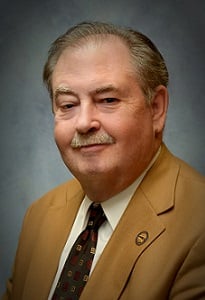
Hi! I can help you understand Tim Shallenburger's legislative record. What would you like to know?
Try one of these
i
Maddy answers using official bill text and legislative records. Always verify before sharing.
Sources cited inline