

0 co-sponsors
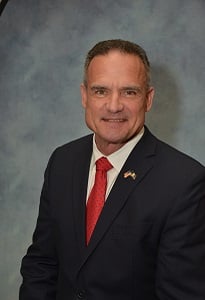
Rep. Dave Buehler
Total votes
318
all sessions
Attendance
97%
9 missed
Lower than 78% of chamber peers
With party
99%
of cast votes
Higher than 94% of chamber peers
Bipartisan score
1%
crosses aisle rarely
Lower than 96% of chamber peers
Sponsored
57
bills & resolutions
Higher than 94% of chamber peers
Committees
4
assignments
57 bills and resolutions
Sponsored bills
Total
57
Primary
57
Co-sponsor
0
This page
57
matching current filters
0 co-sponsors
0 co-sponsors
Proposing to amend the constitution of the state of Kansas by revising article 11 by establishing the freedom from taxes fund, establishing the Kansas citizens freedom review board, authorizing the board to review tax exemptions and approve or eliminate such exemptions and eliminating the motor vehicle property taxes and fees, state-mandated and state-imposed property taxes and state-imposed income and privilege taxes.
Maddy summaryThis bill proposes to amend the Kansas Constitution to create a new "Freedom from Taxes Fund" and a temporary Citizens Freedom Review Board. The fund would be divided into three parts to pay for the elimination of motor vehicle taxes, state property taxes, and state income and privilege taxes. Additionally, the bill establishes a board with the power to review existing tax exemptions and decide whether to keep or remove them. If passed by the legislature and approved by voters, these changes would legally end the specified taxes and allow the state to use the new fund to cover the resulting budget shortfalls.
died Apr 10, 2026
0 co-sponsors
Urging the Kansas Turnpike Authority to waive tolls for vehicles displaying Kansas special license plates related to injury, loss of life or valor in active military service
Maddy summaryThis House Resolution urges the Kansas Turnpike Authority to waive tolls for personal vehicles displaying special license plates that recognize military service, injury, or valor. The bill specifically targets drivers holding plates for disabled veterans, prisoners of war, Purple Hearts, Medal of Honor recipients, and other qualifying military honors. It proposes that the Turnpike Authority modify its existing cashless tolling system to automatically exempt these vehicles from fees. The resolution cites similar toll exemption laws in Oklahoma, California, and Texas as examples of other states providing such benefits to veterans.
died Apr 10, 2026
0 co-sponsors
Requiring rural water districts to award certain contracts through a public letting process.
Maddy summaryHB 2625 requires Kansas rural water districts to use public bidding for contracts exceeding $25,000 related to building, installing, or replacing water infrastructure like pipelines, pump stations, or facilities. Districts must provide 20 days' notice via newspaper or posted notices in the service area before awarding such contracts. Exceptions include emergency repairs (based on public health/safety), professional services, and insurance purchases. This directly affects rural water districts' procurement process for major capital projects.
died Apr 10, 2026
0 co-sponsors
Establishing the private energy campus and industrial host-site electric generation act to authorize the provision of energy services to private enterprises located on a private energy campus.
Maddy summaryHB 2664 creates a legal framework for private energy campuses - such as large data centers, manufacturing facilities, or hydrogen plants - located on contiguous private property to generate and sell electricity exclusively to businesses on the same site. It exempts these private energy sales from standard public utility regulations and net metering requirements, while allowing campuses to connect to the broader grid for emergency backup or energy exports through voluntary agreements with electric utilities. The bill requires utilities to approve these agreements (with state commission oversight for regulated utilities), but keeps utility rates and terms for private campus-to-campus power sales outside regulatory jurisdiction. This directly affects large industrial and data center enterprises seeking self-sufficiency, without altering service for residential or small commercial customers.
died Apr 10, 2026
0 co-sponsors
Exempting minor-owned businesses from paying sales tax on the first $10,000 of sales from tangible personal property sold each calendar year and from local taxes, licenses, permits and other local government permissions.
Maddy summaryHB 2599, known as the "Kansas lemonade stand law," exempts minor-owned businesses (operated solely by individuals under 18) from paying state sales tax and local taxes, licenses, or permits on the first $10,000 of annual sales of goods. It specifically applies to small, seasonal or intermittent businesses like lemonade stands, where minors make under $10,000 yearly in gross sales. The law removes both state-level sales tax obligations and local government fees for qualifying businesses. This policy directly supports young entrepreneurs by reducing startup costs for small-scale, temporary ventures.
died Apr 10, 2026
0 co-sponsors
Reconciling multiple amendments to certain statutes.
Maddy summaryThis bill designates a specific segment of K-5 highway in Wyandotte County (from the junction of K-5 and N. 18th Street west to N. 38th Street) as the "Representative Marvin S. Robinson II Memorial Highway." It also redesignates a portion of Interstate 635 (from the Kansas-Missouri border south to its junction with K-5 highway) as the "Harry Darby Memorial Highway." The bill requires the Kansas Secretary of Transportation to install highway signs marking both routes, following standard procedures. This is a procedural memorial designation with no substantive policy changes to transportation law.
Signed into law Apr 10, 2026
0 co-sponsors
Providing membership in the KP&F retirement system for certain security officers of the department of corrections and allowing certain service credit purchases of previous KPERS security officer service for purposes of KP&F retirement benefits.
Maddy summaryHB 2006 changes retirement eligibility for Kansas Department of Corrections security officers. Starting July 1, 2025, these officers will join the state's police and fire retirement system (KP&F) instead of the general public employees system (KPERS). The bill allows officers to buy back prior service time in KPERS to count toward KP&F benefits, with a 7.15% employee contribution rate on salary. This applies to current and future security officers employed by corrections, affecting their retirement calculations and contributions.
died Apr 10, 2026
0 co-sponsors
Ask Maddy
·
AI policy assistant
Ask Maddy about Dave Buehler
Scope: kansas
Hi! I can help you understand Dave Buehler's legislative record. What would you like to know?
Try one of these
i
Maddy answers using official bill text and legislative records. Always verify before sharing.
Sources cited inline