

In committee Sep 24, 2026
1 co-sponsor
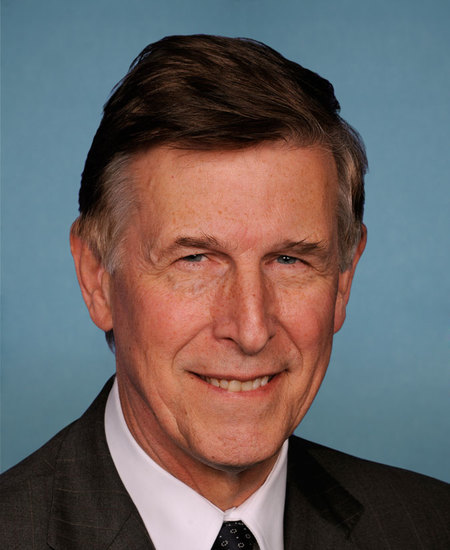
Rep. Donald S. Beyer, Jr.
Total votes
2,837
all sessions
Attendance
98%
54 missed
Near the chamber average
With party
98%
of cast votes
Near the chamber average
Bipartisan score
1%
crosses aisle rarely
Near the chamber average
Sponsored
1,313
bills & resolutions
Near the chamber average
Committees
4
assignments
1,313 bills and resolutions
Sponsored bills
Total
1,313
Primary
159
Co-sponsor
1,154
This page
1,313
matching current filters
In committee Sep 24, 2026
1 co-sponsor
Disapproving the proposed civilian nuclear cooperation agreement between the United States and Saudi Arabia submitted to the Congress on September 14, 2026.
Maddy summaryThis joint resolution seeks to disapprove a proposed civilian nuclear cooperation agreement between the United States and Saudi Arabia that was submitted to Congress in September 2026. The bill directly affects U.S.-Saudi diplomatic and energy relations by blocking the formalization of this specific nuclear partnership. It operates as a procedural vote where members of Congress can reject the executive branch's submission under the Atomic Energy Act.
In committee Sep 16, 2026
1 co-sponsor
In committee Sep 16, 2026
1 co-sponsor
9–8–8 Implementation Act of 2026
Maddy summaryThe 9-8-8 Implementation Act of 2026 expands federal funding and mandates insurance coverage for behavioral health crisis services, directly affecting individuals experiencing mental health or substance use emergencies as well as the providers who serve them. The bill authorizes grants to upgrade local lifeline call centers, build new crisis stabilization facilities, and train a larger workforce of behavioral health professionals. It requires Medicare, Medicaid, private group health plans, TRICARE, and other federal insurance programs to cover crisis response services with financial terms no more restrictive than standard medical care. Additionally, the legislation establishes a federal panel to develop training protocols for 9-1-1 dispatchers to better connect callers to appropriate crisis care rather than law enforcement responses.
In committee Sep 16, 2026
1 co-sponsor
End Tax Penalties on American Hostages Act
Maddy summaryThe End Tax Penalties on American Hostages Act modifies the Internal Revenue Code to protect United States nationals who are wrongfully detained or held hostage abroad from tax penalties and interest. It achieves this by disregarding the time spent in captivity when calculating tax deadlines, interest accruals, and penalty amounts, while also requiring the Treasury Department to update its systems to suspend collection activities for these individuals. Additionally, the bill establishes a program to refund or abate any taxes, penalties, or interest that eligible individuals paid during the period from January 1, 2021, to the date of the law's enactment. To implement these changes, the Secretary of State and the Attorney General must provide lists of affected individuals to the Treasury by January 1, 2027, and notify them of their eligibility for refunds.
Passed Sep 16, 2026
1 co-sponsor
TRAPS Act
Maddy summaryThe TRAPS Act establishes a federal Task Force on Payment Scams, chaired by the Treasury Secretary, to coordinate efforts across agencies like the FTC, Federal Reserve, and consumer groups. The Task Force will study current scam tactics (such as fake text messages or fraudulent payment platforms), evaluate prevention strategies, and develop recommendations to help consumers avoid and report scams. It must submit an initial report within one year and annual updates, focusing on improving federal-state coordination and education programs. This bill directly affects government agencies and stakeholders participating in the Task Force, with the goal of protecting consumers from evolving payment scams.
In committee Sep 16, 2026
1 co-sponsor
Proposing an amendment to the Constitution of the United States to prohibit the use of slavery and involuntary servitude as a punishment for a crime.
Maddy summaryH.J. Res. 216 proposes a constitutional amendment to eliminate the exception in the Thirteenth Amendment that currently permits slavery and involuntary servitude as punishment for a crime. The resolution would amend the Constitution to explicitly state that neither slavery nor involuntary servitude may be imposed on anyone as a penalty for criminal conduct. This change would directly affect incarcerated individuals by prohibiting forced labor practices within the criminal justice system, while clarifying that voluntary work programs and community service alternatives remain permissible.
Criminal JusticeSupports Criminal JusticeProposes constitutional amendment to ban involuntary servitude as punishment, directly advancing criminal justice reform and protecting inmate rights.
Labor & EmploymentSupports Labor & EmploymentThe bill prohibits involuntary servitude and forced labor for prisoners, directly strengthening protections against exploitative labor practices.
In committee Sep 15, 2026
1 co-sponsor
FABRIC Act
Maddy summaryThe FABRIC Act amends the Fair Labor Standards Act to prohibit piece-rate pay for garment industry workers, requiring employers to pay them at least the federal minimum wage on an hourly basis while still allowing for incentive bonuses. The bill establishes joint and several liability for brand guarantors, meaning companies that contract for garment manufacturing can be held financially responsible for wage violations committed by their contractors or subcontractors. To improve oversight, the legislation mandates that all garment manufacturers and contractors register annually with the Department of Labor, providing detailed information about ownership, employees, and past legal violations. Additionally, the bill creates a new Office of the Garment Industry within the Department of Labor and authorizes $100 million in competitive grants to support domestic manufacturing, workforce development, and facility improvements.
In committee Sep 14, 2026
1 co-sponsor
To designate the facility of the United States Postal Service located at 10660 Page Avenue in Fairfax, Virginia, as the "Congressman Gerald E. Connolly Post Office Building".
Maddy summaryHR 6332 designates the United States Postal Service facility at 10660 Page Avenue in Fairfax, Virginia, as the "Congressman Gerald E. Connolly Post Office Building." This bill updates all official references in federal documents, maps, and records to use the new name for this specific post office location. It does not create new policies or affect any services; it solely changes the building's official designation to honor Congressman Gerald E. Connolly. The change applies to all federal materials referencing the facility.
Passed Sep 14, 2026
1 co-sponsor
Ask Maddy
·
AI policy assistant
Ask Maddy about Donald S. Beyer, Jr.
Scope: iowa
Hi! I can help you understand Donald S. Beyer, Jr.'s legislative record. What would you like to know?
Try one of these
i
Maddy answers using official bill text and legislative records. Always verify before sharing.
Sources cited inline