

Maddy summaryHR 5267, the American Franchise Act, clarifies when franchisors can be considered joint employers of franchisee employees under federal labor laws. It defines "substantial direct and immediate control" over essential employment terms like wages, benefits, hours, hiring, and discipline - requiring franchisors to actively set these terms to be deemed joint employers. The bill explicitly excludes routine brand standards, training, or minimal safety requirements from constituting such control. This directly affects franchisors and franchisees by limiting joint employer liability to cases where franchisors exert significant, ongoing influence over core employment decisions. The law applies prospectively to new cases after enactment, not past disputes.
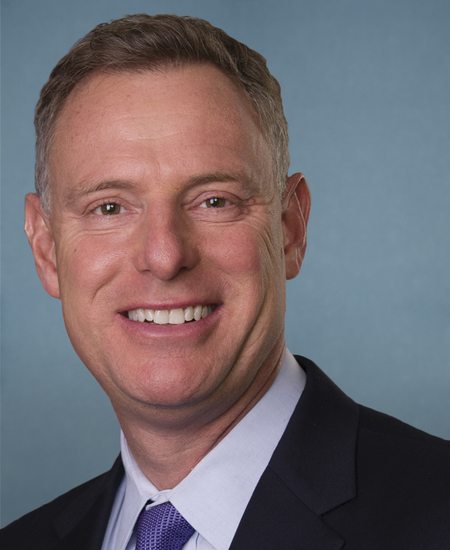
Rep. Scott H. Peters
Sponsored bills
Maddy summaryThe Certainty in Litigation for Electric Asset Reliability (CLEAR) Act of 2026 amends the Federal Power Act to streamline the permitting process for new electric transmission facilities. It designates the Federal Energy Regulatory Commission as the lead agency for coordinating federal authorizations and requires agencies to consolidate their review records into a single joint decision document. Additionally, the bill standardizes legal challenges by allowing parties to seek rehearing or judicial review of these approvals only through the procedures established in Section 313 of the Federal Power Act.
Maddy summaryThis House resolution marks the 25th anniversary of the September 11, 2001 terrorist attacks by formally honoring the memory of the nearly 3,000 victims and recognizing the sacrifices made by first responders, military personnel, and the passengers of United Airlines Flight 93. The bill acknowledges the ongoing health challenges faced by survivors and responders, highlighting the role of the World Trade Center Health Program in providing long-term medical support. It also credits charitable organizations and community groups that have continued to assist victims' families and veterans over the past two decades. Finally, the resolution urges the American public to observe the anniversary with ceremonies and reaffirms Congress's commitment to remembering the events and lessons of that day.
Maddy summaryThe Workforce Mobility Act of 2026 generally prohibits employers from entering into or enforcing noncompete agreements with their employees and contractors, rendering such contracts void. The bill includes specific exceptions that allow for noncompetes in the context of selling a business entity or dissolving a partnership, as well as for senior executives involved in a business sale who receive substantial severance compensation. It explicitly preserves an employer's right to protect trade secrets through nondisclosure agreements and requires businesses to post notices about these new worker protections. Enforcement is shared between the Federal Trade Commission and the Department of Labor, which must establish joint standards within one year, while also granting individuals a private right of action to sue for damages and attorney fees. Additionally, the act invalidates any predispute arbitration or class action waiver agreements related to violations of these noncompete rules.
Maddy summaryThe Chip EQUIP Act restricts federal funding for semiconductor manufacturing equipment made by foreign entities designated as security concerns (or their subsidiaries). It prohibits the use of such "ineligible" equipment - defined as completed, fully assembled tools like etching, lithography, or inspection machines - in projects receiving federal financial assistance for 10 years. The bill requires federal agreements to include this ban, with limited waivers allowed only if the equipment is unavailable from U.S. or allied sources, was refurbished by a foreign entity of concern but originally made by a non-concern entity, or meets export rules and national security criteria. This directly affects companies receiving federal funds for semiconductor manufacturing facilities.
Maddy summaryHR 2805, the PLAN for Broadband Act, requires the federal government to create a National Strategy to Close the Digital Divide within one year of enactment. This strategy must coordinate all federal broadband programs, streamline permitting for infrastructure installation on federal property, and reduce administrative burdens for state, local, and Tribal governments participating in these programs. The bill mandates a follow-up Implementation Plan within 120 days, including accountability measures, common data standards for funding, and regular congressional briefings. The strategy and plan aim to reduce program duplication, improve efficiency, and address gaps in broadband access, particularly for underserved communities and Tribal lands, with oversight from the Government Accountability Office.
National Law Enforcement Officers Remembrance, Support and Community Outreach Act. [ sic ] This bill temporarily directs the Department of the Interior to award a grant to the National Law Enforcement Officers Memorial Fund for the expenses associated with operating and enhancing the community outreach, public education, and officer safety and wellness programs of the National Law Enforcement Museum.
Maddy summaryThe Task Force on the Impact of the Affordable Housing Crisis Act of 2026 establishes a bipartisan, 18-member task force to study how a lack of affordable housing affects various aspects of life and government spending. The group will evaluate impacts on areas such as education, employment, health, and regional economic growth, while also quantifying the costs imposed on federal, state, and local programs due to housing shortages. Members will be appointed by congressional leadership within 180 days of enactment and must submit a final report with recommendations to Congress before the task force terminates two years after all members are appointed.
This bill designates the facility of the United States Postal Service located at 6444 San Fernando Road in Glendale, California, as the "Paul Ignatius Post Office".
Maddy summaryHR 2175 designates the U.S. Postal Service facility at 130 South Patterson Avenue in Santa Barbara, California, as the "Brigadier General Frederick R. Lopez Post Office Building." The bill updates all official U.S. government references to this location to reflect the new name. This is a ceremonial naming bill with no policy changes or direct impact on residents or services.