

In committee Sep 24, 2026
0 co-sponsors
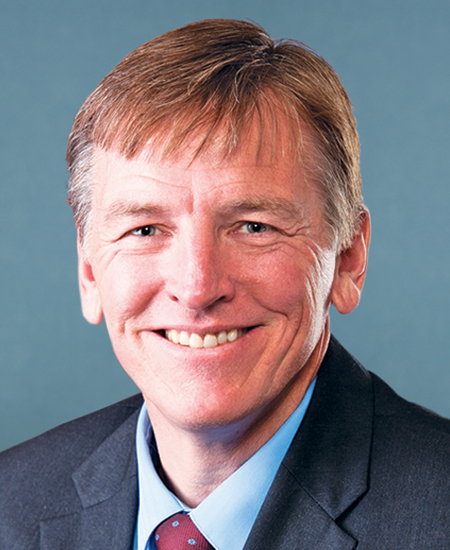
Rep. Paul A. Gosar
Total votes
2,837
all sessions
Attendance
95%
142 missed
Lower than 87% of chamber peers
With party
82%
of cast votes
Lower than 94% of chamber peers
Bipartisan score
9%
crosses aisle rarely
Higher than 93% of chamber peers
Sponsored
1,155
bills & resolutions
Near the chamber average
Committees
6
assignments
1,155 bills and resolutions
Sponsored bills
Total
1,155
Primary
95
Co-sponsor
1,060
This page
1,155
matching current filters
Parents Opt-in Protection Act
Maddy summaryHR 4986, the Parents Opt-in Protection Act, amends federal law to require written permission before schools administer certain student surveys or evaluations. It directly affects students (especially minors) and their parents, requiring schools to obtain prior written consent from the student (if an adult or emancipated minor) or the parent (for minors) for each specific survey. The bill clarifies that schools cannot force participation without this written consent for surveys related to sensitive topics like health or behavior. This change updates existing consent rules from verbal permission to a written requirement for targeted school assessments.
In committee Sep 24, 2026
1 co-sponsor
AM Radio for Every Vehicle Act of 2025
Maddy summaryThis bill requires all new passenger vehicles manufactured for sale in the U.S. to include AM radio as standard equipment (not an optional add-on) by 2027-2028, depending on manufacturer size. It mandates that AM radio receivers must be easily accessible to drivers and allows compliance through digital AM broadcast technology. During a transition period, manufacturers must clearly label vehicles without AM radio but cannot charge extra for this feature. The bill also mandates a GAO study on AM radio's role in emergency alerts and includes a 10-year sunset provision for the rule. It preempts state laws regarding AM radio access in vehicles.
Passed Sep 16, 2026
1 co-sponsor
MAGA Act
Maddy summaryThe Make Apportionment Great Again Act would change how U.S. House seats are distributed among states by excluding noncitizens from the population count used for apportionment. It requires the Secretary of Commerce to recalculate state populations using existing federal and state government records, without conducting a new census, and mandates that future censuses include a question on citizenship status. The bill establishes a legal presumption that any resulting changes in seat allocation are valid, allowing courts to overturn them only with clear evidence of statutory or constitutional violations. Additionally, it creates an expedited judicial process for legal challenges, requiring cases to be heard by three-judge panels and permitting direct appeal to the Supreme Court.
In committee Sep 15, 2026
1 co-sponsor
Kayleigh’s Law Act of 2026
Maddy summaryThis bill, known as Kayleigh's Law Act of 2026, requires federal courts to issue permanent restraining orders against defendants convicted of certain serious crimes, prohibiting them from contacting their victims for the rest of their lives. The law applies specifically to individuals convicted of violent felonies or felony offenses involving sexual acts, including crimes like child exploitation and human trafficking. Courts must include these orders in sentencing, and violations are treated as contempt of court, while the only way to lift the order is if the conviction is overturned or pardoned. The bill also ensures that victims cannot be charged any fees for obtaining these protective orders and clarifies that the restrictions apply regardless of state laws.
Passed Sep 14, 2026
1 co-sponsor
To designate the facility of the United States Postal Service located at 13355 North Lon Adams Road in Marana, Arizona, as the "Mayor Ed Honea Memorial Post Office".
Maddy summaryThis bill designates the U.S. Postal Service facility at 13355 North Lon Adams Road in Marana, Arizona, as the "Mayor Ed Honea Memorial Post Office." It changes all official federal references to this location to reflect the new name, honoring Mayor Ed Honea through a commemorative designation. The bill has no policy or funding provisions - it is purely a naming change for the post office.
Passed Sep 14, 2026
1 co-sponsor
To designate the facility of the United States Postal Service located at 12208 North 19th Avenue in Phoenix, Arizona, as the "Officer Zane T. Coolidge Post Office".
Maddy summaryHR 3393 designates the U.S. Postal Service facility at 12208 North 19th Avenue in Phoenix, Arizona, as the "Officer Zane T. Coolidge Post Office." The bill updates all official references to this location to reflect the new name. This is a commemorative act honoring Officer Zane T. Coolidge, with no substantive policy changes or direct impact on citizens or regulations. The designation applies only to the specific postal facility and its official records.
Passed Sep 14, 2026
1 co-sponsor
HOMEFRONT Act of 2026
Maddy summaryThe HOMEFRONT Act of 2026 prohibits U.S. courts from recognizing or enforcing foreign judgments based on censorship laws if the underlying conduct would be protected by the First Amendment in the United States. The bill places the burden of proof on the party seeking enforcement to demonstrate that the foreign court's jurisdiction and the specific judgment comply with U.S. constitutional standards and Section 230 of the Communications Act. It also bars federal, state, and local government officials from assisting foreign governments in enforcing such laws against U.S. persons and prevents the extradition of individuals for speech protected domestically. Additionally, the legislation grants affected individuals a private right of action to seek damages and requires the Attorney General to submit annual reports on foreign censorship impacts while directing the Federal Trade Commission to maintain a database of targeted speech instances.
In committee Sep 8, 2026
1 co-sponsor
American Franchise Act
Maddy summaryHR 5267, the American Franchise Act, clarifies when franchisors can be considered joint employers of franchisee employees under federal labor laws. It defines "substantial direct and immediate control" over essential employment terms like wages, benefits, hours, hiring, and discipline - requiring franchisors to actively set these terms to be deemed joint employers. The bill explicitly excludes routine brand standards, training, or minimal safety requirements from constituting such control. This directly affects franchisors and franchisees by limiting joint employer liability to cases where franchisors exert significant, ongoing influence over core employment decisions. The law applies prospectively to new cases after enactment, not past disputes.
In committee Sep 8, 2026
1 co-sponsor
Denouncing Sharia law in the United States.
Maddy summaryThis House concurrent resolution formally denounces Sharia law and opposes its implementation within the United States. The text argues that Sharia functions as a comprehensive political and legal system that conflicts with the U.S. Constitution, specifically citing differences in criminal justice, gender equality, and individual liberties. It references historical examples of Islamic governance and recent statements by President Trump to support the claim that foreign legal systems incompatible with American values should not be applied domestically. As a concurrent resolution, this measure serves as an official expression of congressional sentiment rather than creating new binding laws or regulations.
In committee Sep 3, 2026
1 co-sponsor
Ask Maddy
·
AI policy assistant
Ask Maddy about Paul A. Gosar
Scope: indiana
Hi! I can help you understand Paul A. Gosar's legislative record. What would you like to know?
Try one of these
i
Maddy answers using official bill text and legislative records. Always verify before sharing.
Sources cited inline