

Civil rights commission.
Summary
Provides that the civil rights commission (commission) may not represent a private individual in a civil action filed in circuit or superior court. Amends the definition of "discriminatory practice". Requires the commission to first send a complaint received by the commission to another state or federal agency that has jurisdiction over the complaint. Allows the commission to enter into a memorandum of understanding with a state or federal agency if certain conditions are met. Requires the party that elects to have claims asserted in a finding of reasonable cause decided in a civil action to file the civil action. Provides that the commission may only represent the state in a civil action and repeals a provision allowing a court to award monetary damages in those cases. Conforms the circumstances under which the commission may be required to pay attorney's fees to the circumstances under which an agency may be required to pay fees under the administrative orders and proceedings act (AOPA).
Bill status
signed
all 5 stages cleared
Introduction
Jan 2026
Committee Review
Feb 2026
House Passage
Feb 2026
Senate Passage
Feb 2026
Signed into Law
Mar 2026
Introduced Jan 5, 2026
Signed Mar 4, 2026
Maddy AI version diff · 3 comparisons
What changed between versions
House Bill (S)
→
House Bill (H)
·
3 edits
MINOR
The bill was updated from its House version to its Senate-engrossed version, reflecting final amendments made by the Senate. The most significant substantive change is a new requirement for the civil rights commission to forward complaints to other state or federal agencies with jurisdiction before acting, along with the ability to create memorandums of understanding with those agencies. This change aims to improve coordination between agencies handling discrimination complaints.
Scope change
The bill's scope was expanded to include a mandatory referral process for complaints to other agencies, altering how the commission initially handles certain cases.
REQUIREMENT
Requires the civil rights commission to send complaints to other state or federal agencies with jurisdiction before taking action.
Allows the commission to enter into memorandums of understanding with other agencies if specific conditions are met.
TIMELINE
Updated effective date and revision dates to reflect the final Senate action in February 2026.
Floor votes · Senate Feb 24, 2026 · House Jan 28, 2026
How they voted
40–7
Passed · 2 other
Total votes 49
Feb 24, 2026
D
Democratic9
77% Nay
R
Republican40
97% Yea
Vote distribution
All Yea
All Nay
Mixed
No data
Full legislative history
Actions timeline
Total actions
20
Key actions
9
Committee
2
Amendments
1
Mar 4, 2026
Signed into law
Signed by the Governor
executive
Feb 27, 2026
Upper · Passed
Signed by the President of the Senate
upper
Feb 27, 2026
Upper · Passed
Signed by the President Pro Tempore
upper
Feb 26, 2026
Lower · Passed
House concurred with Senate amendments; Roll Call 395: yeas 66, nays 29
lower
Feb 26, 2026
Lower · Passed
Signed by the Speaker
lower
Feb 24, 2026
Upper · Passed
Third reading: passed; Roll Call 240: yeas 40, nays 8
upper
Feb 23, 2026
Amended
Amendment #1 (Hunley) failed; voice vote
upper
Feb 19, 2026
Upper · Passed
Committee report: amend do pass, adopted
upper
Jan 28, 2026
Lower · Passed
Third reading: passed; Roll Call 138: yeas 71, nays 20
lower
Jan 22, 2026
Lower · Passed
Committee report: amend do pass, adopted
lower
2 primary · 0 co-sponsors
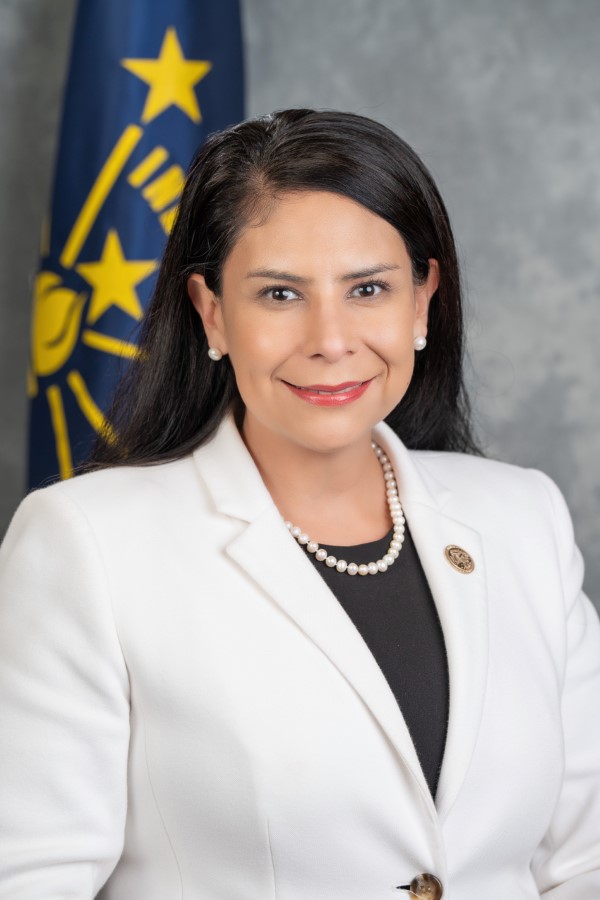
Sponsors

Ask Maddy
·
AI policy assistant
Ask Maddy about HB 1193
Scope: IN
Hi! I can help you understand HB 1193. What would you like to know?
Try one of these
i
Maddy answers using official bill text and legislative records. Always verify before sharing.
Sources cited inline