

Threats to critical infrastructure.
Summary
Amends the statute prohibiting the use of public funds to purchase equipment or services produced or provided by certain prohibited persons determined to be a national security threat to communications networks or supply chains to also prohibit the use of public funds to purchase communications equipment or service that is: (1) determined under specified federal regulations to pose an unacceptable risk to the national security of the United States or the security and safety of United States persons; and (2) included on the covered list published, maintained, and updated by the federal Public Safety and Homeland Security Bureau on the website of the Federal Communications Commission. Provides that the governor may, at any time, and in consultation with the executive director of the department of homeland security, designate a country as a threat to certain critical infrastructure located in Indiana. Provides that after June 30, 2023, a specified qualified entity may not enter into an agreement relating to critical infrastructure with a company if: (1) under the agreement, the company would be able to directly or remotely access or control of a critical infrastructure or a cybersecurity system of a critical infrastructure; and (2) the company is: (A) owned or controlled by citizens of (or a company or entity owned or controlled by citizens or the government of) China, Iran, North Korea, Russia, or a country designated as a threat to critical infrastructure by the governor; or (B) headquartered in China, Iran, North Korea, Russia, or a country designated as a threat to critical infrastructure by the governor. Provides that after June 30, 2023, a prohibited person may not purchase, lease, or acquire a parcel of real property that is directly adjacent to a military installation. Provides that the attorney general may investigate the purchase, lease, or acquisition of real property upon receipt of a complaint. Provides that the attorney general shall enforce a violation by commencing a receivership proceeding and selling the property through the receivership.
Bill status
signed
all 5 stages cleared
Introduction
Jan 2023
Committee Review
Mar 2023
Senate Passage
Apr 2023
House Passage
Apr 2023
Signed into Law
May 2023
Introduced Jan 19, 2023
Signed May 1, 2023
Floor votes · House Mar 23, 2023
How they voted
This bill passed the Senate by voice vote (no roll call recorded).
Full legislative history
Actions timeline
Total actions
28
Key actions
9
Committee
2
May 1, 2023
Signed into law
Signed by the Governor
executive
Apr 26, 2023
Upper · Passed
Signed by the President of the Senate
upper
Apr 21, 2023
Lower · Passed
Signed by the Speaker
lower
Apr 13, 2023
Upper · Passed
Signed by the President Pro Tempore
upper
Apr 10, 2023
Upper · Passed
Senate concurred in House amendments; Roll Call 361: yeas 45, nays 4
upper
Mar 23, 2023
Lower · Passed
Third reading: passed; Roll Call 297: yeas 90, nays 0
lower
Mar 13, 2023
Lower · Passed
Committee report: amend do pass, adopted
lower
Feb 6, 2023
Upper · Passed
Third reading: passed; Roll Call 73: yeas 42, nays 7
upper
Jan 31, 2023
Upper · Passed
Committee report: do pass, adopted
upper
4 primary · 10 co-sponsors
Sponsors
Role
Legislator
Party
State
District
P

Chris Garten
RRepublican
P

Ethan Manning
RRepublican
P

Jon Ford
RRepublican
P

Justin Busch
RRepublican
Co

Becky Cash
RRepublican
Co

Blake Doriot
RRepublican
Co

Chris Judy
RRepublican
Co

Eric Koch
RRepublican
Co
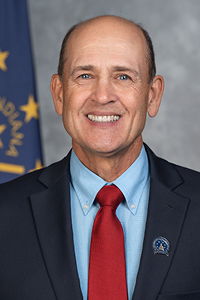
Gary Byrne
RRepublican
Co

Jim Buck
RRepublican
Co

Jim Tomes
RRepublican
Co

John Crane
RRepublican
Co

Randy Frye
RRepublican
Co
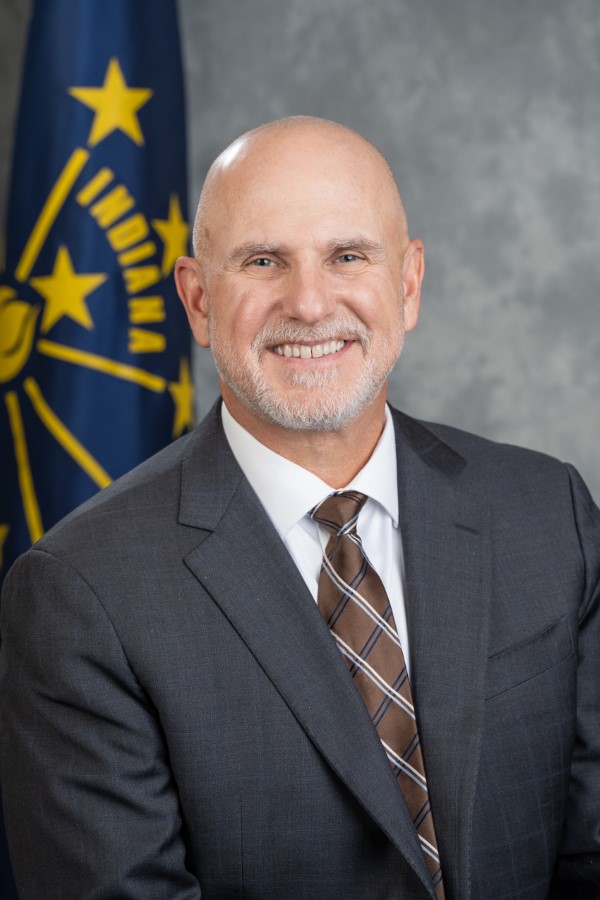
Scott Baldwin
RRepublican
Ask Maddy
·
AI policy assistant
Ask Maddy about SB 477
Scope: IN
Hi! I can help you understand SB 477. What would you like to know?
Try one of these
i
Maddy answers using official bill text and legislative records. Always verify before sharing.
Sources cited inline