

Excess liability trust fund.
Summary
Defines "aboveground storage tank" as a tank or combination of tanks that is at least 90% above the surface of the ground, that has a capacity of more than 1,500 gallons but not more than 20,000 gallons, and that is used for the bulk storage and distribution of motor fuel to retailers or used at an airport. Changes the name of the underground petroleum storage excess liability fund to the "petroleum storage excess liability fund" (ELTF). Changes the name of the underground storage tank financial assurance board to the "petroleum storage tank financial assurance board" (financial assurance board). Transfers, from the state fire marshal and the fire prevention and building safety commission to the department of environmental management (department) and the environmental rules board, the authority to issue certificates for people who install, test, or decommission underground or aboveground storage tanks. Transfers rules concerning the certification program. Authorizes the use of the ELTF to provide a source of money to satisfy liabilities for corrective action involving aboveground storage tanks. Authorizes the use of the ELTF to provide reimbursement of 50% of costs of decommissioning or replacing underground petroleum storage tanks subject to certain conditions, but limits the total amounts that can be paid from the ELTF each year for this purpose. Requires the financial assurance board to adopt: (1) rules concerning this reimbursement program; and (2) rules under which ELTF eligibility and funding may be reopened for a release previously granted "no further action" status by the department. Provides that a subsequent owner of a property on which a restrictive covenant has been placed because of soil or water contamination due to a leaking underground or aboveground storage tank is eligible for reimbursement from the ELTF of remediation expenses if the tank was registered and all annual fees for the tank were paid before the eligible release. Provides that the commissioner of the department (commissioner) may not: (1) issue an order to secure compliance; or (2) proceed in court; to require the owner or operator of an underground storage tank to undertake corrective action with respect to a release of petroleum until the commissioner has received and reviewed the initial site characterization of the site of the release. Provides that, if a quantity of the released petroleum remains or may remain underground at a site, the commissioner is prohibited from: (1) requesting that the owner or operator execute a restrictive covenant applying to the site; (2) making a determination of no further action being required at the site; or (3) approving closure of the site; unless the commissioner has received and reviewed the initial site characterization, but allows the commissioner to require the owner or operator to undertake corrective action at the site before reviewing the initial site characterization in case of a threat to human health or the environment. Establishes requirements for initial site characterizations. Provides that a qualified environmental professional, upon behalf of a tank owner, may request a waiver of the initial site characterization requirements and suggest an alternative procedure. Provides that the fee for the inspection of gasoline or kerosene: (1) applies to "avgas" (aviation fuel used in piston engine powered aircraft) in the same manner and to the same extent as it applies to gasoline; and (2) applies to jet fuel in the same manner and to the same extent as it applies to kerosene. Establishes an aviation fuel account (account) within the ELTF and requires that the inspection fees on avgas and jet fuel be deposited in the account. Provides that the account may be used only for financial responsibility, corrective action, third party indemnification, and administration expenses related to avgas and jet fuel.
Bill status
signed
all 5 stages cleared
Introduction
Jan 2023
Committee Review
Apr 2023
Senate Passage
Apr 2023
House Passage
May 2023
Signed into Law
May 2023
Introduced Jan 11, 2023
Signed May 4, 2023
Floor votes · House Apr 11, 2023
How they voted
This bill passed the Senate by voice vote (no roll call recorded).
Full legislative history
Actions timeline
Total actions
33
Key actions
12
Committee
7
Amendments
1
May 4, 2023
Signed into law
Signed by the Governor
executive
May 1, 2023
Lower · Passed
Signed by the Speaker
lower
Apr 28, 2023
Upper · Passed
Signed by the President Pro Tempore
upper
Apr 28, 2023
Upper · Passed
Signed by the President of the Senate
upper
Apr 26, 2023
Upper · Passed
Conference Committee Report 1: adopted by the Senate; Roll Call 488: yeas 48, nays 0
upper
Apr 25, 2023
Lower · Passed
Rules Suspended. Conference Committee Report 1: adopted by the House; Roll Call 502: yeas 85, nays 0
lower
Apr 17, 2023
Introduced
Senate dissented from House amendments
upper
Apr 11, 2023
Lower · Passed
Third reading: passed; Roll Call 385: yeas 94, nays 2
lower
Apr 6, 2023
Lower · Passed
Committee report: amend do pass, adopted
lower
Mar 30, 2023
Committee
Referred to the Committee on Ways and Means pursuant to House Rule 127
lower
Mar 30, 2023
Lower · Passed
Committee report: amend do pass, adopted
lower
Feb 28, 2023
Upper · Passed
Third reading: passed; Roll Call 188: yeas 49, nays 0
upper
Feb 23, 2023
Upper · Passed
Committee report: amend do pass, adopted
upper
Feb 7, 2023
Upper · Passed
Committee report: amend do pass adopted; reassigned to Committee on Appropriations
upper
3 primary · 2 co-sponsors
Sponsors
Role
Legislator
Party
State
District
P

Hal Slager
RRepublican
P

Mike Gaskill
RRepublican
P

Rick Niemeyer
RRepublican
Co

Alan Morrison
RRepublican
Co
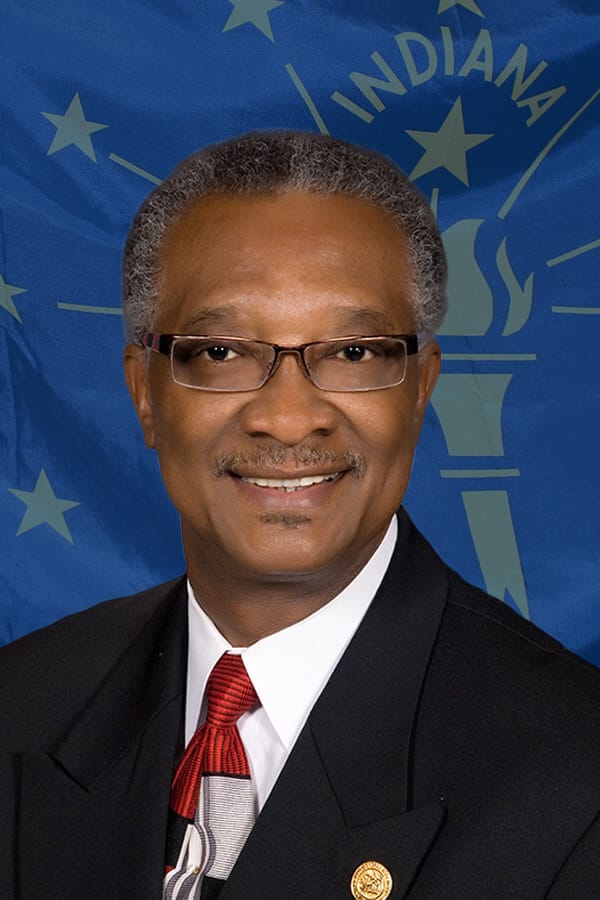
Lonnie Randolph
DDemocratic
Ask Maddy
·
AI policy assistant
Ask Maddy about SB 246
Scope: IN
Hi! I can help you understand SB 246. What would you like to know?
Try one of these
i
Maddy answers using official bill text and legislative records. Always verify before sharing.
Sources cited inline