Establishes the Hawaii Dementia Initiative Business Recognition Program within the Department of Business, Economic Development, and Tourism. Appropriates funds. (CD1)

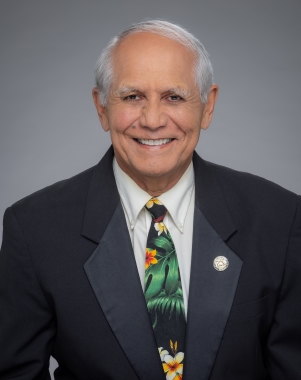
Sen. Mike Gabbard
Sponsored bills
Establishes the Banyan Drive Community Development District within the Hawaii Community Development Authority. Establishes the Banyan Drive Community Development District Special Fund. Specifies the powers and duties of HCDA as it relates to the District. Amends the composition of HCDA to include representatives of the District, Chairperson of the Banyan Drive Hawaii Redevelopment Agency, and a lineal descendant of the Waiakea Ahupuaa. Appropriates funds. (CD1)
Authorizes the Rental Housing Revolving Fund to be used to provide any and all forms of financing for the development, pre‑development, construction, acquisition, preservation, and substantial rehabilitation of rental housing units. Requires the Hawaii Housing Finance and Development Corporation to give preference to certain projects with perpetual affordability commitments, that are revenue neutral, and to applicants with a demonstrated history of early repayment to the RHRF. Authorizes HHFDC to use moneys in the RHRF that have been reserved or awarded by HHFDC for specific projects but have not yet been encumbered to fund other rental housing projects subject to certain conditions. Authorizes HHFDC to secure a line of credit or other instrument of indebtedness to provide liquidity for the RHRF under certain conditions. Repeals 6/30/2030. (CD1)
Amends the definition of "eligible business activity" for the purposes of the Enterprise Zone Program to include certain retail sales of tangible personal property; processing of certain value-added agricultural products; research development, sale, or production of all types of medical products and medical and health care services; activities of the Hawaii Food and Product Innovation Network; the provision of certain professional services by health care professionals; aerospace research and development activities; and information technology design and production services. Authorizes the Department of Business, Economic Development, and Tourism to declare up to two census tracts on state land that contain an innovation enterprise to be designated as an enterprise zone, subject to the Governor's approval and notwithstanding certain conditions. Requires DBEDT to conduct a comprehensive review, in consultation with the Department of Taxation, of the State Enterprise Zones Program and to submit a report to the Legislature. For taxable years beginning after 12/31/2026, extends the eligibility period of the state business tax credit for qualified businesses within state enterprise zones. Beginning 1/1/2028, extends the eligibility period of the general excise tax exemption for qualified businesses within state enterprise zones. Applies to qualified businesses who join the Enterprise Zone Program on or after 7/1/2026. (CD1)
Requires the Food and Product Innovation Network to integrate a coordinated food safety and regulatory framework. Requires the Agribusiness Development Corporation to establish key performance indicators for the Food and Product Innovation Network, develop a market access strategy, align and harmonize state branding initiatives, and report certain data to the Legislature. Requires the Department of Business, Economic Development, and Tourism to evaluate or adapt enterprise zone incentives in all counties to better support the Food and Product Innovation Network. Appropriates funds. (CD1)
Authorizes the Department of Land and Natural Resources to engage in certain capital improvement projects at state small boat harbors and state parks without prior approval from the Legislature and Governor for existing facilities. Requires semiannual reports to the Legislature. Sunsets five years after the effective date. (CD1)
Updates and establishes additional statewide goals for solid waste stream and organic waste stream diversion. Requires the recycling, bioconversion, and organic waste diversion component to identify and assess methods to achieve certain organic waste stream reduction goals. (CD1)
Maddy summarySB 3255 requires retail merchants to accept cash payments for all in-person transactions. This directly affects businesses that sell goods or services face-to-face and customers who prefer using physical cash. The key provision mandates that merchants cannot refuse cash simply because it is cash, ensuring it remains a valid payment method. The bill focuses on maintaining cash accessibility without specifying exceptions or penalties for non-compliance. It does not address digital payments or online transactions.
Amends the factors a family court is required to consider in deciding whether the family court may waive jurisdiction over a minor or adult held for criminal proceedings for acts committed during the person's minority. Preserves the family court's jurisdiction over a minor transferred for criminal proceedings for subsequent acts that would otherwise be within the family court's jurisdiction. Requires the family court to retain jurisdiction over a minor if the court finds by clear and convincing evidence that the minor was trafficked, sexually abused, or raped by the alleged victim in the case before or during the commission of the alleged offense. (CD1)
Authorizes the Department of Health to accept accreditation or certification from an accreditation organization or a certification organization approved by the Centers for Medicare and Medicaid Services as demonstration that a licensed home health agency is in compliance with all licensing inspections required by the State. Specifies conditions under which a home health agency may be exempt from a licensing inspection on a continuing basis throughout the accreditation or certification period. Requires information obtained in reports of survey and accreditation or certification letters to be public information. (CD1)