

URGING THE DEPARTMENT OF EDUCATION TO STRENGTHEN MENSTRUAL HEALTH EDUCATION INITIATIVES AND TO ADOPT A COMPREHENSIVE MENSTRUAL CYCLE CURRICULUM.
This Senate Resolution urges Hawaii's Department of Education to strengthen menstrual health education in public schools by adopting a comprehensive curriculum. The bill directly affects students, educators, and school administrators by requesting the creation of age-appropriate lessons that cover menstrual biology, hygiene, and cultural perspectives. Key provisions include integrating the four pillars of menstrual dignity - privacy, inclusivity, access, and education - into existing health standards, with specific requirements for elementary schools such as using anatomically correct diagrams and providing age-appropriate books. The resolution also calls for culturally responsive content that includes both Native Hawaiian and Western views on menstruation while ensuring materials are respectful of all students regardless of race, gender, or background.
Bill status
passed
3 of 5 stages cleared
Introduction
Mar 2026
Committee Review
Apr 2026
Senate Passage
Apr 2026
House Passage
Governor
Introduced Mar 16, 2026
Last action May 12, 2026
Maddy AI version diff · 1 comparison
What changed between versions
SR82
→
SR82_SD1
·
4 edits
MODERATE
This bill was updated to reflect its progression from a Senate resolution (SR82) to a Senate Motion (SD1), changing the sponsor from Devin Choy to Ainoa Naniole. The text was edited to replace the word 'comprehensible' with 'comprehensive' in the main resolution and to standardize the spelling of grade levels (e.g., changing '5' to 'five'). Additionally, the resolution was expanded to explicitly refer to the curriculum as a 'program' for middle and high school students, clarifying the scope of the requirements.
Scope change
The bill's scope was slightly clarified by expanding the terminology for middle and high school requirements from 'program' to 'curriculum' and 'program' to 'curriculum', ensuring consistency across all grade levels.
REQUIREMENT
The requirement for the Department of Education to adopt a 'comprehensible' curriculum was changed to a 'comprehensive' curriculum, broadening the implied scope of the educational materials.
Grade level references were updated from numeric format (5, 8, 12) to written format (five, eight, twelve) for consistency.
The terminology for middle and high school requirements was changed from 'program' to 'curriculum' to align with the elementary school section and clarify the specific educational content required.
TECHNICAL
Metadata fields such as the bill title, sponsor name, chamber designation, and various tracking numbers were updated to reflect the bill's new status as SD1.
Floor votes
How they voted
This bill passed the Senate by voice vote (no roll call recorded).
Full legislative history
Actions timeline
Total actions
9
Key actions
4
Committee
4
Apr 9, 2026
Upper · Passed
Report and Resolution Adopted, as amended (SD 1).
upper
Apr 8, 2026
Upper · Passed
Reported from EDU (Stand. Com. Rep. No. 3597) with recommendation of adoption, as amended (SD 1).
upper
Apr 8, 2026
Upper · Passed
The committee(s) on EDU recommend(s) that the measure be PASSED, WITH AMENDMENTS. The votes in EDU were as follows: 5 Aye(s): Senator(s) Kim, Kidani, Fukunaga, Hashimoto, DeCorte; Aye(s) with reservations: none ; 0 No(es): none; and 0 Excused: none.
upper
Apr 6, 2026
Upper · Passed
The committee(s) on EDU added the measure to the public hearing scheduled on 04-08-26 1:03PM; CR 229 & Videoconference.
upper
Mar 19, 2026
Committee
Referred to EDU.
upper
Mar 16, 2026
Introduced
Offered.
upper
1 primary · 0 co-sponsors
Sponsors
Role
Legislator
Party
State
District
P
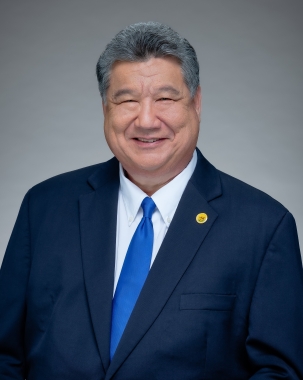
Ron Kouchi
DDemocratic
Ask Maddy
·
AI policy assistant
Ask Maddy about SR 82
Scope: HI
Hi! I can help you understand SR 82. What would you like to know?
Try one of these
i
Maddy answers using official bill text and legislative records. Always verify before sharing.
Sources cited inline