

RELATING TO TAXATION.
Summary
Imposes the manufacturing general excise tax rate on motion picture, digital media, and film productions and repeals the provision in the definition of "qualified production costs" that applied the term to mean costs incurred that are subject to the highest general excise tax rate. Exempts from the general excise tax amounts received by a motion picture project employer from a client company equal to amounts that are disbursed by the motion picture project employer for employee wages, salaries, payroll taxes, insurance premiums, and employment benefits and payments to loan-out companies. Effective 1/1/2050. (SD1)
Bill status
passed
3 of 5 stages cleared
Introduction
Jan 2026
Committee Review
Feb 2026
Senate Passage
Feb 2026
House Passage
Governor
Introduced Jan 23, 2026
Last action Feb 12, 2026
Maddy AI version diff · 1 comparison
What changed between versions
SB2796
→
SB2796_SD1
·
4 edits
MODERATE
This bill updates legislative metadata to reflect the first Senate District committee version and reorganizes the effective dates for various tax provisions. The most significant substantive change is moving the effective date for the entire Act from January 1, 2027, to January 1, 2050, which delays the implementation of new tax rules and exemptions by over two decades. Additionally, the bill clarifies the definition of 'production' in manufacturing tax contexts and adjusts the effective dates for specific sections to align with the new overall timeline.
Scope change
The bill's scope remains focused on Hawaii's general excise and privilege taxes, but the applicability of new rules is significantly delayed to 2050.
TIMELINE
The effective date for the entire Act was changed from January 1, 2027, to January 1, 2050, delaying the implementation of new tax provisions.
The effective dates for Sections 2 and 3 were updated to January 1, 2027, to remain consistent with the new overall Act effective date.
DEFINITION
The term 'production' was added to the list of taxable manufacturing activities in Section 237-13.
TECHNICAL
Metadata fields such as bill numbers, sponsor names, and revision numbers were updated to reflect the Senate District 1 version.
Floor votes
How they voted
This bill passed the Senate by voice vote (no roll call recorded).
Full legislative history
Actions timeline
Total actions
7
Key actions
3
Committee
4
Feb 12, 2026
Upper · Passed
Report adopted; Passed Second Reading, as amended (SD 1) and referred to WAM.
upper
Feb 12, 2026
Committee
Reported from EDT (Stand. Com. Rep. No. 2211) with recommendation of passage on Second Reading, as amended (SD 1) and referral to WAM.
upper
Feb 3, 2026
Upper · Passed
The committee(s) on EDT recommend(s) that the measure be PASSED, WITH AMENDMENTS. The votes in EDT were as follows: 5 Aye(s): Senator(s) DeCoite, Wakai, Fukunaga, Kim, Fevella; Aye(s) with reservations: none ; 0 No(es): none; and 0 Excused: none.
upper
Jan 30, 2026
Upper · Passed
The committee(s) on EDT has scheduled a public hearing on 02-03-26 1:00PM; Conference Room 229 & Videoconference.
upper
Jan 30, 2026
Committee
Referred to EDT, WAM.
upper
Jan 23, 2026
Introduced
Introduced.
upper
1 primary · 0 co-sponsors
Sponsors
Role
Legislator
Party
State
District
P
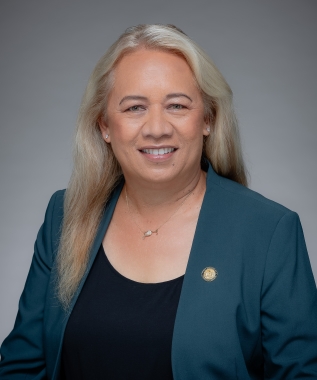
Lynn DeCoite
DDemocratic
Ask Maddy
·
AI policy assistant
Ask Maddy about SB 2796
Scope: HI
Hi! I can help you understand SB 2796. What would you like to know?
Try one of these
i
Maddy answers using official bill text and legislative records. Always verify before sharing.
Sources cited inline