

RELATING TO WORKFORCE DEVELOPMENT.
Summary
Amends the State Internship and Workforce Development Program for the public sector by expanding the program to the Legislative and Judicial branches; limiting the internships to full-time placements of ten to eleven months; establishing eligibility criteria, application requirements, and selection preferences; and requiring the Department of Labor and Industrial Relations to collaborate with coordinating agencies to promote the program and recruit eligible applicants. Appropriates funds. Effective 1/1/2077. (SD1)
Bill status
passed
3 of 5 stages cleared
Introduction
Jan 2026
Committee Review
Feb 2026
Senate Passage
Feb 2026
House Passage
Governor
Introduced Jan 14, 2026
Last action Feb 20, 2026
Maddy AI version diff · 1 comparison
What changed between versions
SB2231
→
SB2231_SD1
·
4 edits
MODERATE
This bill updates the state internship program by modernizing its metadata and extending the effective date from July 2026 to January 2077. The most significant policy change is the removal of the requirement for interns to have a minimum 2.5 GPA, replacing it with a broader requirement to hold a bachelor's degree or specific credential by the program's start date. Additionally, the bill adds a new condition requiring official transcripts from all colleges attended to be submitted as a condition of employment.
Scope change
The bill's scope remains focused on workforce development and state internships, but the eligibility criteria have been broadened to remove specific GPA thresholds while tightening documentation requirements for employment offers.
TIMELINE
The effective date of the Act was changed from July 1, 2026, to January 1, 2077.
ELIGIBILITY
The specific requirement for a cumulative GPA of 2.5 or higher was removed and replaced with a general requirement to have earned or be scheduled to earn a bachelor's degree or specific credential.
REQUIREMENT
A new requirement was added mandating that official transcripts from every college or university an applicant attended must be submitted as a condition of employment.
TECHNICAL
Various metadata fields, including bill numbers, dates, and template versions, were updated to reflect the Senate's first reading (SD1).
Floor votes
How they voted
This bill passed the Senate by voice vote (no roll call recorded).
Full legislative history
Actions timeline
Total actions
7
Key actions
3
Committee
4
Feb 20, 2026
Upper · Passed
Report adopted; Passed Second Reading, as amended (SD 1) and referred to WAM.
upper
Feb 20, 2026
Committee
Reported from LBT (Stand. Com. Rep. No. 2536) with recommendation of passage on Second Reading, as amended (SD 1) and referral to WAM.
upper
Feb 13, 2026
Upper · Passed
The committee(s) on LBT recommend(s) that the measure be PASSED, WITH AMENDMENTS. The votes in LBT were as follows: 5 Aye(s): Senator(s) Elefante, Lamosao, Ihara, Moriwaki, Fevella; Aye(s) with reservations: none ; 0 No(es): none; and 0 Excused: none.
upper
Feb 10, 2026
Upper · Passed
The committee(s) on LBT has scheduled a public hearing on 02-13-26 3:00PM; Conference Room 225 & Videoconference.
upper
Jan 26, 2026
Committee
Referred to LBT, WAM.
upper
Jan 21, 2026
Introduced
Introduced and passed First Reading.
upper
Jan 14, 2026
Introduced
Pending Introduction.
upper
1 primary · 0 co-sponsors
Sponsors
Role
Legislator
Party
State
District
P
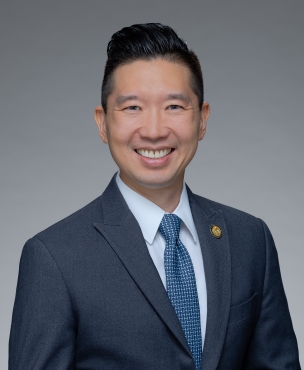
Stanley Chang
DDemocratic
Ask Maddy
·
AI policy assistant
Ask Maddy about SB 2231
Scope: HI
Hi! I can help you understand SB 2231. What would you like to know?
Try one of these
i
Maddy answers using official bill text and legislative records. Always verify before sharing.
Sources cited inline