

RELATING TO RENEWABLE ENERGY.
SB 202 requires electric utilities to pay customer-generators (like homeowners with solar panels) for excess electricity they send back to the grid, replacing previous credit systems. This directly affects residential and commercial customers who generate their own renewable energy. The bill mandates that utilities compensate these customers for surplus power at a specific rate, ensuring fair payment for contributions to the grid. It passed committee with amendments in February 2025 and aims to support distributed renewable energy adoption.
Bill status
passed
3 of 5 stages cleared
Introduction
Jan 2025
Committee Review
Feb 2025
Senate Passage
Feb 2025
House Passage
Governor
Introduced Jan 13, 2025
Last action Dec 8, 2025
Maddy AI version diff · 1 comparison
What changed between versions
SB202
→
SB202_SD1
·
4 edits
MODERATE
This bill update clarifies that electric utilities must purchase unused solar energy credits from homeowners at the end of any twelve-month period, rather than just at the end of a specific year. It also explicitly exempts member-owned cooperative electric utilities from these compensation requirements. Additionally, the bill specifies that the compensation rate for unused credits will be set by the Public Utilities Commission for the relevant time period.
Scope change
The bill now explicitly excludes member-owned cooperative electric utilities from the requirement to compensate customer-generators for excess electricity credits.
REQUIREMENT
Changed the timing for credit purchase from the end of the calendar year to the end of any twelve-month period, providing more flexibility for homeowners.
ELIGIBILITY
Added a specific exemption stating that member-owned cooperative electric utilities are not subject to the compensation requirements.
DEFINITION
Updated terminology to refer to 'customer-generators' instead of 'electricity producers' to better reflect the role of residential solar owners.
FISCAL
Changed the mechanism for setting compensation rates from the 'retail rate' to a rate established by the Public Utilities Commission.
Floor votes
How they voted
This bill passed the Senate by voice vote (no roll call recorded).
Full legislative history
Actions timeline
Total actions
8
Key actions
3
Committee
4
Feb 11, 2025
Upper · Passed
Report adopted; Passed Second Reading, as amended (SD 1) and referred to CPN.
upper
Feb 11, 2025
Committee
Reported from EIG (Stand. Com. Rep. No. 213) with recommendation of passage on Second Reading, as amended (SD 1) and referral to CPN.
upper
Feb 4, 2025
Upper · Passed
The committee(s) on EIG recommend(s) that the measure be PASSED, WITH AMENDMENTS. The votes in EIG were as follows: 5 Aye(s): Senator(s) Wakai, Chang, DeCoite, Richards, Fevella; Aye(s) with reservations: none ; 0 No(es): none; and 0 Excused: none.
upper
Jan 31, 2025
Upper · Passed
The committee(s) on EIG has scheduled a public hearing on 02-04-25 3:02PM; Conference Room 016 & Videoconference.
upper
Jan 17, 2025
Committee
Referred to EIG, CPN.
upper
Jan 15, 2025
Introduced
Introduced and passed First Reading.
upper
Jan 13, 2025
Introduced
Pending Introduction.
upper
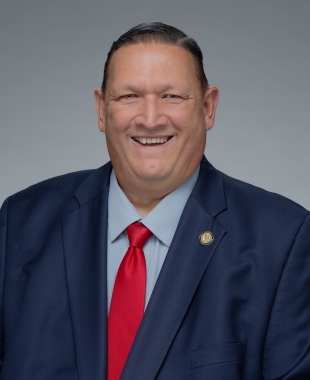
2 primary · 0 co-sponsors
Sponsors

Ask Maddy
·
AI policy assistant
Ask Maddy about SB 202
Scope: HI
Hi! I can help you understand SB 202. What would you like to know?
Try one of these
i
Maddy answers using official bill text and legislative records. Always verify before sharing.
Sources cited inline