

RELATING TO TAXATION.
Summary
Authorizes the use of county surcharge revenues for transportation and housing infrastructure in counties having a population of 500,000 or less. Authorizes counties that have previously adopted a surcharge on state tax ordinance after July 1, 2015, to amend the uses of the surcharge. Extends the period within which a county with a population of 500,000 or less may collect a surcharge on state tax, under certain conditions, to 12/31/2047. Authorizes cost-sharing with private or other public developers for housing infrastructure projects funded by surcharge revenues. (SD1)
Bill status
passed
3 of 5 stages cleared
Introduction
Jan 2025
Committee Review
Feb 2025
Senate Passage
Feb 2025
House Passage
Governor
Introduced Jan 21, 2025
Last action Dec 8, 2025
Maddy AI version diff · 1 comparison
What changed between versions
SB1333
→
SB1333_SD1
·
5 edits
MODERATE
This bill updates the rules for county surcharges on state taxes, extending the collection period until December 31, 2047, and clarifying that counties can use these funds for both housing and transportation infrastructure. It also adjusts the population threshold for eligible counties from 'five hundred thousand or less' to 'five hundred thousand people or less' and adds language allowing cost-sharing with private developers for housing projects.
Scope change
The scope of eligible counties was technically refined by changing the population threshold phrasing, and the allowable uses of funds were expanded to explicitly include housing infrastructure alongside transportation.
TIMELINE
Extended the deadline for collecting county surcharges to December 31, 2047, providing more certainty for long-term infrastructure planning.
FISCAL
Explicitly authorized counties to use surcharge revenues for housing infrastructure, not just transit and transportation.
Added authority for counties to share costs with private or public developers for housing projects funded by surcharge revenues.
ELIGIBILITY
Refined the population eligibility criteria from 'five hundred thousand or less people' to 'five hundred thousand people or less'.
TECHNICAL
Changed the legislative title from 'SB1333' to 'SB1333 SD1' and updated associated metadata fields.
Floor votes
How they voted
This bill passed the Senate by voice vote (no roll call recorded).
Full legislative history
Actions timeline
Total actions
9
Key actions
3
Committee
5
Feb 13, 2025
Upper · Passed
Report adopted; Passed Second Reading, as amended (SD 1) and referred to WAM.
upper
Feb 13, 2025
Committee
Reported from HOU (Stand. Com. Rep. No. 472) with recommendation of passage on Second Reading, as amended (SD 1) and referral to WAM.
upper
Feb 5, 2025
Upper · Passed
The committee(s) on HOU recommend(s) that the measure be PASSED, WITH AMENDMENTS. The votes in HOU were as follows: 3 Aye(s): Senator(s) Chang, Hashimoto, Kanuha; Aye(s) with reservations: none ; 0 No(es): none; and 2 Excused: Senator(s) Aquino, Fevella.
upper
Feb 3, 2025
Upper · Passed
The committee(s) on HOU has scheduled a public hearing on 02-06-25 1:05PM; Conference Room 225 & Videoconference.
upper
Jan 31, 2025
Committee
Re-Referred to HOU, WAM.
upper
Jan 27, 2025
Committee
Referred to EIG/HOU, WAM.
upper
Jan 23, 2025
Introduced
Introduced and passed First Reading.
upper
Jan 21, 2025
Introduced
Pending Introduction.
upper
1 primary · 0 co-sponsors
Sponsors
Role
Legislator
Party
State
District
P
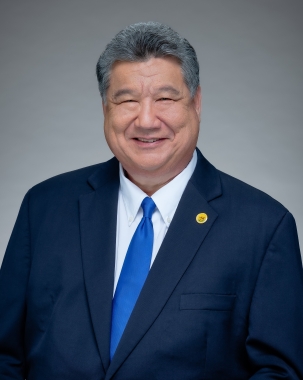
Ron Kouchi
DDemocratic
Ask Maddy
·
AI policy assistant
Ask Maddy about SB 1333
Scope: HI
Hi! I can help you understand SB 1333. What would you like to know?
Try one of these
i
Maddy answers using official bill text and legislative records. Always verify before sharing.
Sources cited inline