

Maddy summaryThis bill extends the funding authorization for the Accelerating Access to Critical Therapies for ALS Act from 2026 to 2031, ensuring continued financial support for research into treatments for amyotrophic lateral sclerosis. It requires the Food and Drug Administration to review clinical trial data more rigorously by assessing patient enrollment numbers and requesting interim results from drug manufacturers before renewing research grants. Additionally, the legislation clarifies that clinical trials in phase 3 include combined phase 2/3 studies and planned trials that have not yet started enrolling participants. The bill also mandates the FDA to publish a report within a year of enactment detailing its progress on rare neurodegenerative disease action plans and how it coordinates with broader disease communities. Finally, it adjusts the timeline for a Government Accountability Office report to cover a five-year period instead of four.
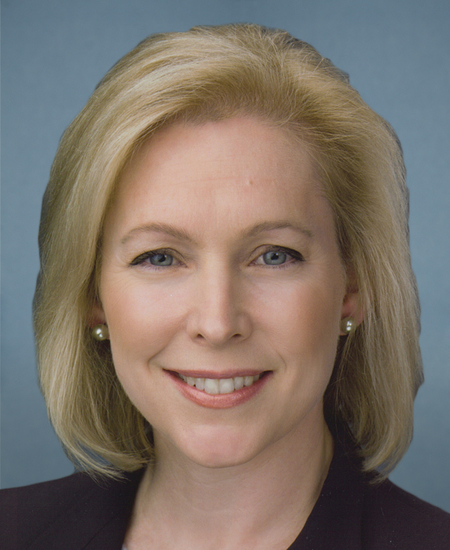
Sen. Kirsten E. Gillibrand
Sponsored bills
Maddy summaryThis bill amends the Public Safety Officers' Benefit Program to improve processing of claims for officers injured or killed in the line of duty. It establishes clear timelines for the Bureau to notify claimants about missing information (90 days) and make determinations (270 days), with automatic interim benefits issued if deadlines aren't met. The bill requires regular outreach to public safety officers and underserved agencies, mandates annual audits of backlogged claims, and strengthens subpoena authority to obtain necessary information. It also creates a pathway for expedited processing when claims are approved by the 9/11 Victim Compensation Fund or World Trade Center Health Program. The bill does not change benefit amounts but aims to make the claims process more efficient and transparent for public safety officers and their families.
Maddy summaryThis bill extends two existing public health programs focused on tick-borne diseases through 2030. It updates the funding timeline for national vector-borne disease centers and health department support from 2021-2025 to 2026-2030. The bill does not change program content or eligibility but ensures continued funding for efforts addressing tick-related illnesses. It directly affects public health agencies administering these programs, not specific individuals.
Maddy summaryThe Common Cents Act ends regular production of one-cent coins (pennies) by the U.S. Mint after one year, except for limited sales to numismatic collectors. It maintains all existing pennies as legal tender for all debts and transactions. The bill requires businesses to round cash payments to the nearest nickel (e.g., $0.03 rounds up to $0.05, $0.07 rounds down to $0.05), with exceptions for transactions under $0.02 and non-cash payments like credit cards. This directly affects the U.S. Mint, businesses processing cash, and consumers making cash purchases.
Maddy summaryThis bill amends the existing Northern Border Security Review Act to update reporting requirements for U.S. Customs and Border Protection. It mandates a threat analysis of northern border apprehensions (including sector-level data) by September 2, 2025, and every three years thereafter, and requires the DHS Secretary to update the border security strategy by September 2, 2026, and every five years, incorporating the latest analysis. The bill also adds a requirement for classified briefings to Congress within 30 days of each threat analysis submission. No new funding is authorized for these changes.
National Plan for Epilepsy Act This bill requires the Department of Health and Human Services (HHS) to establish a national plan, form an advisory council, and take other actions to address epilepsy. The requirements sunset on December 31, 2035. Specifically, the bill requires HHS to carry out a National Plan for Epilepsy to prevent, diagnose, treat, and cure epilepsy. In carrying out the plan, HHS must implement activities such as coordinating research and services across all federal agencies and soliciting public comments. Also, HHS must establish an Advisory Council on Epilepsy Research, Care, and Services. The advisory council must report to HHS and Congress every two years with an evaluation of federally funded efforts. Additionally, HHS must annually report to Congress with recommended actions based on its assessments of the nation’s progress on epilepsy.
Maddy summaryThe Clean Elections Act establishes a "Democracy Dollars" program that provides $100 in federal vouchers to eligible U.S. citizens aged 18 and older for use in federal elections starting after December 31, 2028. To receive these funds, candidates must agree to accept only small individual contributions, which the bill gradually reduces from $1,000 per donor down to $200 by 2037, and limit their own personal spending to $2,500 per election. The program is administered by the Federal Election Commission, which will distribute the vouchers, monitor compliance through random audits, and adjust voucher values over time based on inflation and campaign spending trends. Additionally, the bill repeals the existing public financing system for presidential elections, transferring any remaining funds in the Presidential Election Campaign Fund to the general Treasury.
Maddy summaryThe Fairness to Freedom Act of 2026 establishes a new independent Office of Immigration Representation to guarantee government-funded legal counsel for individuals who cannot afford an attorney in immigration proceedings. This right applies broadly to removal, exclusion, and bond hearings, requiring that legal representation be appointed within 24 hours of detention or before any proceeding begins. The bill creates a decentralized system involving local boards and public defender organizations to manage case assignments, while ensuring that appointed attorneys receive compensation comparable to federal prosecutors. Additionally, the legislation mandates minimum funding levels for the new office based on a specific ratio relative to federal immigration enforcement budgets and prevents the use of seeking this legal aid as a factor in "public charge" determinations.
Maddy summaryThis bill designates the U.S. Chancery building in Pristina, Kosovo, as the "Eliot L. Engel Building." It requires that all future U.S. laws, maps, and official documents refer to the facility by this new name.
Maddy summaryThe HCBS Access Act would require states to cover home and community-based services (HCBS) as a mandatory benefit under Medicaid, effectively eliminating waiting lists for individuals with disabilities and older adults who need support to live in their communities rather than institutions. To fund this expansion, the bill provides a 100% federal matching rate for these services if states meet specific requirements, such as improving workforce wages, removing access barriers, and establishing infrastructure to support self-directed care models. Additionally, the legislation creates a national technical assistance center and authorizes grants to recruit, train, and retain direct care workers, while also prohibiting states from placing liens on the assets of Medicaid recipients for medical assistance correctly paid.