Maddy summaryThis House resolution formally congratulates the Paseo Verde Little League team from Henderson, Nevada, on winning the 2026 Little League World Series United States Championship. The bill details the team's undefeated path to victory, including their final win against the Hamilton West Side Little League of Ohio. It specifically honors the players, coaches, and supporters for their contributions to the championship achievement.

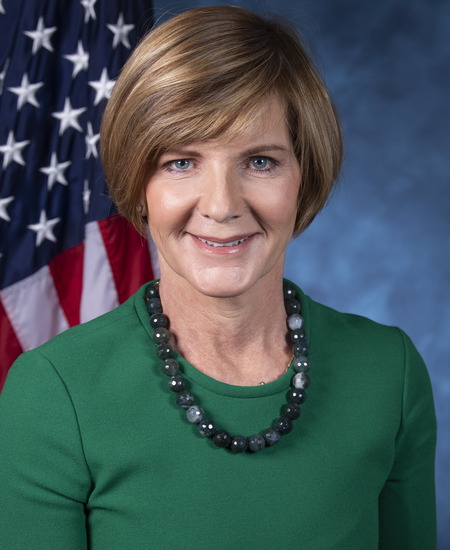
Rep. Susie Lee
Sponsored bills
Maddy summaryHR 1869 creates a new DOJ task force within the Criminal Division to investigate and prosecute international trade crimes, such as customs evasion, smuggling, and trade-based money laundering. It requires the DOJ to hire specialized prosecutors, coordinate with agencies like U.S. Customs and Border Protection, and focus on specific violations covered under statutes like 18 U.S.C. §§ 541-546 and 21 U.S.C. § 331. The bill authorizes $20 million in funding for fiscal year 2026 (with 80% dedicated to criminal prosecutions), mandates annual reports to Congress on enforcement activities, and requires the DOJ to develop multi-agency partnerships to address these crimes. This directly affects federal prosecutors, border enforcement agencies, and industries impacted by trade violations.
Maddy summaryThe Jobs, Not Waste Act of 2026 permanently ends the federal government's effort to build a nuclear waste repository at Yucca Mountain by withdrawing the construction application and terminating the associated licensing process. The bill prohibits the Secretary of Energy from considering the site for this purpose in the future and requires the Department of Energy to reclaim the land and mitigate any environmental damage caused by previous activities. Additionally, it mandates that the Office of Management and Budget submit a report to Congress within 180 days analyzing the economic potential and job-creation benefits of alternative uses for the site, such as defense facilities, renewable energy development, and scientific research.
National Law Enforcement Officers Remembrance, Support and Community Outreach Act. [ sic ] This bill temporarily directs the Department of the Interior to award a grant to the National Law Enforcement Officers Memorial Fund for the expenses associated with operating and enhancing the community outreach, public education, and officer safety and wellness programs of the National Law Enforcement Museum.
Maddy summaryThis bill reauthorizes and expands the Radiation Exposure Compensation Act, extending the program's funding through 2043 and allowing new claims to be filed until 2042. It increases compensation amounts for downwinders and Manhattan Project waste claimants from $100,000 or $50,000 to $150,000, respectively, and introduces a provision for reimbursing documented out-of-pocket medical expenses not covered by insurance. The legislation broadens eligibility by adding new geographic areas in states such as Colorado, Montana, Washington, Illinois, and Ohio, as well as the territory of Guam, while also permitting the use of third-party affidavits to verify employment history or physical presence in affected zones. Additionally, it establishes a discretionary process for the President to designate new groups of radiation-exposed individuals for compensation and mandates several health studies regarding the long-term effects of nuclear testing on specific populations.
Maddy summaryThe Earn to Learn Act establishes a federal demonstration grant program that provides low-income students with matched savings accounts to help pay for postsecondary education. Under this mechanism, states or nonprofit organizations receive grants to match student contributions at a rate of $8 for every $100 deposited, while also providing financial literacy training and success coaching. The bill explicitly ensures that participation in the program does not reduce a student's eligibility for Federal Pell Grants or other federal student aid. It authorizes $100 million annually for five years to fund these grants, which are capped at $10 million per recipient, and requires the Department of Education to report on the program's impact on savings rates and educational retention.
Maddy summaryThe Beverage Regulatory Parity Act establishes a federal framework for regulating hemp-derived non-alcoholic beverages containing naturally occurring cannabinoids, such as delta-9 THC and CBD. The bill assigns primary regulatory authority to the Tax and Trade Bureau, which will enforce a three-tiered distribution system requiring separate permits for manufacturers, wholesalers, and retailers, while also setting strict labeling, advertising, and age-restriction requirements modeled after alcohol regulations. Additionally, the Food and Drug Administration will oversee product safety by defining standards for adulteration and misbranding, ensuring that beverages do not contain synthetic cannabinoids or harmful additives like alcohol or nicotine. The legislation imposes a federal excise tax of 8 cents per milligram of intoxicating THC content on these products and explicitly preserves state and local authority to enact more stringent laws or prohibit the sale of such beverages within their jurisdictions.
Maddy summaryHR 5631 establishes a Geothermal Ombudsman within the Bureau of Land Management (BLM) to streamline permitting for geothermal energy projects on public lands. The ombudsman, appointed within 60 days of enactment, acts as a liaison between BLM offices and project applicants, resolves disputes, monitors permit timelines, and develops best practices for the permitting process. The bill also creates a Geothermal Permitting Task Force led by the ombudsman, which can assign cross-office personnel (with retention allowances up to 25% of pay) to support geothermal authorizations without altering BLM's jurisdiction. The ombudsman must submit annual reports to Congress on the task force's effectiveness and permit processing outcomes. This directly affects geothermal project applicants and BLM field offices handling geothermal permits.
Maddy summaryThis House resolution formally acknowledges the courage and sacrifice of veterans who served in the Korean War and those who have continued to serve in South Korea as Korean Defense Veterans. It highlights that nearly 1.8 million U.S. service members participated in the conflict, which resulted in over 36,000 American deaths, and notes that approximately 25,000 troops remain stationed in the region today. The text emphasizes that these veterans often returned home without the widespread recognition given to World War II heroes and urges all Americans to honor their service in defending democracy.
Maddy summaryThis bill establishes federal protections and funding to expand access to in vitro fertilization and intrauterine insemination for individuals, military service members, and veterans. It requires most private health plans, Medicaid programs, and Medicare to cover these fertility treatments without imposing higher cost-sharing than other medical services. Additionally, the legislation mandates that the Department of Defense and the Department of Veterans Affairs provide specific fertility preservation and treatment benefits to uniformed service members and eligible veterans. The bill also includes preemption clauses that override state laws restricting these procedures and prohibits discrimination based on marital status, sex, or sexual orientation in the provision of care.