

Maddy summaryHR 5267, the American Franchise Act, clarifies when franchisors can be considered joint employers of franchisee employees under federal labor laws. It defines "substantial direct and immediate control" over essential employment terms like wages, benefits, hours, hiring, and discipline - requiring franchisors to actively set these terms to be deemed joint employers. The bill explicitly excludes routine brand standards, training, or minimal safety requirements from constituting such control. This directly affects franchisors and franchisees by limiting joint employer liability to cases where franchisors exert significant, ongoing influence over core employment decisions. The law applies prospectively to new cases after enactment, not past disputes.
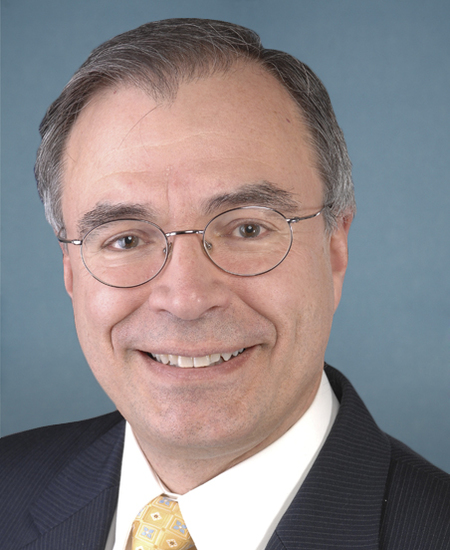
Rep. Andy Harris
Sponsored bills
Maddy summaryThis bill would prohibit any state or local government designated as a "sanctuary jurisdiction" from receiving grant funds distributed by the Department of Housing and Urban Development (HUD). A jurisdiction is defined as a sanctuary if it has laws, policies, or practices that restrict officials from sharing information about an individual's immigration status or from complying with federal requests to detain or notify about the release of individuals. The funding restriction would apply to grants distributed 180 days after the bill's enactment. To determine which jurisdictions qualify for this ineligibility, the HUD Secretary is required to consult with the Secretary of Homeland Security.
Maddy summaryHR 7008, the Stop Insider Trading Act, restricts Members of Congress, their spouses, and dependent children from purchasing certain investments like stocks in publicly traded companies. It requires 7-14 days' advance public notice before selling any such investment, including the sale date, description, and number of shares. Exceptions apply for work-related transactions (e.g., employer compensation) and reinvesting dividends. Violations trigger a fee of $2,000 or 10% of the investment’s value (whichever is greater), plus any net gain, paid from personal funds - not congressional allowances or campaign donations. The bill aims to prevent conflicts of interest by increasing transparency around congressional financial dealings.
Maddy summaryThis bill renames a U.S. Postal Service facility in Olney, Maryland (located at 3570 Olney Laytonsville Road) as the "Edward L. Ramsey Olney Post Office Building." It directly affects the postal facility and all official U.S. government references to it, requiring future documents, maps, and laws to use the new name. The bill has no policy provisions - its sole purpose is to honor Edward L. Ramsey through this naming designation.
Maddy summaryThis resolution formally recognizes the 100th anniversary of the Golf Course Superintendents Association of America, honoring its century-long contribution to the golf industry. The bill does not change any laws or allocate funds; instead, it serves as a symbolic commendation for the organization's work in advancing greenkeeping standards, promoting environmental stewardship, and supporting education and workforce development. By acknowledging the association's role in managing golf courses and its impact on the economy and communities, the measure highlights the professional achievements of its members without imposing new regulatory requirements.
Maddy summaryThe Preventing Forced Abortions Act of 2026 prohibits federal courts from enforcing any part of a surrogacy agreement that forces a surrogate mother to have an abortion. Instead, the law mandates that courts must uphold the financial compensation promised to the surrogate, even if the contract includes penalties or reduced payments for refusing an abortion. This legislation grants federal district courts specific authority to hear civil cases involving surrogacy contracts and defines key terms such as "abortion" and "surrogate mother" to clarify the scope of the protections.
Maddy summaryHR 6213, the Heat Workforce Standards Act of 2025, prohibits the U.S. Department of Labor from finalizing, implementing, or enforcing OSHA's proposed "Heat Injury and Illness Prevention" standard (published August 30, 2024). This bill directly blocks the specific regulatory proposal targeting heat safety in both outdoor and indoor work settings. It does not create new requirements or affect workers; it solely prevents the implementation of the existing OSHA proposal. The bill is procedural, focusing on halting a regulatory action rather than establishing new policy.
Maddy summaryHR 4986, the Parents Opt-in Protection Act, amends federal law to require written permission before schools administer certain student surveys or evaluations. It directly affects students (especially minors) and their parents, requiring schools to obtain prior written consent from the student (if an adult or emancipated minor) or the parent (for minors) for each specific survey. The bill clarifies that schools cannot force participation without this written consent for surveys related to sensitive topics like health or behavior. This change updates existing consent rules from verbal permission to a written requirement for targeted school assessments.
Maddy summaryHR 1266, the Combating Illicit Xylazine Act, adds xylazine - a veterinary sedative increasingly found in illicit drug mixtures - to Schedule III of the Controlled Substances Act, regulating its use and trafficking. It directly affects veterinarians, animal owners, and manufacturers by allowing xylazine to be legally dispensed for animal use under specific veterinary prescriptions, while prohibiting non-veterinary human use. The bill includes transition periods (60 days for practitioners, 1 year for labeling) to ease compliance for manufacturers and practitioners, and requires the DEA and FDA to expedite necessary applications. It also mandates two congressional reports on xylazine's illicit use and trafficking patterns, and directs the Sentencing Commission to review penalties for offenses involving xylazine.
Maddy summaryThe TRUTH in Coverage Act of 2026 requires group health plans and health insurance issuers that cover gender-affirming procedures to also cover medical services intended to treat physical and psychological complications resulting from those procedures. This mandate applies regardless of whether the original gender-affirming treatment was covered by the plan and ensures that any required follow-up care faces the same cost-sharing rules and limitations as standard medical benefits. The bill defines "sex-rejecting procedures" broadly to include hormone therapy, surgeries, and puberty blockers, while explicitly excluding treatments for intersex conditions, life-threatening emergencies, and standard puberty suppression for early puberty. These provisions would take effect for plan years beginning on or after January 1, 2027, affecting individuals with access to employer-sponsored or individual health insurance.