Maddy summaryThis bill establishes a federal program to address the invasive golden mussel, which threatens water infrastructure and ecosystems. It directs the Task Force to develop a demonstration program focused on research, control methods, and early warning systems for infested areas like the Sacramento-San Joaquin Delta, with a $15 million annual funding authorization from 2026-2030. Key provisions include grants for developing technologies to remove mussels from water intakes, pipelines, and boat hulls, plus guidelines for watercraft inspections to prevent spread. The program requires collaboration with states, ports, and research institutions to share control strategies and coordinate efforts.

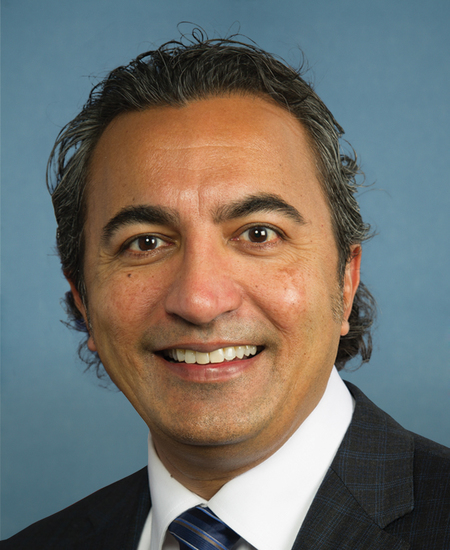
Rep. Ami Bera
Sponsored bills
Maddy summaryHR 5267, the American Franchise Act, clarifies when franchisors can be considered joint employers of franchisee employees under federal labor laws. It defines "substantial direct and immediate control" over essential employment terms like wages, benefits, hours, hiring, and discipline - requiring franchisors to actively set these terms to be deemed joint employers. The bill explicitly excludes routine brand standards, training, or minimal safety requirements from constituting such control. This directly affects franchisors and franchisees by limiting joint employer liability to cases where franchisors exert significant, ongoing influence over core employment decisions. The law applies prospectively to new cases after enactment, not past disputes.
Maddy summaryThe End Tuberculosis Now Act of 2026 amends the Foreign Assistance Act to designate ending the global tuberculosis emergency as a major objective of U.S. foreign policy and authorizes the President to provide funding for prevention, diagnosis, and treatment programs worldwide. The bill sets specific targets to be achieved by 2030, including an 80 percent reduction in new infections and a 90 percent reduction in deaths compared to 2015 levels, while also requiring that 30 million individuals receive preventive treatment. Key provisions mandate the use of innovative diagnostic tools, support for drug-resistant TB care, and coordination with private sector partners to develop vaccines and lower treatment costs. The legislation requires annual reports to Congress detailing program progress and expenditures, and it includes a sunset clause that terminates these specific authorities on January 1, 2033.
Maddy summaryThis House resolution formally recognizes the 80th anniversary of the Fulbright Program, which was established in 1946 to promote international goodwill through student and scholar exchanges. The bill highlights that the program currently operates in over 160 countries and has provided grants to more than 450,000 individuals since its inception. It encourages Congress to continue supporting educational and cultural affairs programs as tools for advancing foreign policy and national security. Additionally, the resolution congratulates past and present recipients and calls on global professionals to engage in cross-cultural partnerships.
Maddy summaryThe Wildfire Response and Readiness Act establishes a national prescribed fire program that requires federal agencies to increase the acreage of controlled burns on public lands by 10 percent annually for a decade. It creates a ten-year national wildfire plan to coordinate landscape-scale forest restoration, reforestation, and watershed protection efforts across federal, state, tribal, and private boundaries. The bill also authorizes new funding for community resilience, including grants for home hardening, satellite monitoring technology, and a joint office dedicated to fire environment data and prediction. Additionally, it modernizes the firefighting workforce by establishing training academies, expanding civilian conservation centers, and providing liability protections for non-federal partners conducting prescribed fires.
Maddy summaryThe Truth in Labeling Act of 2026 establishes national standards for labeling packaging, food service products, and beverage containers as recyclable, compostable, reusable, or refillable to reduce consumer confusion. The bill requires the Environmental Protection Agency (EPA) and the Federal Trade Commission (FTC) to define these terms based on specific criteria, such as the existence of a responsible end market for recycling or acceptance by a certain percentage of composting programs. Producers are prohibited from using symbols like chasing arrows or making claims that a product is recyclable or compostable unless it meets these federal standards, with violations treated as deceptive practices under existing law. The legislation also mandates the creation of standardized on-package labels and digital labeling options, while establishing an advisory committee to guide the development of these criteria and enforcement mechanisms.
This bill designates the facility of the United States Postal Service located at 6444 San Fernando Road in Glendale, California, as the "Paul Ignatius Post Office".
This bill designates the facility of the United States Postal Service located at 340 East 1st Street in Tustin, California, as the "Ursula Ellen Kennedy Post Office Building".
Maddy summaryHR 2175 designates the U.S. Postal Service facility at 130 South Patterson Avenue in Santa Barbara, California, as the "Brigadier General Frederick R. Lopez Post Office Building." The bill updates all official U.S. government references to this location to reflect the new name. This is a ceremonial naming bill with no policy changes or direct impact on residents or services.