Maddy summaryThe Cost Estimates Improvement Act requires the Congressional Budget Office and the Joint Committee on Taxation to include public debt servicing costs in their financial estimates, to the extent practicable. This change directly affects federal budgeting processes by ensuring that the interest payments on national debt are factored into official cost projections for new legislation. The bill amends the Congressional Budget and Impoundment Control Act of 1974 to mandate this specific inclusion in all future estimates prepared by these two bodies.

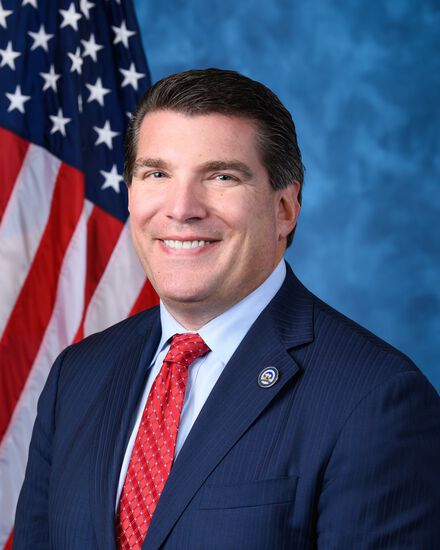
Rep. Jay Obernolte
Sponsored bills
Maddy summaryThe AI LABS Act directs the Secretary of Education to provide competitive grants to states for establishing or expanding artificial intelligence programs in elementary and secondary schools. These funds are specifically designated for creating dedicated curricula that teach students how to use and understand AI, as well as providing professional development for teachers to integrate these tools into their instruction. Additionally, the bill requires the Secretary to conduct a study on how states utilize the grant money and submit a report with recommendations to Congress within one year of enactment.
Maddy summaryHR 5267, the American Franchise Act, clarifies when franchisors can be considered joint employers of franchisee employees under federal labor laws. It defines "substantial direct and immediate control" over essential employment terms like wages, benefits, hours, hiring, and discipline - requiring franchisors to actively set these terms to be deemed joint employers. The bill explicitly excludes routine brand standards, training, or minimal safety requirements from constituting such control. This directly affects franchisors and franchisees by limiting joint employer liability to cases where franchisors exert significant, ongoing influence over core employment decisions. The law applies prospectively to new cases after enactment, not past disputes.
Maddy summaryThe GUARD Act of 2026 requires U.S. national security agencies to evaluate whether humanoid or quadruped robots made by foreign entities pose a risk to national security. If a robot is determined to be unsafe or comes from a country of concern, the Federal Communications Commission will add it to a banned list, preventing its use in U.S. communications networks. The law mandates that agencies report their findings to Congress within specific timeframes, ensuring transparency about these security assessments. Importantly, the rule does not apply to allies such as NATO members or designated Major Non-NATO Allies.
Maddy summaryThe Chip EQUIP Act restricts federal funding for semiconductor manufacturing equipment made by foreign entities designated as security concerns (or their subsidiaries). It prohibits the use of such "ineligible" equipment - defined as completed, fully assembled tools like etching, lithography, or inspection machines - in projects receiving federal financial assistance for 10 years. The bill requires federal agreements to include this ban, with limited waivers allowed only if the equipment is unavailable from U.S. or allied sources, was refurbished by a foreign entity of concern but originally made by a non-concern entity, or meets export rules and national security criteria. This directly affects companies receiving federal funds for semiconductor manufacturing facilities.
Maddy summaryThis bill designates the Route 66 National Historic Trail, covering approximately 2,400 miles from Chicago, Illinois, to Santa Monica, California, along all historical alignments of U.S. Highway 66 (1926-1985). It directs the National Park Service to administer the trail while respecting its unique character, requiring tribal consultation for significant impacts on Native American tribes, and explicitly prohibiting land acquisition beyond 1/4 mile on either side of the trail. The bill clarifies it does not create buffer zones, disrupt energy infrastructure (including pipelines or renewable projects), or designate the trail as part of the National Park System, while affirming existing authority for easements and rights-of-way.
Maddy summaryThis bill authorizes a land exchange between the Yuhaaviatam of San Manuel Nation (a federally recognized tribe) and the U.S. government. The tribe would transfer approximately 1,460 acres of its owned land to the federal government in exchange for roughly 1,475 acres of National Forest System land in California. The process requires the Secretary of Agriculture to accept the tribe's offer within 120 days, with the tribe covering survey costs and agreeing to preserve the Arrowhead landmark site. The exchanged lands will become part of the San Bernardino National Forest, managed under standard forest regulations.
National Law Enforcement Officers Remembrance, Support and Community Outreach Act. [ sic ] This bill temporarily directs the Department of the Interior to award a grant to the National Law Enforcement Officers Memorial Fund for the expenses associated with operating and enhancing the community outreach, public education, and officer safety and wellness programs of the National Law Enforcement Museum.
Maddy summaryThis joint resolution seeks to overturn an Environmental Protection Agency rule that granted California permission to enforce its own stricter pollution standards for small off-road engines. If enacted, the measure would revoke this waiver, effectively preventing California from implementing regulations that exceed federal requirements for equipment such as lawn mowers and generators. The bill operates under congressional review authority to nullify the agency's decision, ensuring that national uniformity is maintained for these specific engine emissions standards.
Maddy summaryThis bill, titled the Uniform Vehicle Safety Standards Act of 2026, aims to standardize how motor vehicle safety rules are applied across the United States. It directly affects vehicle manufacturers and legal proceedings by modifying federal law to explicitly exempt companies from liability when they meet existing safety standards set by the National Highway Traffic Safety Administration. The key provision prevents courts from using common law lawsuits to require vehicles to exceed these established federal safety requirements, thereby reducing legal uncertainty for interstate commerce. By clarifying that compliance with federal standards is sufficient, the legislation seeks to prevent additional lawsuits that could disrupt the national vehicle market.