

Maddy summaryHR 5267, the American Franchise Act, clarifies when franchisors can be considered joint employers of franchisee employees under federal labor laws. It defines "substantial direct and immediate control" over essential employment terms like wages, benefits, hours, hiring, and discipline - requiring franchisors to actively set these terms to be deemed joint employers. The bill explicitly excludes routine brand standards, training, or minimal safety requirements from constituting such control. This directly affects franchisors and franchisees by limiting joint employer liability to cases where franchisors exert significant, ongoing influence over core employment decisions. The law applies prospectively to new cases after enactment, not past disputes.
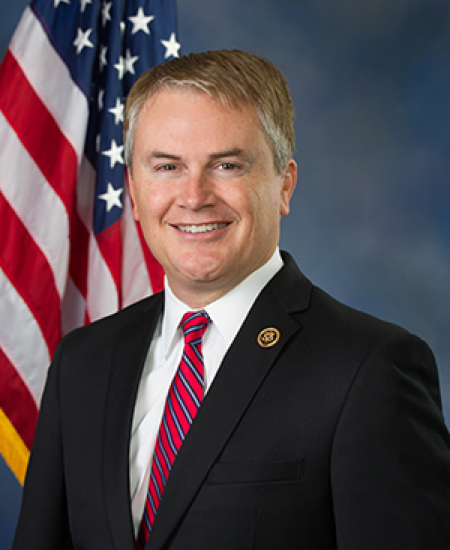
Rep. James Comer
Sponsored bills
This bill directs the Department of the Interior to remove all deed restrictions from approximately 3.62 acres located at 2956 Park Avenue, on the Paducah Memorial Army Reserve Center in Paducah, Kentucky. The restrictions include easements, exceptions, reservations, terms, conditions, and covenants described in the quitclaim deed that was executed on April 27, 2012. The deed conveyed land from Interior to the City of Paducah, Kentucky.
Maddy summaryHR 6332 designates the United States Postal Service facility at 10660 Page Avenue in Fairfax, Virginia, as the "Congressman Gerald E. Connolly Post Office Building." This bill updates all official references in federal documents, maps, and records to use the new name for this specific post office location. It does not create new policies or affect any services; it solely changes the building's official designation to honor Congressman Gerald E. Connolly. The change applies to all federal materials referencing the facility.
Maddy summaryThis bill, known as the D.C. Taxing Authority Review Act, modifies the rules for how new taxes and fees proposed by the District of Columbia government are reviewed by Congress. It requires that any D.C. law imposing or increasing a tax or fee must receive explicit approval from a joint resolution passed by both the House of Representatives and the Senate within 60 days, or else the law will not take effect. Additionally, the bill limits the time for debating these specific approval resolutions to one hour, split evenly between supporters and opponents. These changes directly affect the District of Columbia government's ability to enact new financial measures without prior congressional consent.
Maddy summaryThis bill requires pharmacy benefits managers (PBMs) administering prescription drug benefits for federal employee health plans to reimburse pharmacies at specific rates, including the national average drug cost plus a small percentage or $50, whichever is lower. It prohibits PBMs from favoring their own pharmacies, restricting patient choice, or reducing pharmacy payments after claims are processed. The bill establishes $10,000 civil penalties for violations, with debarment from federal health plans after 10 penalties in 10 years. This directly affects PBMs, in-network pharmacies, and federal health benefit plans covering millions of federal employees and their families. The law aims to ensure fair reimbursement practices and maintain pharmacy choice under the Federal Employees Health Benefits Program.
Maddy summaryHR 5578 expands whistleblower protections for employees and contractors working with the U.S. Department of Defense (DoD) and National Aeronautics and Space Administration (NASA). It broadens the definition of "protected individual" to include state/local governments, tribal organizations, and intelligence community personnel working under federal contracts. Key changes prohibit retaliation for reporting gross mismanagement, waste, safety dangers, or violations of law, ban forced arbitration waivers that would override these rights, and require disciplinary action against officials who request retaliation. This applies specifically to DoD/NASA contractors under Section 4701 and extends similar protections to all federal contractors under Section 4712 of U.S. Code.
Protecting Privacy in Purchases Act This bill prohibits payment card networks from using merchant codes that distinguish firearms retailers from general-merchandise retailers or sporting-goods retailers. The Department of Justice must enforce this bill and report annually on the resulting investigations and cases.
Maddy summaryThe American Enrichment Deployment Act modifies federal rules to allow the construction of uranium enrichment facilities to begin before a full operating license is granted. This change applies to companies building these facilities, permitting them to start construction under the same conditions used for other nuclear fuel cycle projects. The Nuclear Regulatory Commission must update its regulations within 180 days to implement these new procedures while retaining its authority to oversee safety and enforce compliance.
Repealing Big Brother Overreach Act This bill repeals the Corporate Transparency Act. The act requires existing companies and newly created companies to report beneficial ownership information to the Department of the Treasury’s Financial Crimes Enforcement Network for purposes of addressing the financing of terrorism and money laundering.
Maddy summaryThis bill, known as the Stopping Harmful and Outrageous Torts Act, expands legal protections for firearm manufacturers and sellers by strengthening their immunity from civil lawsuits. It requires courts to immediately dismiss any pending cases against these companies that are based on the criminal or unlawful misuse of a gun by a third party, while also clarifying that sellers are not liable for negligence in entrusting products to others. The legislation further restricts who can file such suits by prohibiting foreign governments from bringing these claims and adding a specific exception for victims under the age of 17, though it maintains immunity for cases involving design or manufacturing defects. Additionally, the bill allows companies to move these cases to federal court and grants them the right to appeal dismissal orders immediately, along with the ability to recover legal fees if they win. Finally, it preempts state and local laws that attempt to impose liability on these entities for the same types of misuse-related harms.