

In committee Sep 24, 2026
1 co-sponsor
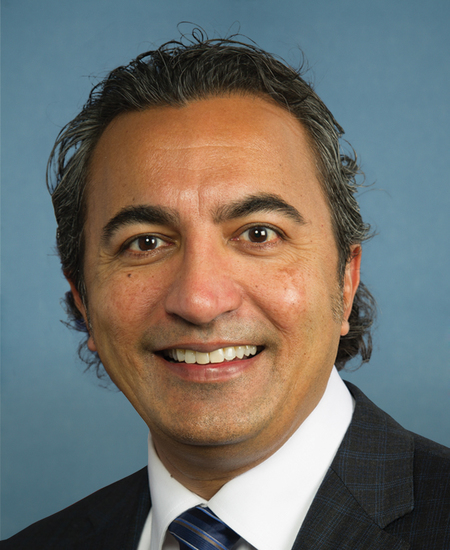
Rep. Ami Bera
Total votes
2,837
all sessions
Attendance
98%
52 missed
Near the chamber average
With party
98%
of cast votes
Near the chamber average
Bipartisan score
1%
crosses aisle rarely
Near the chamber average
Sponsored
990
bills & resolutions
Near the chamber average
Committees
6
assignments
990 bills and resolutions
Sponsored bills
Total
990
Primary
69
Co-sponsor
921
This page
990
matching current filters
Tropical Forest and Coral Reef Conservation Reauthorization Act of 2026
Maddy summaryThe Tropical Forest and Coral Reef Conservation Reauthorization Act of 2026 extends funding for the existing conservation program through fiscal year 2032. The bill allocates $20 million per year for each of the five new fiscal years, from 2028 to 2032. This action directly affects U.S. foreign assistance efforts aimed at protecting tropical forests and coral reefs by ensuring continued financial support.
Budget & TaxesSupports Budget & TaxesThe bill explicitly allocates $20 million per year for an existing conservation program, directly increasing government spending and funding an essential program related to foreign assistance.
EnvironmentSupports EnvironmentThe bill reauthorizes and extends funding for tropical forest and coral reef conservation programs, directly supporting environmental protection efforts.
In committee Sep 17, 2026
1 co-sponsor
Justice for Ukrainian Children Act
Maddy summaryThe Justice for Ukrainian Children Act directs the U.S. government to support efforts to locate and rescue Ukrainian children forcibly transferred by Russia, while imposing mandatory sanctions on foreign individuals who facilitate these transfers. The bill authorizes at least $15 million annually from fiscal years 2027 through 2032 to fund evidence collection, maintain a centralized database, and assist in the rehabilitation of affected children. It requires the President to block the assets and revoke the visas of any foreign person found to have knowingly participated in the abduction or indoctrination of Ukrainian minors, with limited exceptions for humanitarian aid and national security needs. Additionally, the legislation allocates $10 million annually to expand U.S. media broadcasting services in Ukraine and neighboring regions to counter disinformation.
Budget & TaxesSupports Budget & TaxesThe bill authorizes at least $15 million annually from fiscal years 2027 through 2032, directly impacting government spending and appropriations for a specific program.
Criminal JusticeSupports Criminal JusticeThe bill supports international efforts to address crimes against children, which aligns with broader criminal justice principles of accountability and victim support, although it is not domestic criminal justice reform.
In committee Sep 16, 2026
1 co-sponsor
ASAP Act
Maddy summaryThis bill would require Medicare to cover early detection screening tests for Alzheimer's disease and related dementias starting January 1, 2028. It defines eligible tests as FDA-cleared genomic blood tests, blood product analyses, or equivalent medical imaging methods (like protein expression or whole genome sequencing) that detect pre-symptomatic or early-stage conditions. Medicare beneficiaries would receive this coverage without cost-sharing for these specific screenings. The bill amends Medicare coverage rules to explicitly include these tests under Section 1861(nnn) of the Social Security Act.
In committee Sep 16, 2026
1 co-sponsor
Eviction Helpline Act
Maddy summaryThe Eviction Helpline Act requires the Secretary of Housing and Urban Development to establish a free hotline within one year of enactment to provide eviction-related assistance to tenants living in HUD-assisted rental housing. This includes tenants in public housing, Section 8 voucher programs, and other federally subsidized housing units covered under specific HUD programs. The hotline will offer direct support for eviction issues, such as legal guidance or housing resources, without requiring tenants to pay for services. The bill does not change existing housing laws but creates a new service to help vulnerable renters navigate eviction processes. Funding for the hotline will be authorized annually starting in fiscal year 2026.
In committee Sep 16, 2026
1 co-sponsor
TRAPS Act
Maddy summaryThe TRAPS Act establishes a federal Task Force on Payment Scams, chaired by the Treasury Secretary, to coordinate efforts across agencies like the FTC, Federal Reserve, and consumer groups. The Task Force will study current scam tactics (such as fake text messages or fraudulent payment platforms), evaluate prevention strategies, and develop recommendations to help consumers avoid and report scams. It must submit an initial report within one year and annual updates, focusing on improving federal-state coordination and education programs. This bill directly affects government agencies and stakeholders participating in the Task Force, with the goal of protecting consumers from evolving payment scams.
In committee Sep 16, 2026
1 co-sponsor
Save Our Sequoias Act
Save Our Sequoias Act This bill provides for the conservation of giant sequoia trees ( Sequoiadendron giganteum ) in California. Specifically, it provides statutory authority for the Giant Sequoia Lands Coalition and outlines the coalition's duties. The coalition must submit a Giant Sequoia Health and Resiliency Assessment and annually update it. The information from the assessment must be made available so the information can be integrated into certain other plans. The coalition must also create and maintain a website that contains the assessment, educational materials, searchable information about individual giant sequoia groves, and a searchable database to track the status and costs of reforestation and rehabilitation activities. In addition, the bill declares an emergency on certain public lands and allows officials to carry out protection plans during the emergency to respond to the threat of wildfires, insects, and drought. The emergency expires after seven years. The Department of the Interior must develop and implement a Giant Sequoia Reforestation and Rehabilitation Strategy. Finally, the bill establishes a variety of programs and funds to support the conservation of giant sequoias.
Passed Sep 16, 2026
1 co-sponsor
AM Radio for Every Vehicle Act of 2025
Maddy summaryThis bill requires all new passenger vehicles manufactured for sale in the U.S. to include AM radio as standard equipment (not an optional add-on) by 2027-2028, depending on manufacturer size. It mandates that AM radio receivers must be easily accessible to drivers and allows compliance through digital AM broadcast technology. During a transition period, manufacturers must clearly label vehicles without AM radio but cannot charge extra for this feature. The bill also mandates a GAO study on AM radio's role in emergency alerts and includes a 10-year sunset provision for the rule. It preempts state laws regarding AM radio access in vehicles.
Passed Sep 16, 2026
1 co-sponsor
Proposing an amendment to the Constitution of the United States to prohibit the use of slavery and involuntary servitude as a punishment for a crime.
Maddy summaryH.J. Res. 216 proposes a constitutional amendment to eliminate the exception in the Thirteenth Amendment that currently permits slavery and involuntary servitude as punishment for a crime. The resolution would amend the Constitution to explicitly state that neither slavery nor involuntary servitude may be imposed on anyone as a penalty for criminal conduct. This change would directly affect incarcerated individuals by prohibiting forced labor practices within the criminal justice system, while clarifying that voluntary work programs and community service alternatives remain permissible.
Criminal JusticeSupports Criminal JusticeProposes constitutional amendment to ban involuntary servitude as punishment, directly advancing criminal justice reform and protecting inmate rights.
Labor & EmploymentSupports Labor & EmploymentThe bill prohibits involuntary servitude and forced labor for prisoners, directly strengthening protections against exploitative labor practices.
In committee Sep 15, 2026
1 co-sponsor
Ailani Myers Accelerating Innovation in Medicine to Cure Kids with Cancer Act
Maddy summaryThe Ailani Myers Accelerating Innovation in Medicine to Cure Kids with Cancer Act directs federal agencies to coordinate efforts using artificial intelligence to improve the diagnosis, treatment, and prevention of pediatric cancer. It establishes a Childhood Cancer Data Initiative within the National Cancer Institute to collect, standardize, and share data on patients diagnosed as children, adolescents, or young adults. The bill requires the development of interoperability standards for patient data used with AI tools and mandates annual reports to Congress on implementation progress through fiscal year 2031. Additionally, it authorizes $100 million per year from fiscal years 2027 through 2031 specifically for the data initiative, while allowing necessary sums for other activities under the law.
HealthcareSupports HealthcareThe bill explicitly aims to improve the diagnosis, treatment, and prevention of pediatric cancer through AI and data initiatives, directly advancing healthcare for children.
TechnologySupports TechnologyThe bill directs federal agencies to use AI for pediatric cancer, establishing a Childhood Cancer Data Initiative to collect and share data. This explicitly advances technology in healthcare.
In committee Sep 14, 2026
1 co-sponsor
Ask Maddy
·
AI policy assistant
Ask Maddy about Ami Bera
Scope: district-of-columbia
Hi! I can help you understand Ami Bera's legislative record. What would you like to know?
Try one of these
i
Maddy answers using official bill text and legislative records. Always verify before sharing.
Sources cited inline