HR 8005 United States House · 119th Congress

Stop Pills That Kill Act

The Stop Pills That Kill Act targets counterfeit pills containing fentanyl or methamphetamine that are sold under the branding of legitimate prescription medications. It expands federal criminal penalties to specifically include these counterfeit substances and requires the Drug Enforcement Administration to create a comprehensive plan within 180 days to improve law enforcement investigations and public education efforts. The bill also mandates annual reports to Congress detailing seizure data, prosecution statistics, and prevention measures related to counterfeit pills. These provisions aim to enhance federal response to the distribution of fake prescription pills while maintaining existing legal frameworks.
Bill status passed 3 of 5 stages cleared
Introduction
Mar 2026
Committee Review
Sep 2026
House Passage
Sep 2026
Senate Passage
President
Introduced Mar 19, 2026 Last action Sep 16, 2026
Maddy AI version diff · 1 comparison

What changed between versions

Introduced in House → Engrossed in House · 7 edits · Sep 15, 2026
MODERATE
The Engrossed version of HR 8005 dramatically expands the bill's scope beyond its original focus on counterfeit fentanyl and methamphetamine pills. The most significant addition is an entirely new section regulating tableting and encapsulating machines (the equipment used to press drugs into pill form), including serial number requirements, record-keeping obligations, criminal penalties for tampering with serial numbers, and extraterritorial jurisdiction over foreign manufacturers of such machines. The counterfeit pill definition was also broadened to cover additional illicit substances beyond fentanyl and methamphetamine.
Scope change
The bill expanded from a narrow focus on tracking and prosecuting counterfeit fentanyl/methamphetamine pills to a comprehensive framework that also regulates the manufacturing equipment (tableting and encapsulating machines) used to produce illicit pills, adds extraterritorial jurisdiction over foreign machine manufacturers, and broadens the definition of covered substances to include additional categories of illicit drugs.
SCOPE

A new Section 2 adds regulation of tableting machines, encapsulating machines, and their critical parts (upper punch, lower punch, die) under the Controlled Substances Act, requiring serial numbers, transaction records, and reporting to the Attorney General for all regulated transactions involving these machines.

A new Section 3 grants extraterritorial jurisdiction over persons who manufacture or distribute tableting/encapsulating machines abroad with intent that they be used to illicitly manufacture controlled substances and unlawfully imported into the United States.

ENFORCEMENT

New criminal prohibitions were added: removing, altering, or obliterate a machine's serial number is now illegal, as is transporting or possessing a machine with a removed/altered serial number. Violations carry penalties under the Controlled Substances Act.

New sentencing provisions set maximum prison terms: up to 20 years for violations involving List I chemicals, up to 10 years for machine-related violations, up to 8 years for certain offenses, and up to 15 years for large-scale operations (over 1,000 kg of chemical or over 100 machines).

DEFINITION

The definition of the targeted substance was broadened from 'counterfeit fentanyl or methamphetamine substance' to 'counterfeit pill containing an illicit synthetic substance,' which now also covers fentanyl-related substances, illicit depressants, stimulants, narcotics, and synthetic opioids.

TIMELINE

The annual report to Congress requirement now has a sunset date (through fiscal year 2031) and adds new content requirements including a description of pharmaceutical markings on counterfeit pills compared to FDA-approved labeling, and geographic origin data for seized pills.

REQUIREMENT

The Attorney General must promulgate regulations within 180 days of enactment covering serial number requirements, including for machines manufactured before the effective date. The Sentencing Commission is directed to review and amend federal sentencing guidelines to align with the new provisions.

Floor votes

How they voted

No floor votes recorded yet.
Full legislative history

Actions timeline

Total actions
16
Key actions
5
Committee
7
Amendments
3
Sep 16, 2026
Committee
Received in the Senate and Read twice and referred to the Committee on the Judiciary.
upper
Sep 15, 2026
Introduced
The title of the measure was amended. Agreed to without objection.
lower
Sep 15, 2026
Introduced
On motion to suspend the rules and pass the bill, as amended Agreed to by voice vote. (text: CR H5674-5675)
lower
Sep 15, 2026
Lower · Passed
Passed/agreed to in House: On motion to suspend the rules and pass the bill, as amended Agreed to by voice vote.
lower
Sep 15, 2026
Introduced
Mr. Guthrie moved to suspend the rules and pass the bill, as amended.
lower
Jul 21, 2026
Lower · Passed
Committee Consideration and Mark-up Session Held
lower
Jul 20, 2026
Lower · Passed
Committee Consideration and Mark-up Session Held
lower
Jul 15, 2026
Lower · Passed
Forwarded by Subcommittee to Full Committee (Amended) by Voice Vote.
lower
Jul 15, 2026
Lower · Passed
Subcommittee Consideration and Mark-up Session Held
lower
Mar 19, 2026
Committee
Referred to the Subcommittee on Health.
lower
Mar 19, 2026
Committee
Referred to the Committee on the Judiciary, and in addition to the Committee on Energy and Commerce, for a period to be subsequently determined by the Speaker, in each case for consideration of such provisions as fall within the jurisdiction of the committee concerned.
lower
Mar 19, 2026
Introduced
Introduced in House
lower
1 primary · 0 co-sponsors

Sponsors

Role
Legislator
Party
State
District
P
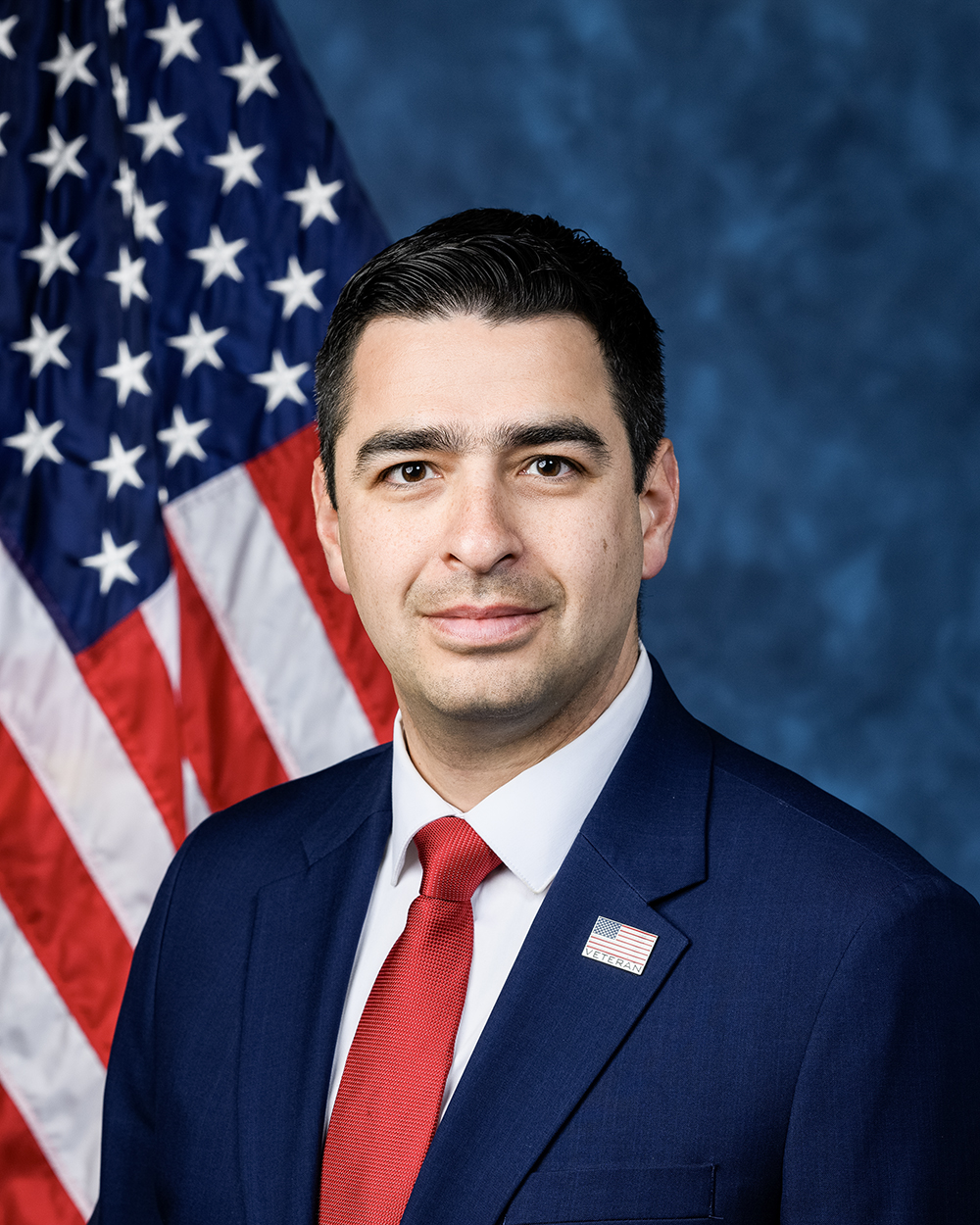
Photo of Gabe Evans
Gabe Evans
RRepublican
CO
8